Every October, in conjunction with breast cancer awareness month, the message is always focused on encouraging women to get their breasts checked for early detection.
But when the result comes back and an abnormality is found, what happens to women who are unable to afford the next step?
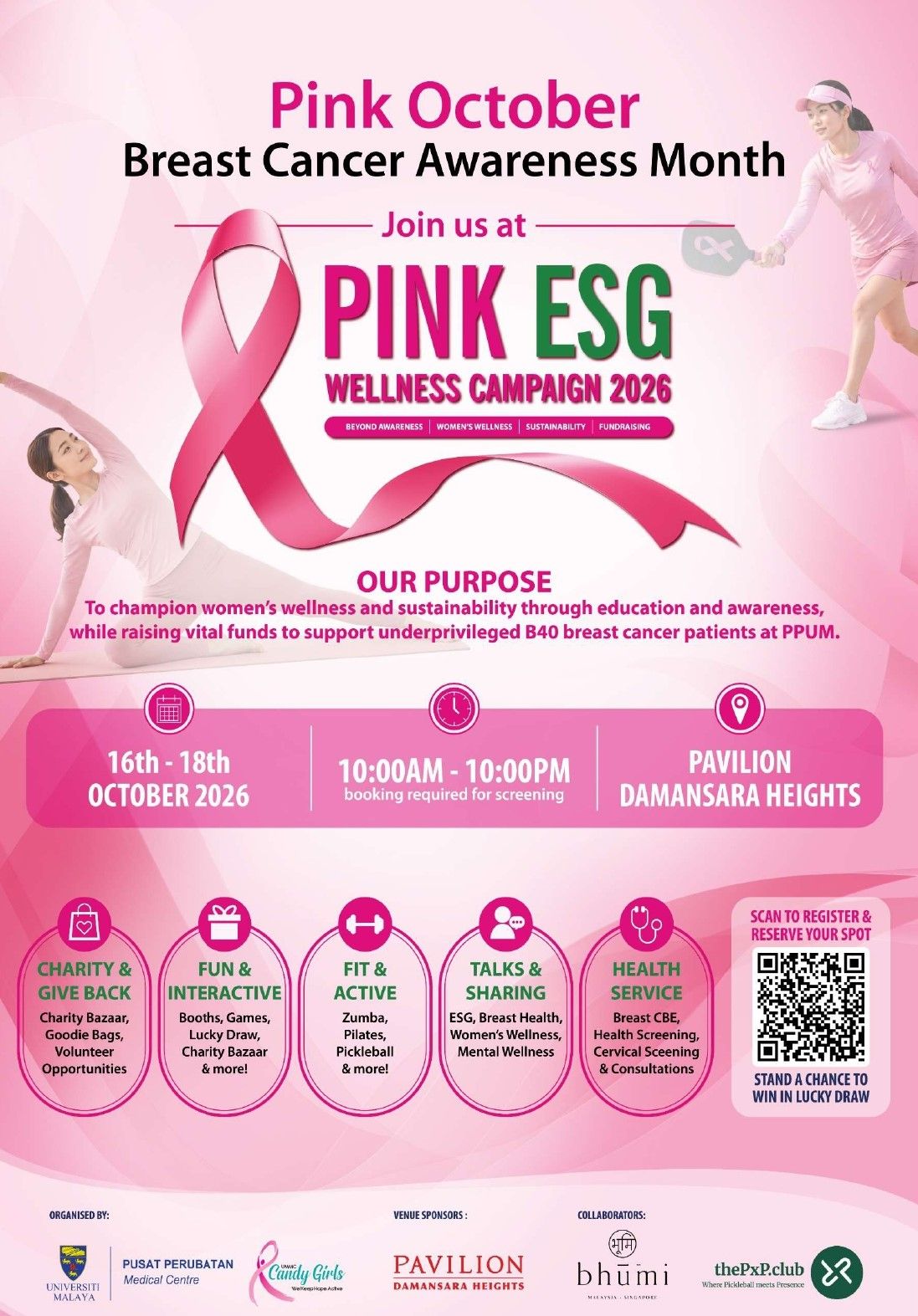
To highlight this concern, Universiti Malaya Medical Centre (UMMC) will be organising the Pink ESG Wellness campaign from Oct 16 to 18 at Pavilion Damansara Heights, Kuala Lumpur.
“Breast cancer awareness should not end with encouraging women to attend screening. For many women, particularly those from B40 households, the greater challenge may begin only after an abnormality is discovered,” says campaign chairperson Prof Dr See Mee Hoong.

Even before getting an official diagnosis, the process is already costly, such as getting ultrasounds, mammograms, and pathology tests. Not to forget expenses such as transportation and caregiving, as well as the anxiety that comes with anticipating results.
“These pressures can result in delays in seeking further investigation, even after an abnormality has already been identified,” she says, adding that the campaign aims to bridge that gap.
Since 2017, the “UMMC B40 Breast Cancer Diagnostic Fund” has supported more than 500 patients. As of Sept 1 this year, the campaign has received RM100,000 in cash sponsorship and RM250,000 specifically to support eligible low-income breast cancer patients who require robotic breast surgery.
Prof See stresses that robotic surgery is not suitable for everyone, and treatment decisions will be based on clinical assessment.
But for women who are suitable for the surgery, she hopes financial constraints will not prevent them from getting access to the procedure.
Offering support
During the campaign event, there will be plenty of ways to give support for the cause through participating vendors.
Across the three days, participation is open for the various health and wellness activities, sharing sessions, interactive booths, charity initiatives and health services, which includes breast and women’s health education, screening opportunities and consultations.
A bazaar during the campaign will also give breast cancer and survivors a platform to sell handmade and specially curated items, providing them a source of income while allowing them to socialise with others post-treatment.
“Providing survivors with opportunities to participate in community activities, contribute their skills, generate income and reconnect with society can help restore independence, confidence and a sense of purpose,” Prof See explains.
“Supporting survivors means looking beyond short-term medical intervention and considering how women can rebuild their quality of life, financial independence and connection to the community over the longer term.”
Their role can also extend further, as “survivors are not only recipients of care, but can also become mentors, companions and sources of strength for other women.”
With 45 companies, sponsors and community partners involved, she hopes the campaign will also serve as a reminder to patients and their families that they do not have to face the battle alone.
“Ultimately, the campaign seeks to move beyond awareness and towards action so that every screening taken, every wellness activity joined, every contribution made and every message shared can help create meaningful and lasting impact.”