
When she was growing up, Dr Nurnadiah Zamri remembers liking English more than mathematics.But when she started to realise how impactful mathematics can be when it comes to solving real-world problems, she began to develop a deeper passion for numbers.
Today, the senior lecturer at Universiti Sultan Zainal Abidin in Kuala Terengganu is working on developing a hybrid AI-driven mental health chatbot which provides early intervention, tools for self-help, emotional pattern detection and referrals to qualified therapists.
The whole idea is to make mental health support less intimidating and more accessible, especially for people who don’t feel ready to talk face-to-face to a therapist.
Her chatbot incorporates fuzzy mathematics – a branch of the field capable of translating subjective feelings and emotions into data that can be analysed, crucial for AI.
“Many people think that there’s no possible way to measure human emotions, but true mathematics – especially fuzzy mathematics and data analysis – can be used to help solve pressing issues like psychological well-being,” she explains.
For this project, Nurnadiah was awarded the L’Oreal-Unesco For Women in Science 2025 grant last month, placing her among three Malaysian women recognised for their contributions to science and technology.
Other recipients include Dr Noorfatimah Yahaya on her research in improving safe and effective use of antibiotics in hospitalised patients, and Dr Tan Lling-Lling, whose research focuses on transforming sunlight into usable fuels.L'Oreal Malaysia managing director Tomas Hruska says the company is committed to fostering continuous positive changes in the country."By supporting these outstanding women, we are not just funding their work, we are investing in the future of science, driving sustainable impact in Malaysia and equipping the next generation of leaders to shape tomorrow's solutions."
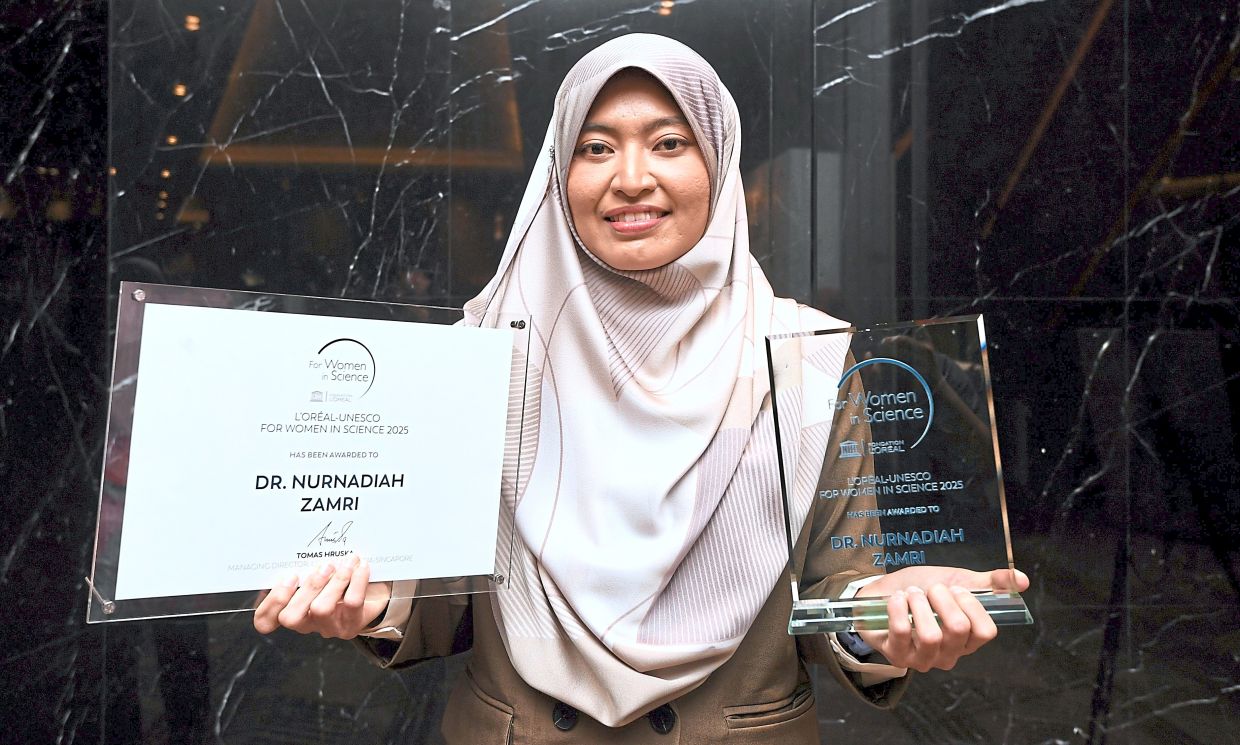
A tool for change
During her presentation, Nurnadiah highlights the urgent need for mental health trends in Malaysia to be examined and handled, especially since issues like stress, burnout and anxiety are on the rise across different work sectors.
“We discovered from other research that workers across different industries are experiencing significant increase in stress levels caused by factors such as working overtime – primarily in the technology industry,” she notes.
“The study also found that leave taken by workers were mostly due to stress, depression and anxiety.”
She says having a reliable and accessible tools to tackle this issue effectively is imperative, and Nurnadiah wants to ensure she can help by putting her knowledge to good use and coming up with the best solution.
“Based on my previous research with Hospital Sultanah Nur Zahirah in Kuala Terengganu and the National Institute of Occupational Safety and Health, we found out that most of those who deal with mental health problems are shy and afraid to admit what they’re going through,” she explains.
“From there, the idea of developing something that can reach these individuals came to me. Through this chatbot, they can get the help they need without fear of being judged."Mental health chatbots are not new, but most are built and tailored to fit users from Western countries, primarily Europe.
Nurnadiah’s planned chatbot will address the need for early intervention tools in Malaysia's setting – one that understands our languages and behavioural norms.
With enough information fed to the system over a period of time, it can detect emotional patterns, recognise early indicators of stress and flag users who may be at risk.
The system can then guide users to self-coping tools or referrals to professionals when necessary, to improve their mental well-being.
“By combining mathematics and AI, we can bring mental health support closer to the people who need it most in ways that are accessible, culturally sensitive and grounded in real data. This will help not only individuals in the workplace, but also communities and our healthcare system while contributing to global research on ethical, culturally grounded AI.”
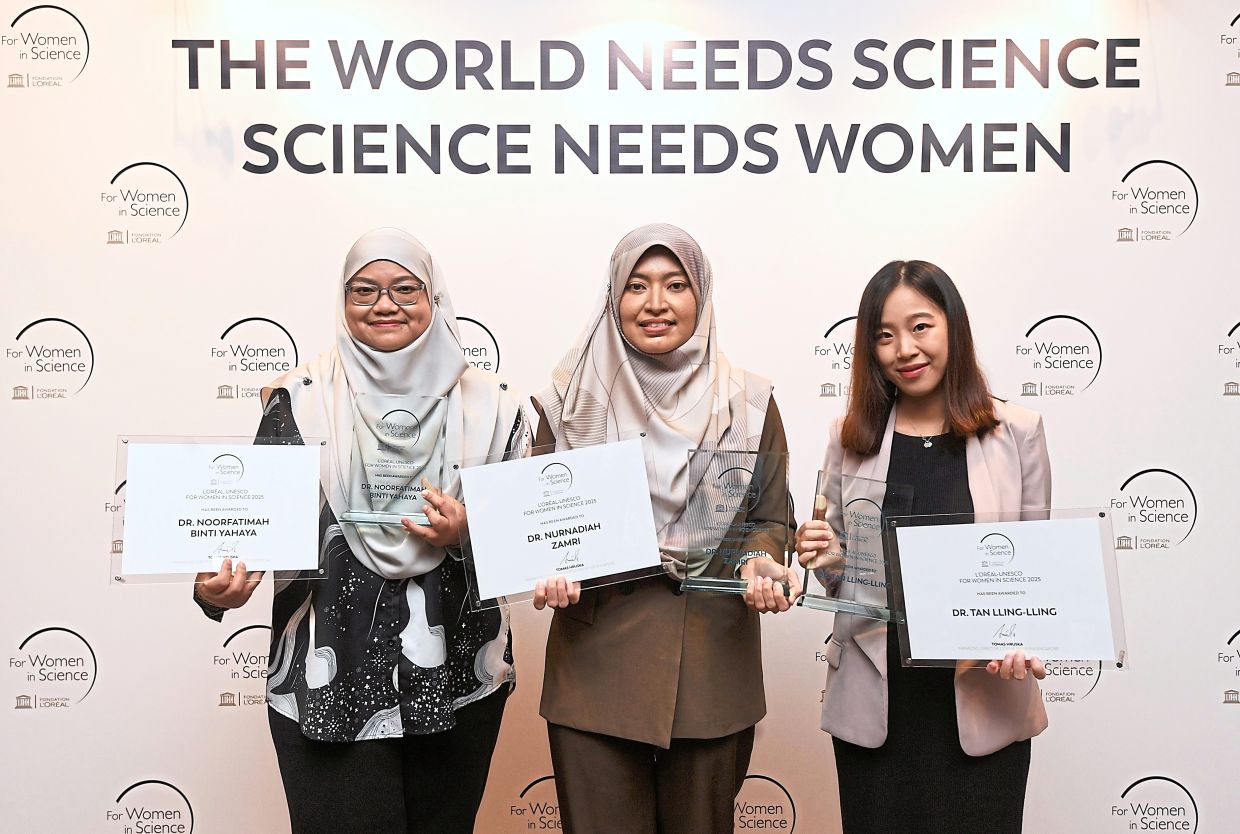
Pushing forward
Nurnadiah’s journey into mathematics was not something she envisioned for herself in the beginning. But once she entered the field, she saw the sheer potential it holds to help make the world a better place.
“I realised mathematics can solve lots of problems around us. When I first started getting into the field, I thought building models was all we do and I kept asking myself, ‘What do we do with them?’” she reflects.
“It was later that I understood it to be our responsibility to help people by applying these models to real cases.”
Raised by a single mother, her family has always encouraged education – even if the path wasn’t always a straight line.
At home, although there were no deep roots in science and academia, there was continuous support and determination.
“Both my parents – before their divorce – worked in banking, so they never really pushed me into science. But when I got into this field, my mother still supported me to the very end and motivated me to do my best.”
Outside of her work, Nurnadiah is a mother to two girls and she jokes that she still dreams one of them might become a doctor, a way of fulfilling her wish of becoming one when she was younger.
But she insists that she will always allow them to follow their own dreams, whatever they may be.
“I understand they may have their own ambitions and I can’t get in the way of that. No matter what they do, I’ll always be the best role model for them just like how my mother is to me.”
To her, winning the award extends to more than just herself.
“This award will motivate me to keep working hard so I can bring more impact to the world in big ways,” she says. “But most importantly, winning this proves to young Malaysian women that they can pursue their dreams in science.”
When asked about what is next, she gives a bright smile before answering – almost like she’s seen the path ahead of her already.
“I would like to apply for more grants!” she says half-jokingly. “I love research so much and I want to continue making a difference and reach as many people as possible through my work.”