
When Dr Wan Nor Fitri Wan Jaafar first read about elephant reproduction as a veterinary student at Universiti Putra Malaysia (UPM), he didn’t know that a simple homework assignment would shape his life’s mission.
“Later, I learned how humans can co-exist with elephants – and not long after, I found myself in the jungles of Gerik, Perak, chasing a radio-collared wild elephant,” he recalls with a laugh.
Today, that curiosity has grown into a groundbreaking career at the intersection of wildlife reproduction, conservation and biotechnology.
Dr Wan Nor Fitri is pioneering reproductive technologies that could safeguard Malaysia’s most endangered species – from the Malayan tiger to the Bornean rhinoceros.
To the uninitiated, he describes his work simply: “I’m like a gynaecologist for animals – when they can’t get pregnant, whether tiger, rhino, cow or cat – they see me.”
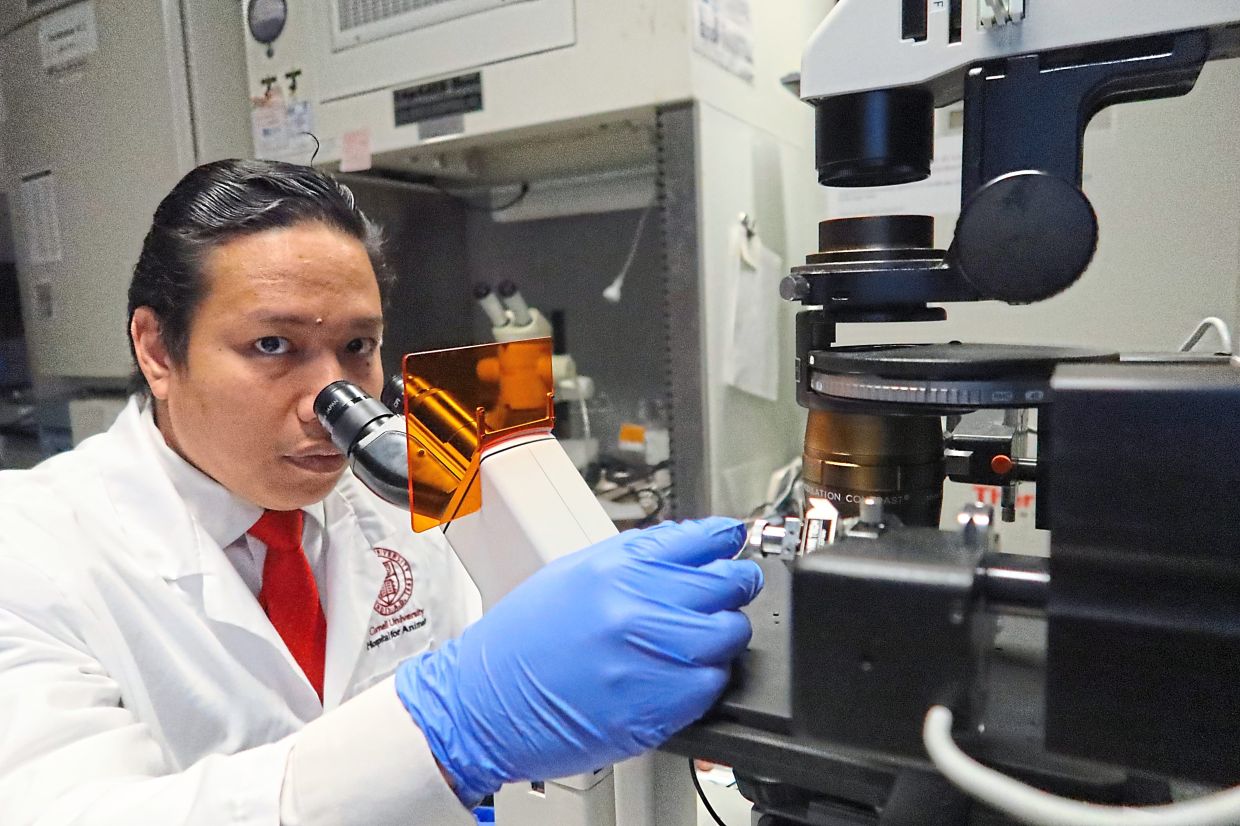
A senior lecturer at UPM’s Faculty of Veterinary Medicine, Dr Wan Nor Fitri is also an international researcher attached to Cornell University’s College of Veterinary Medicine in New York, where he trained under renowned theriogenologist Assoc Prof Dr Cheong Soon Hon.
Cloning may feel like the stuff Jurassic Park and other science fiction movies are made of.
But as Dr Wan Nor Fitri explains, “While we’re far from bringing back dinosaurs, the idea of resurrecting recently extinct species is no longer fantasy.”
He points to the revival of the black-footed ferret through cryopreserved cells, and ongoing efforts to clone dire wolves and even woolly mammoths.
“These are real intersections of science and conservation,” he says, adding that they could soon shape Malaysia’s own fight to save its wildlife.
Dr Wan Nor Fitri’s field, known as Assisted Reproductive Technology (ART), uses advanced techniques like artificial insemination, in vitro fertilisation (IVF) and embryo transfer to help preserve genetic diversity when natural breeding is no longer enough.
“ART gives nature a second chance,” he explains.
“When populations are small or isolated – like the Malayan tiger or the Bornean rhinoceros – these tools can sustain life where nature struggles.”
But he’s quick to correct a common misconception: “Cloning or ART doesn’t replace conservation. We still need to protect habitats, prevent poaching and address disease. Think of ART as an insurance policy – one that buys us time – for these animals.”
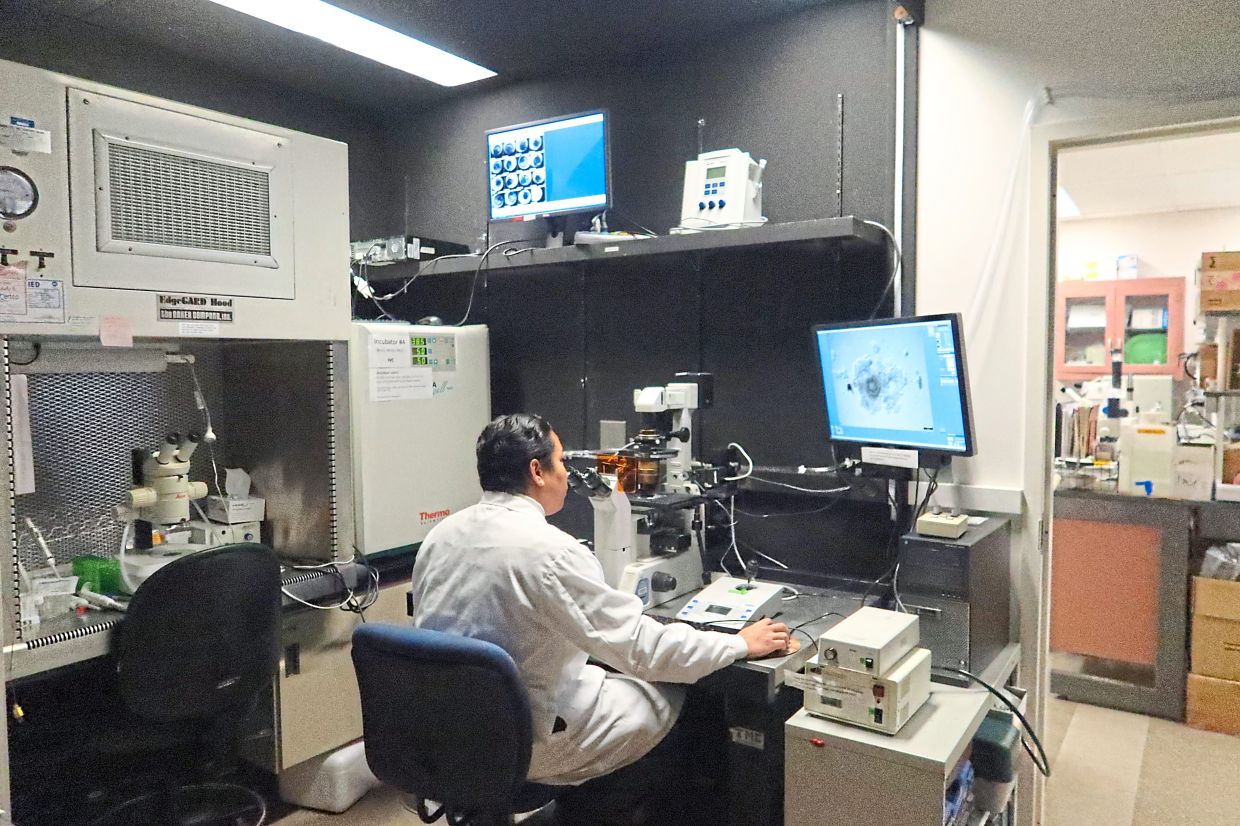
During his three-month research attachment at Cornell University, Dr Wan Nor Fitri witnessed firsthand the precision and promise of cutting-edge conservation science.
He remembers watching frozen oocytes (developing eggs) arrive in a courier box before being used in the lab to produce embryos.
“They’d travelled further than the length of Peninsular Malaysia! It struck me how the future of a species could begin in such controlled conditions. Saving wildlife isn’t about miracles – it’s about science, collaboration and dedication.”
Among his proudest moments was helping to clone Twilight, the world’s first horse with a fully sequenced genome (complete set of DNA or genetic material in an organism).
“It felt like stepping into the frontier of science,” he says.
“These tools are here and they hold immense potential for endangered species like our own Malayan tiger.”
Beyond the lab, Dr Wan Nor Fitri has spent countless hours in Malaysia’s jungles and wildlife centres.
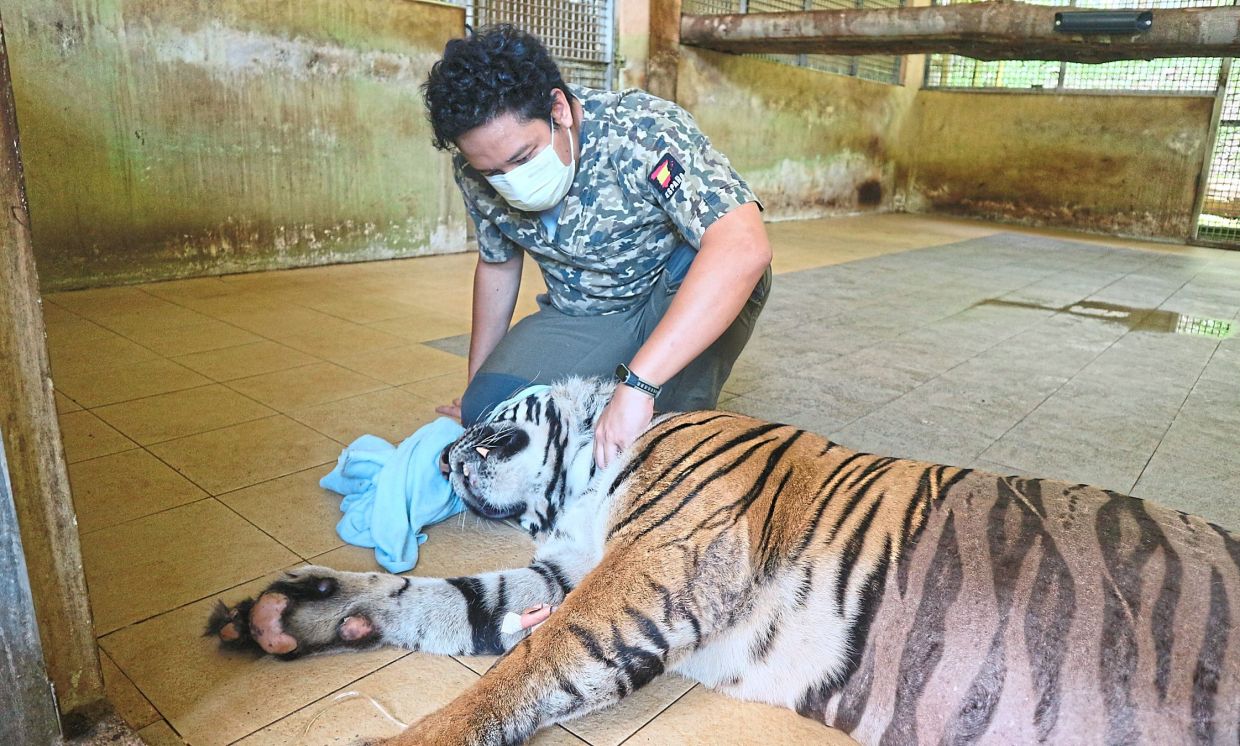
One experience, in particular, remains etched in his memory – helping perform a reproductive evaluation on a tigress at the National Wildlife Rescue Centre.
“When we returned her to the den before reversing the anaesthesia, I checked her breathing and temperature. For a moment, it was just the two of us – her calm breaths under my hands,” he recalls quietly.
“She recovered well, but months later, we learned she had passed away. Even though we tried, we couldn’t save her. It reminded me how fragile life is – and why this work matters.”
That fragility fuels his determination.
“Emotion is fuel,” he says. “The grief of loss and the joy of success both push you forward. Every tiger, every embryo, every study – it’s a step toward hope.”
Dr Wan Nor Fitri’s passion for science has grown into a national mission.
“Malaysia is one of the most biodiverse countries on Earth, but we’re losing species faster than we can record them,” he cautions.
“If we don’t act now, our children may only see tigers, rhinos and hornbills in photos.”
For him, the Malayan tiger embodies this struggle and hope.
“Saving the tiger means saving its entire ecosystem – forests, rivers, prey species. It’s not just an animal; it’s our living symbol of resilience.”
As a recipient of the Merdeka Award for Outstanding Contribution to Environment and Planetary Health (2021), Dr Wan Nor Fitri continues to advocate for stronger public participation in conservation.
His advice to Malaysians is simple: “Support our national parks. Report wildlife crime. Teach your children to love the wild. Conservation is not just for scientists – it’s for everyone.”
For young Malaysians inspired by wildlife and science, Dr Wan Nor Fitri’s message is one of courage and curiosity.
"Go into the forest. Feel it. Hear it. Science isn’t just in books – it’s alive,” he says. “Stay curious, learn from failure, and know that every action counts.
“Conservation is love in action. Love for a tiger is giving it the space to live. Hope is built through research, fieldwork and education.
“Every choice matters. Be bold, stay curious, and fall in love with the wild,” he advises.