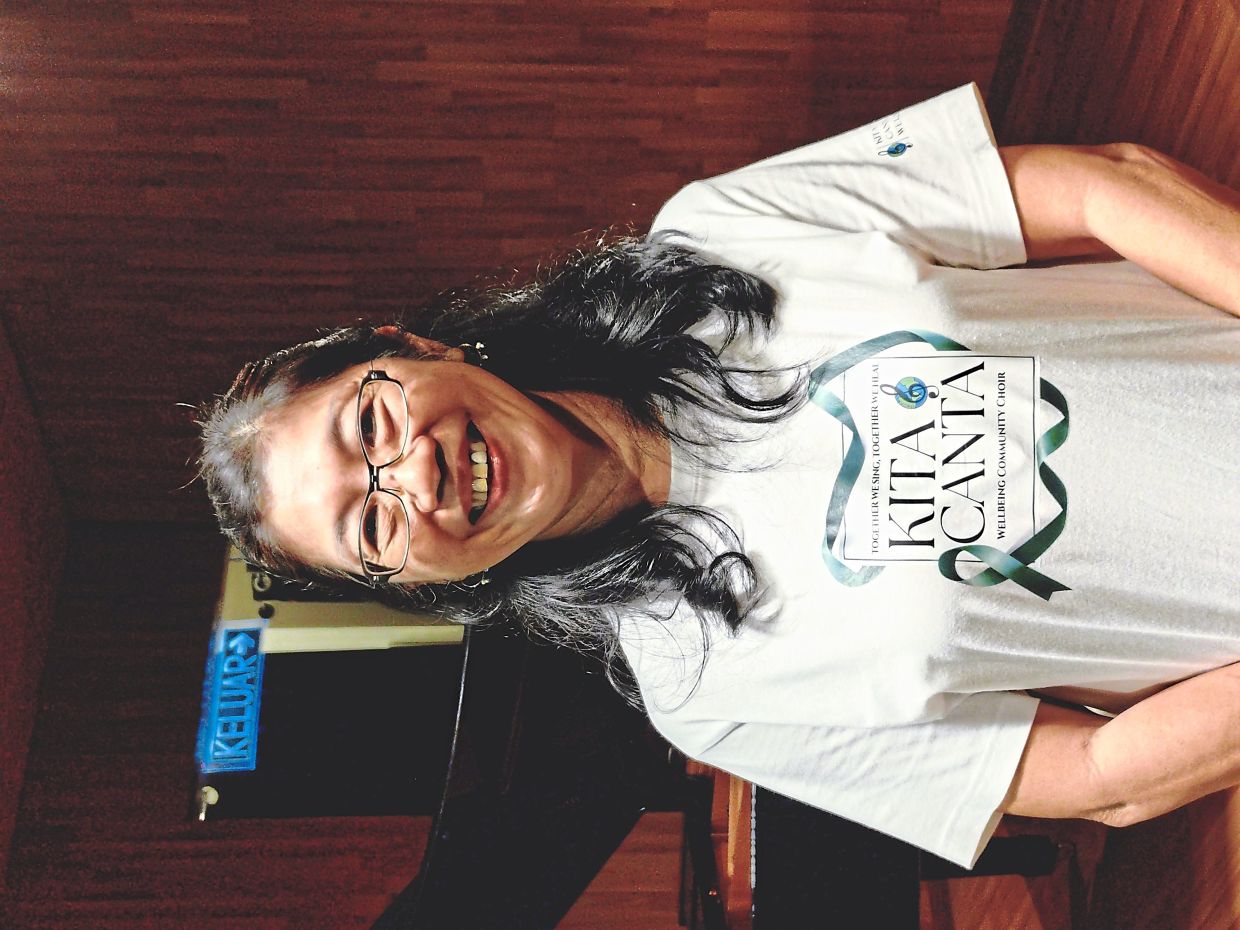
At 61, Chin Siew Mui knows what it means to carry a heavy load. The former banker, one of twelve siblings, has long been a dedicated caregiver to her mother and recently endured the loss of her father.
Yet, when she talks about her life and her newfound passion, her quiet, smiling resilience is immediately apparent in her voice and calm demeanour.
“I realised at some point in my life, I had gone through depression, and that singing helps me to heal,” Chin shares.
“I sing when I’m sad, and I sing when I’m happy. Even now that I have to care for my mother, I have my ‘me time’ when I am singing. It makes me feel better, lighter, and happier.”
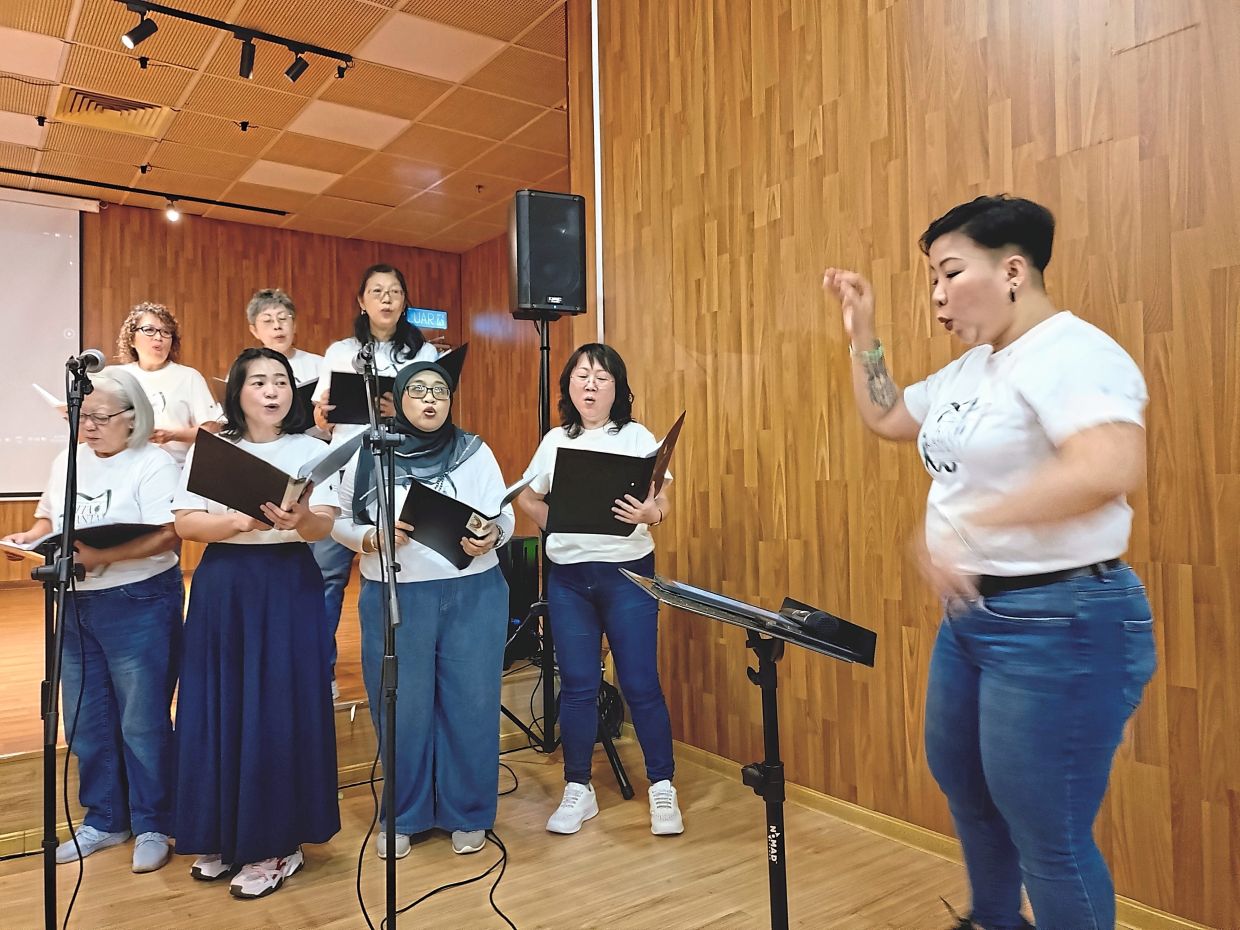
Chin doesn’t only sing behind closed doors; she sings on stage with the Kita Canta Wellbeing Community Choir (KCW).
Founded in May 2023 by choral conductor and mental health advocate Darlyn Goh and academician Janice Kaur, KCW calls itself the first wellbeing choir in Malaysia.
Though still a young choir, its mission is clear – to make mental health support accessible through music.
Since its founding, it has collaborated with numerous organisations, raised funds for charities, and performed at festivals, steadily building a reputation as a choir where everyone belongs.
But what makes it even more special is that the choir requires no auditions or entry requirements, and deliberately does not focus on perfection.
“Kita Canta is not just a choir – it’s a wellbeing community,” says Goh. “The goal is connection, not perfection.”
Unlike traditional choirs that often prioritise performance or competition, Goh explains that KCW focuses on creating a safe, supportive, and joyful space where people can sing without pressure.
“Everyone is welcome – and that openness makes it very inviting for seniors, or even for younger singers who might feel hesitant to join a typical performance-driven group,” she adds.
To cater specifically for senior choristers, rehearsals are comfortably paced, the repertoire is varied and accessible, and dedicated time is set aside for what the group calls Circle Time.
“We want everyone to feel included and seen during Circle Time – 10 minutes after singing our songs, when they take turns to share stories, laugh, and connect,” Goh explains. “And that’s just as important as singing together.”
Chin first heard of KCW from a friend in another choir and was immediately drawn to its multi-part harmonies.
“I have always wanted to be a chorister since I was in school, but I was shy then and not a good singer,” she recalls. Joining KCW, she says, was a chance to finally tick that dream off her bucket list.
Where music heals
Recognising that music has long been known for its therapeutic power, KCW positions itself as a bridge between mental wellbeing and community support.
“We wanted to break down barriers – both the stigma around mental health and the fear that singing is only for the ‘talented’,” says Goh. “Singing is a natural part of being human, and everyone deserves to enjoy it.”
For seniors, she says, the benefits are tangible, as singing can reduce loneliness, spark joy, and provide a sense of purpose.
“I’ve seen seniors who came in quiet and hesitant gradually open up, smiling more, making friends, and finding joy in expressing themselves,” she adds.
“Singing taps into memory and emotion – it can be grounding and healing, especially for those navigating life transitions or grief.”
Beyond mental health, Goh points out that singing also offers physical and social advantages.
“Physically, it can be quite a workout that improves breathing, posture, and vocal strength,” she adds.
“Emotionally, it gives seniors confidence and pride, especially when performing in front of an audience, while learning new pieces keeps the mind active. Many seniors tell me it makes them feel young again because they’re learning, laughing, and singing with friends.”
Chin wholeheartedly agrees.
“On stage, I’m no longer shy. We sing songs like I’ll Be There and That’s What Friends Are For, which reflect our friendship. It really feels like a family, with the younger members like my nephews and nieces – they make me feel young again.”

Singing into the next chapter
If Chin found a safe, healing cocoon in the choir, fellow chorister Eric Chan has used it to transform retirement into a new chapter of adventure.
Turning 60 this year, Chan has lived a life full of reinvention. Born in Hong Kong, he studied and worked in the United States before moving to Malaysia nearly three decades ago.
After retiring from a career in property development – and recovering from kidney disease – he decided to embrace life to the fullest.
“I realised life is too short not to try new things,” he says. “Instead of slowing down, I’ve been busier than ever – playing pickleball, line dancing, cheerleading, modelling competitions. And now the choir.”
When he walked into his first KCW rehearsal, Chan was nervous. “I didn’t know how to read music, count beats, or control my voice – and had certainly never sung in front of people.”
He remembers how his pounding heart was quickly calmed by the warmth and encouragement from everyone.
“That day, I realised I hadn’t just found a choir – I had found a community,” says Chan, who believes that choir life is about more than just music.
“The harmony is more powerful than any one of us alone. Emotionally, singing brings me joy and energy; socially, it’s given me friendships and a sense of belonging; physically, the breathing has improved my posture and wellbeing. It has enriched my retirement far beyond what I imagined.”
Music across generations
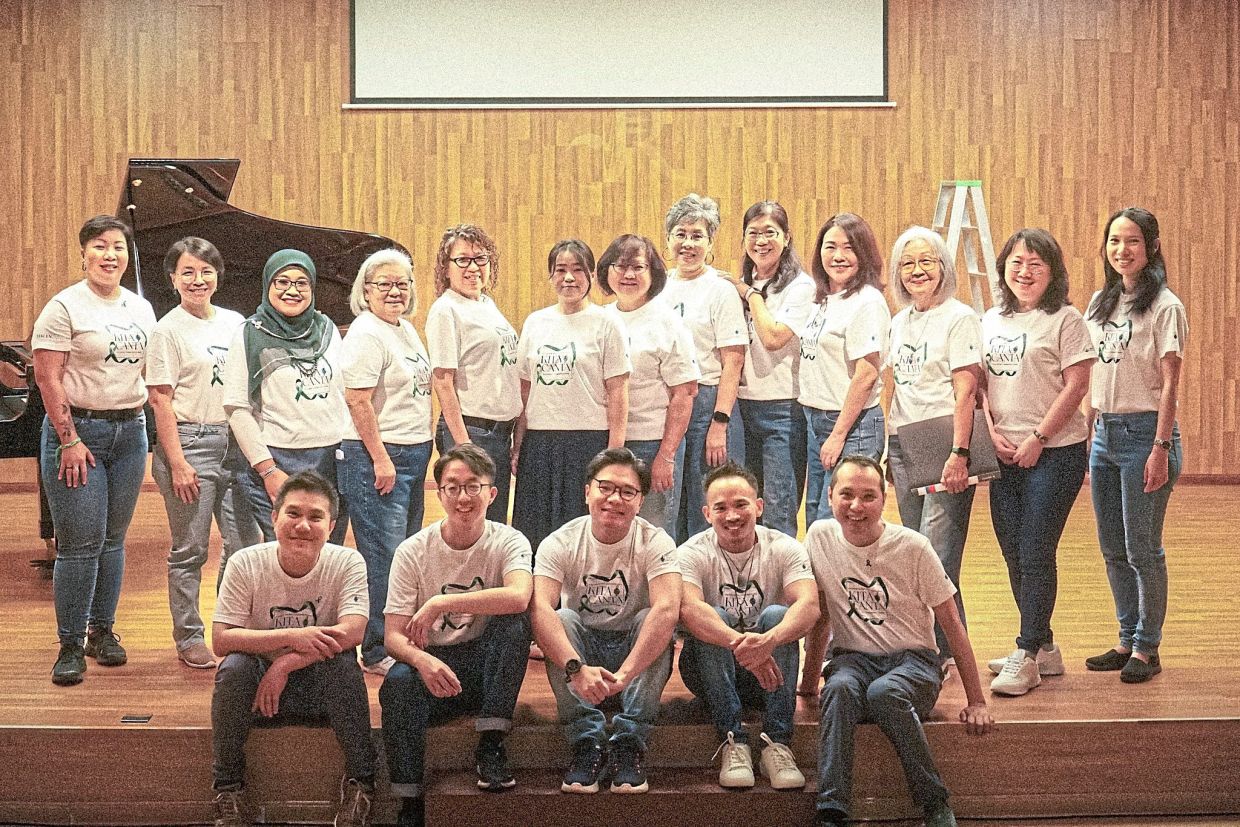
The presence of seniors, Goh says, is vital to the choir’s dynamic, as they bring “wisdom, life stories, and a deep emotional connection to the songs”.
She notes that performing alongside younger members sends a powerful message that healing and music know no age limit.
“They remind us that music is about lived experience, not just notes on a page. They also set a beautiful example of courage and openness – showing younger members that it’s never too late to learn, grow, and find joy in community,” she adds.
Describing the intergenerational group as a beautiful community, Goh observes, “Sometimes we may not have the best relationships with our families at home, but here, we are all a family – and hopefully that helps us improve our relationships outside the choir too.”
Chan concurs. “Singing side by side with them reminds me that music connects generations, and that we can inspire and lift each other no matter our age.”
Being part of a vibrant community that values him, Chan hopes to inspire his peers. “Life is short – we should enjoy ourselves, stay healthy, and live happily. Don’t just stay at home; join something like this, and you’ll be surprised how alive you feel.”
Chin agrees. “I always feel better and happier after a choir class. Music heals the soul.”
Thanks to the confidence she’s gained from rehearsals and performing on stage, Chin says she’s now comfortable singing both soprano and alto parts – something she never imagined before.
“I hope people see that music and healing have no age limit. When they see seniors singing alongside others, it sends a powerful message: community and wellbeing are for everyone,” Goh concludes.