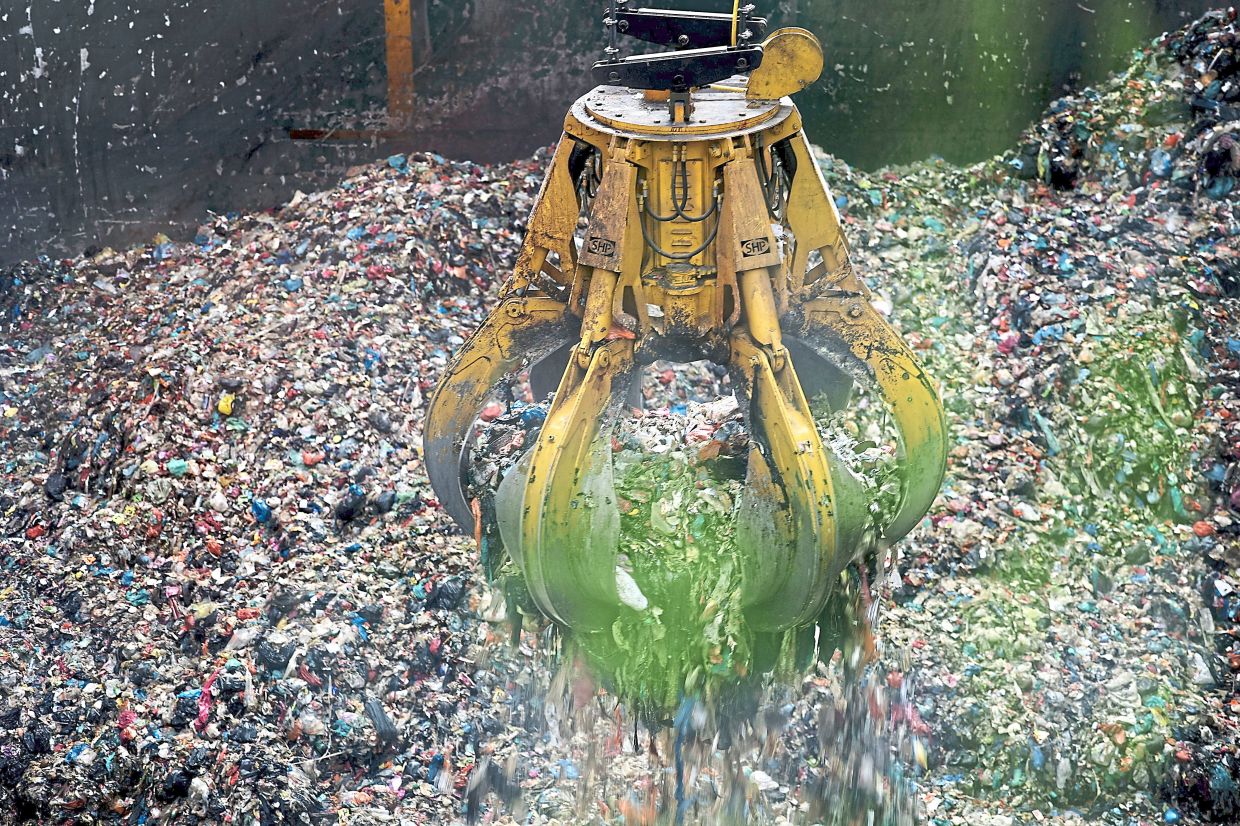
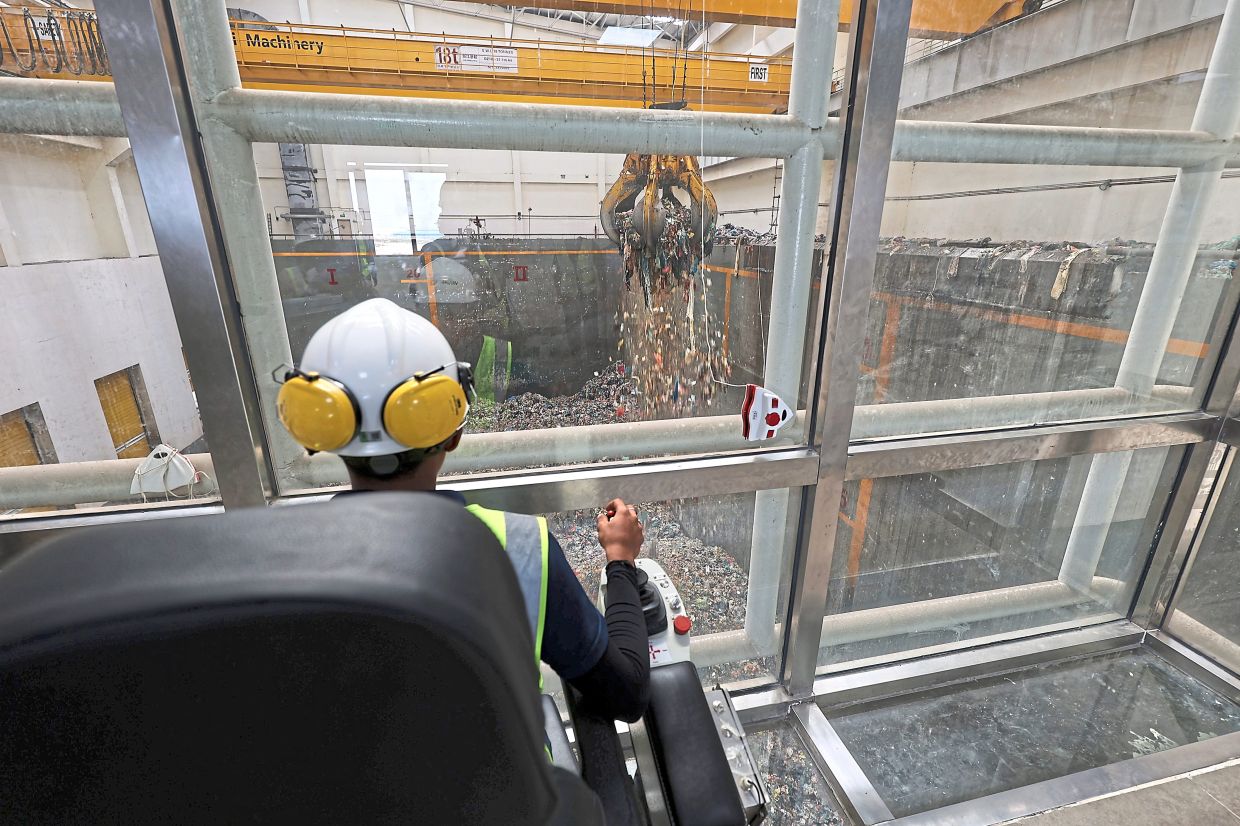
It resembles a claw machine in a game arcade, magnified to industrial scale.
Seated before a clear viewing panel, operators manoeuvre giant steel claws that hover over a sea of household waste, speckled with the familiar single-use plastic bags.
The claws descend into the pit and emerge with a dripping mass of waste. They glide across the bunker and release their load, sending off the waste to be incinerated at 1,000°C and transformed into energy.
At this Waste-to-Energy (WtE) 1 Plant in Jeram, Kuala Selangor, up to 1,700 tonnes of solid waste can be processed each day, with an electricity output of 26MW.
To put that into perspective, a typical compactor truck operating in the state carries 16 tonnes or 18 tonnes of waste, and Selangor produces 7,000 to 8,000 tonnes of domestic waste daily.
WtE 1 serves six local authorities: Shah Alam, Subang Jaya, Petaling Jaya, Klang, Kuala Selangor and Ampang Jaya. Before the facility began operations in May, the everyday garbage was sent to landfills, one of which located just across the road from WtE 1.
As population grows, the amount of waste generated is expected to rise, requiring more landfill sites. This led to a quest for sustainable alternatives for waste management, and increasingly, WtE is being promoted as part of the solution.
By diverting waste from landfills, these facilities can reduce the demand for land, improve hygiene and environmental conditions compared with dumpsites. They can also curb greenhouse gas emissions associated with the release of methane during the decomposition of organic waste.
At the same time, the process unlocks the energy value in municipal waste, transforming waste into electricity through combustion.
The Jeram facility is part of a broader national plan to harness bioenergy from solid waste. There is a plan to develop 18 WtE plants nationwide by 2040, diverting up to 85% of solid waste currently destined for landfills while generating as much as 600MW of electricity.
Malaysia’s first large-scale commercial WtE facility is located at Ladang Tanah Merah, Negri Sembilan. In March, Cypark Resources Bhd announced that it has agreed to undertake the phase 2 development of the WtE plant.
In Sungai Udang, Melaka, a RM660mil WtE plant is expected to be fully operational by 2029. Malakoff Corporation Bhd is the key strategic investor of the project.
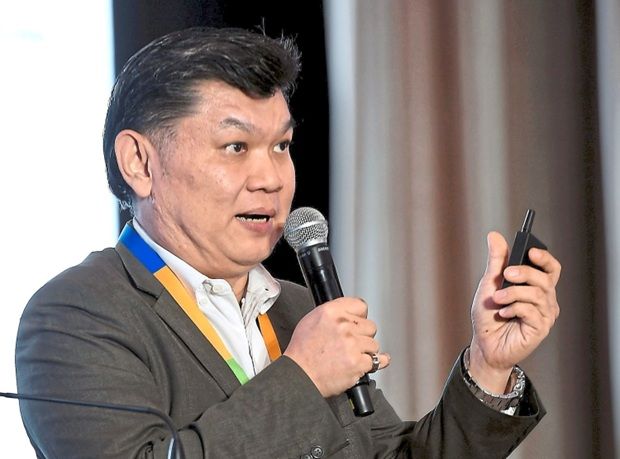
WtE is not a magical solution that will address all waste management challenges in Malaysia, stressed waste management specialist Dr Theng Lee Chong.
“Waste management consists of various components from the stage of waste generation, waste storage, collection, transportation, treatment, recycling and final disposal.
“WtE is just one of many components towards the treatment and disposal end.”
Largest WtE in Malaysia
The first of such facilities in Selangor and the largest in Malaysia to date, WtE 1 is owned by Worldwide Holdings Bhd, a wholly-owned subsidiary of Perbadanan Kemajuan Negeri Selangor.
It was developed in collaboration with Shanghai Electric Power Generation Sdn Bhd.
WtE 2 is currently under development right next to WtE 1 and is expected to complete by the end of the year. Another facility, WtE 3 in Tanjung 12, Kuala Langat, is progressing into the execution phase.
Collectively, these three plants are expected to generate 90MW of electricity while processing up to 5,500 tonnes of waste daily.
Total investment for the three plants is estimated at about RM2bil, according to Selangor Mentri Besar Datuk Seri Amirudin Shari at a ceremony to mark the official commencement of operations of WtE 1 recently.
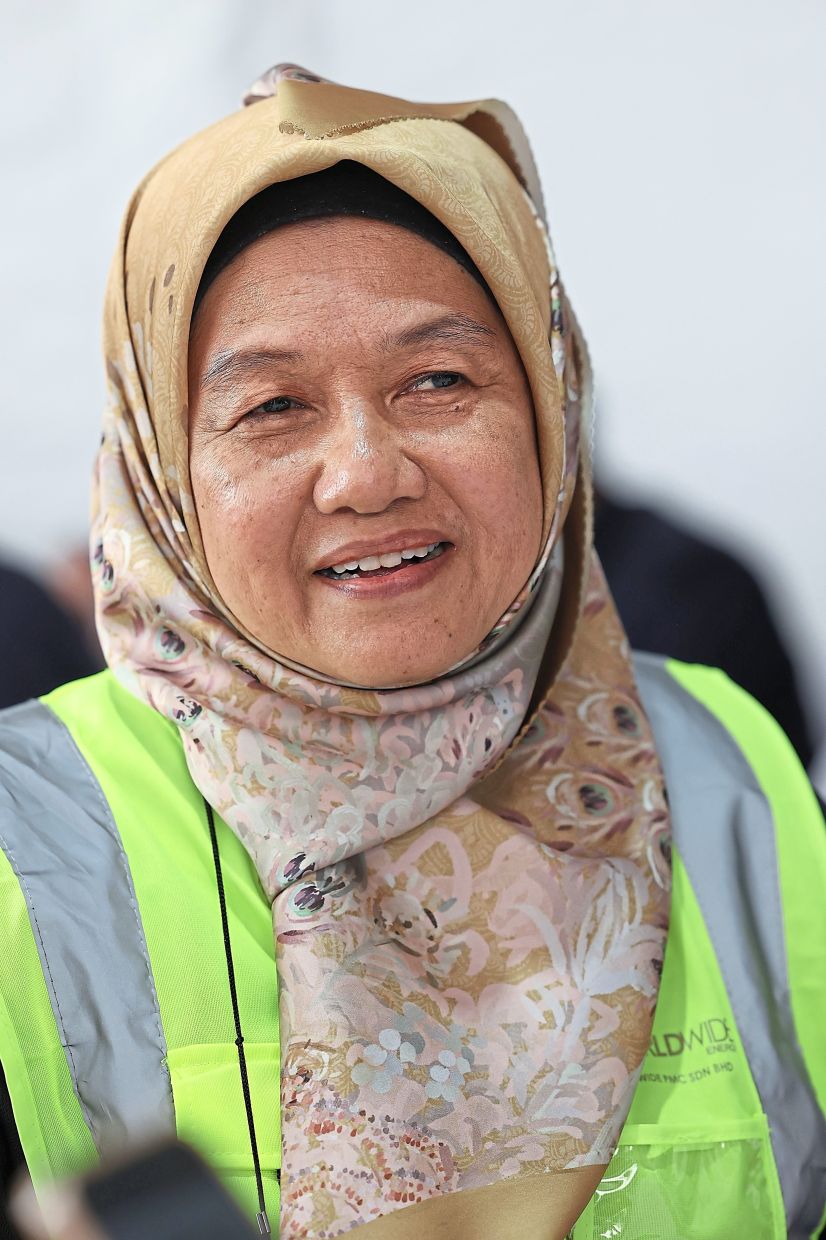
To Worldwide Holdings group chief executive officer Datin Paduka Norazlina Zakaria, WtE 1 represents a significant milestone in a three decades-journey in the state’s waste management solutions, which include sanitary landfills, landfill gas recovery and green-to-green initiatives.
Efforts to explore WtE technology for Selangor date back many years and have spanned the tenures of several chief ministers.
“Both WtE facilities in Jeram and Tanjung 12 require only 60 acres of land while delivering a substantial 5,500 tonne waste treatment capacity for the state over a 30-year concession period,” Norazlina said in her speech.
“This translates into an estimated land saving of 1,500 acres, which would otherwise be required for landfill.”
How WtE works
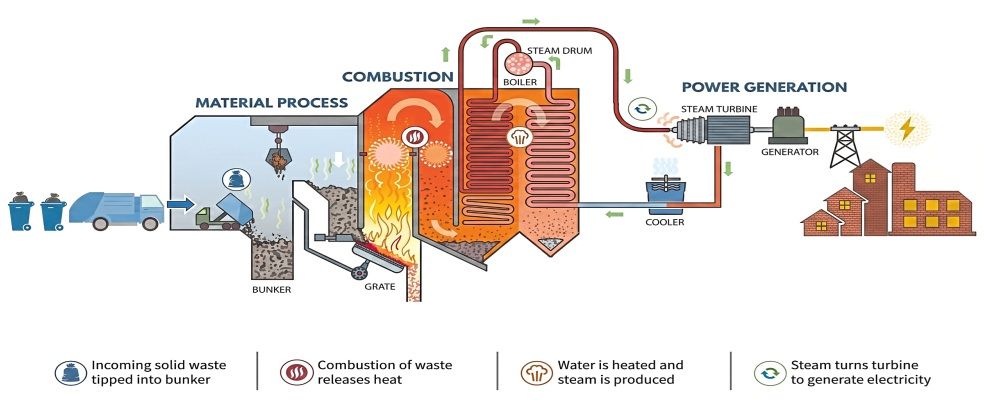
After garbage trucks unload the waste into the bunker at a WtE, it remains there for seven days to dry.
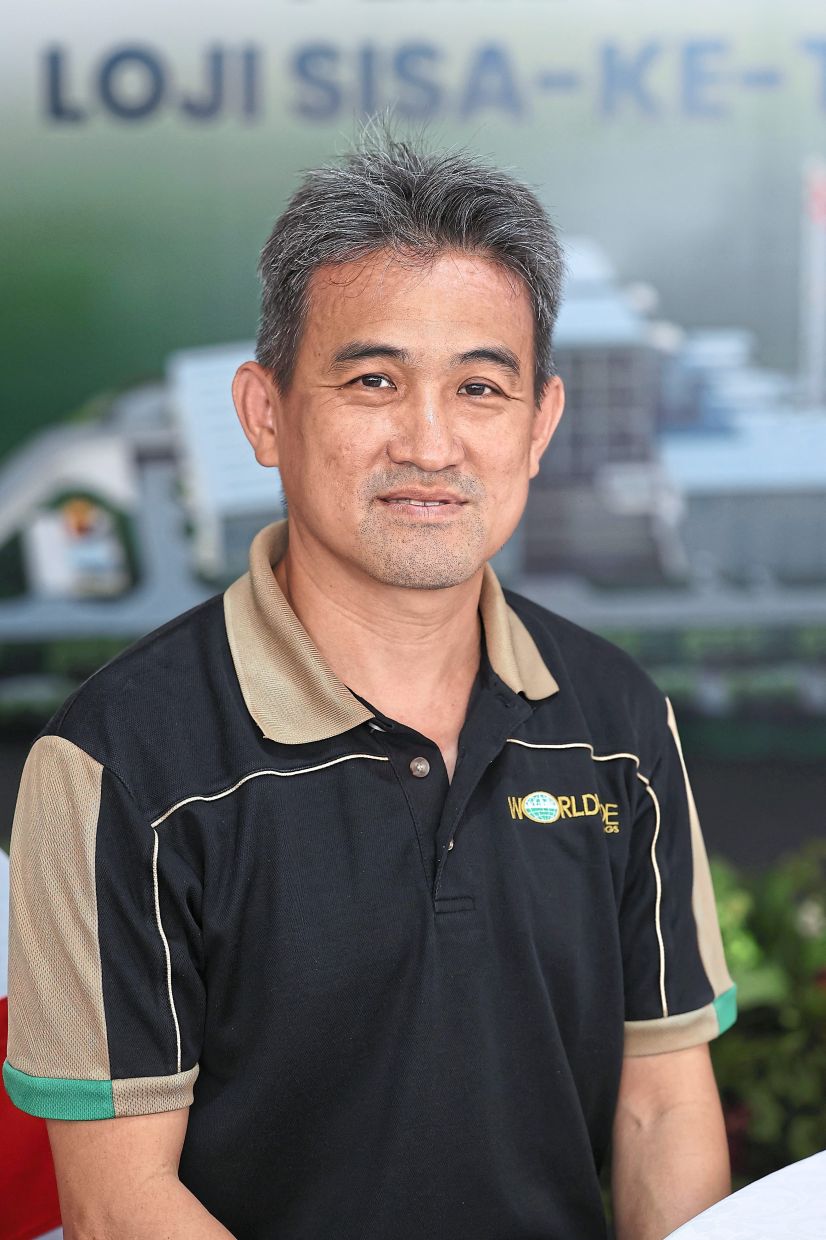
The drier the waste, the higher its calorific value, Worldwide Holdings chief operating officer Danial Liew Jin Sheon explained, referring to the amount of heat released from the combustion.
After that, the waste will be fed into the incinerator, where it is combusted on a grating system.
“We have to maintain the temperature above 850°C to break down all hazardous substances – the infamous ones like furan and dioxin,” he said.
Liew added that the heat generated from the combustion process converts water in the boiler into steam, which drives a turbine to generate electricity.
At the moment, WtE 1 consumes 2MW of the electricity it generates to power its own operations, with the remaining output supplied to the national grid.
The gas produced during the combustion process is treated and filtered before being released into the atmosphere, Liew said.
The process does not end there. There is still recovery of valuable materials to be done. Precious metals and materials that are not combustible are retrieved from the bottom ash.
“We can convert bottom ash into construction materials such as bricks. We can also use the ash as daily cover material at our landfills. At the moment, we have to buy aggregates and soil for this purpose,” Norazlina said.
For WtE operators, revenue typically comes from tipping fees charged for accepting waste from garbage trucks, as well as the sale of electricity generated to the national grid.
Environmental concerns
In a 2019 report, the United Nations Environment Programme (UNEP) noted that harmful air pollutants such as dioxin and furan from WtE facilities can be reduced through modern emission control technologies, resulting in minimal public health impact.
However, it cautioned that mismanaged plants can still produce unsafe emissions, and it is debatable whether WtE contributes to climate change mitigation.
Site selection of WtE also often draws protests from residents. In Batu Arang, Rawang, residents have protested a proposed WtE plant for potential health risks, traffic hazards, environmental impact and impact on property value.
WtE 1 in Jeram is subject to real-time monitoring by Department of Environment (DOE), with operational data transmitted directly from the plant’s control room to the department, according to Worldwide Holdings. Liew said gas emissions are measured at the final stage before release to ensure all parameters are within DOE limits and are safe to discharge.
Theng, the waste management specialist, said criticisms over dioxin and furan emissions from WtE facilities are particularly frustrating.
“No one seems to care about the pollution caused by millions of tonnes of waste buried in the landfills, which pollute soil and water bodies, emit methane, cause dump fires and create other problems.
“All these happened for decades throughout the whole country, but few raise concerns because they are largely out of sight. But when a WtE is planned, there are protests and a sudden focus on emission,” he said.
Theng pointed out that Malaysia has more than 130 landfill sites, but only 15% are sanitary landfills and the rest are open dumps.
There is little difference between illegal dumpsites and legally operated open dumpsites in terms of pollution, he said.
Theng also questioned the inconsistency of opposing the disposal of WtE ash in landfills while remaining largely silent on burying waste, including household hazardous waste like insecticide cans, chemical containers, fluorescent lamps, batteries and more, in landfills.
3R and recovery
UNEP noted that waste prevention and 3R principles – reduce, reuse and recycle – should still be put as the top priorities of waste management.
Worldwide Holdings’ Liew said waste separation at source is beneficial for the operations of a WtE, as non-combustible items, such as camping fuel canisters, take up space and reduce efficiency.
It is impossible to sort mixed waste at a WtE facility, and getting households to separate waste is a policy challenge in itself.
He said WtE facilities complement 3R by adding a fourth R: recovery.
“Our role is to ensure there is a final recovery process. We are helping to complement the circular economy.”
Theng opined that WtE will not affect the national recycling rate, as it is unlikely for people who already practise waste separation and recycling to stop doing so simply because such facilities exist.
It is also improbable for the government to scale back efforts to promote separation at source, although in reality, waste separation at source currently only contributes 0.04% to the overall recycling rate, which he described as insignificant.
Separation at source is not just to recover valuable resources or save disposal costs, but to divert hazardous materials from landfills, he stressed.
Theng said debates over the conflict between recycling and WtE, particularly on whether the government is encouraging recycling or promoting WtE, are valid.
“If recycling is carried out perfectly, whatever is left for WtE will be mainly non-recyclable food waste, and the calorific value of the waste will be extremely low. Imagine it is burning only wet food waste, no plastics.
“However, it is unlikely to achieve such perfect recycling,” he said.
Commenting on this, Norazlina said she believed the amount of waste sent to WtE will not reduce significantly with higher waste segregation and recycling rate, because waste generation rises along with population growth.
“Every year there is a 5% increase in the amount of waste generated, so if the recycling rate increases by 5%, we will still be managing the same amount of waste,” she said.
Collective accountability
To ensure WtE plants truly complement the transition towards a sustainable waste management system, Theng stressed the country must not compromise on the standards of WtE technology.
“Learn from the experiences of other countries and ensure strict monitoring of performance and environmental compliance, as well as enforcement, with the involvement of professional groups, non-governmental organisations and local communities,” he said.
The country should also explore other WtE technologies, such as anaerobic digester or biogas that convert food waste into electricity, he added.
At the same time, Theng cautioned against overselling the function of WtE. The technology, which has existed for more than a century, is fundamentally a waste solution that also generates electricity.
Hailing waste as an important source of energy is misleading, he stressed.
“Defining waste as a valuable resource is akin to encouraging people to generate more waste, or suggesting that producing more waste is not a problem at all.”
He called on the government to be transparent about the financial aspects, including WtE plant construction costs, concession periods, processing costs per-tonne basis, and total payments made over the contract duration.
“It is a reality that WtE is expensive and disposal costs will increase tremendously, both paid by the government.”
Lamenting disappointment with the government’s promotion of the “waste-to-wealth” narrative, Theng stressed that the government should instead instil in the public that waste is a responsibility.
“The government has spent billions of ringgit on waste management every year, and what will the costs be when we have 18 WtE by 2040? Who will bear the costs while the WtE companies are making a profit out of it? This is the reality, but we never heard much about it.”
While shifting from landfills to WtE is a right move as a country develops, Theng said people’s mindset should also evolve in tandem.
“They should not be motivated by ‘wealth’ or money to recycle and manage waste properly. They should see waste management as a responsibility,” he said.
This article, produced by StarESG, is part of a content-sharing initiative of the Asia ESG Positive Impact Consortium (A-EPIC), which includes Star Media Group, Indonesia’s Media Group of Kompas Gramedia and the Philippines’ Inquirer Group of Companies.