Gross domestic product (GDP) is arguably the most important number in the world.
It is a benchmark measure of a country’s economic activity. Simply put, it is calculated by adding household spending, business investment, government purchases and exports, then subtracting imports.
The categories included in GDP are determined by international standards, which are implemented by national statistics agencies.
The figure is highly anticipated each quarter for its link to economic growth and decline, but for years, critics have pointed out that it does not account for societal well-being such as wealth distribution, the natural environment and the quality of services.
Quoting Nobel laureate economist Simon Kuznets, Prof Datuk Dr Ahmad Ibrahim said the GDP is a measure of activity, not well-being.
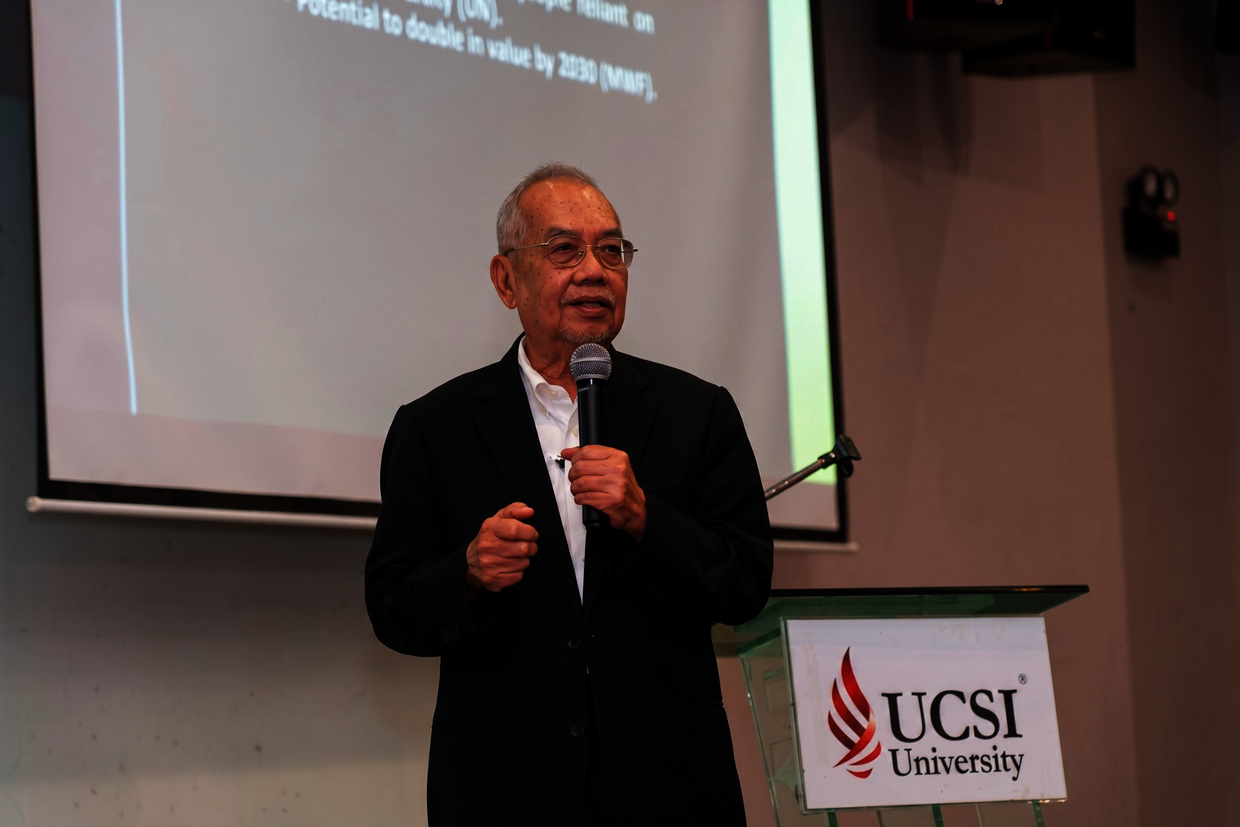
“For decades, we have been conditioned to cheer whenever GDP figures are announced. A 5% growth here, a 4.5% expansion there – the headlines trumpet progress, and policymakers pat themselves on the back.
“But ask any Malaysian if they feel that prosperity. The answer is often a resigned sigh about the rising cost of living, the potholes that seldom get fixed fast,” the academic from UCSI University’s Tan Sri Omar Centre for STI Policy said.
He added: “It counts the cost of rebuilding after a flood as economic gain. It celebrates the sale of bottled water while ignoring the polluted rivers that made it necessary.”
Beyond GDP
In May, the United Nations (UN) unveiled the first global blueprint for measuring progress beyond GDP. It consists of a dashboard of 31 indicators grouped under four categories: foundational principles, current well-being, equity and inclusion, and sustainability and resilience.
Recognising that key dimensions of progress sit outside GDP and that progress should be measured by the well-being of people and planet, the report defines progress as equitable, inclusive and sustainable well-being, grounded in peace, human rights and respect for the planet.
The UN report “Counting What Counts: The Urgent Need for a New Compass” does not call for the world to abandon GDP. Rather, it “asks something more ambitious: to look at the full picture, and to act accordingly.”
Prof Yeah Kim Leng, economics professor and director of the Economic Studies Programme at Sunway University’s Jeffrey Cheah Institute on South-East Asia, described this long-awaited global initiative as timely and essential, which offers a broader, more accurate lens through which to measure development progress.
Although GDP has long served as a useful proxy for human well-being, he said, its overemphasis on wealth and income has overshadowed other critical dimensions of sustainable, resilient, equitable and inclusive development.
“These Beyond GDP metrics without doubt are far superior to GDP as a measure of a nation’s wealth and well-being.”
Environmental indicators
A closer look at Beyond GDP’s Sustainability and Resilience category shows an effort to link present outcomes to future well-being by measuring produced, human, social, institutional and natural capital.
One of the indicators under this category is environmental assets (land, water, soil and subsoil resources, etc.), building on the System of Environmental Economic Accounting and complemented by ecosystem accounting approaches that capture ecosystems as integrated assets.
The Current Well-Being category focuses on people’s lived experiences such as health, education and environmental quality.
An indicator is the annual mean levels of fine particulate matter in cities.
On integrating environment metrics into the national accounting system, Prof Yeah said doing so captures both the benefits and costs of using the environmental assets and services, providing a more accurate and realistic picture of the production system and its sustainability.
“By accounting for environmental costs and benefits in producing the final products and services, it will help to reduce the impact of human activities on the environment, ensuring that its quality is not sacrificed for profits, leading to sustainable growth,” he elaborated.
Measure progress
A key limitation, Prof Yeah noted from the report, is the ability of the statistical agencies to produce annual series rather than a single year for some of the new indicators.
However, given that more than half of the proposed indicators can be derived from existing national statistical surveys, including new surveys initiated to support reporting on national achievements of the UN 2030 Sustainable Development Goals (SDGs), the Beyond GDP metric will not be financially burdensome for most governments.

In Malaysia’s case, Prof Yeah said the Department of Statistics Malaysia (DOSM), which has been voted as one the world’s top national statistical agencies, is equipped to expand its SDG Dashboard to Beyond GDP dashboard.
“It however will have to increase manpower and funding resources to carry out more surveys on an annual basis. It will also have to engage with experts and stakeholders, especially those indicators that are qualitative and more challenging to define and measure such as human rights and inclusivity.”
Prof Ahmad, who is also an adjunct professor at Universiti Malaya’s Ungku Aziz Centre for Development Studies, concurred that Malaysia does not need to start from scratch as DOSM already compiles the Malaysian Well-being Index.
Drawing on other alternative data sources, he observed: “For all our grumbling, Malaysians are remarkably happy. The Malaysia Happiness Index tells us that. It suggests that beyond the economic statistics, there is a deep reservoir of social cohesion, family bonds and cultural resilience that money cannot buy.”
He added that Malaysia Human Development Index stands at a solid 0.826, and the government has set a bold target of breaking into the top 25 globally within the next decade. The Social Progress Index has also risen for 10 consecutive years.
“Even on the SDGs, we are projected to achieve 49% of our targets by 2030 – a rate that far outpaces the global average of 18%.”
However, Prof Ahmad cautioned that environmental management is Malaysia’s Achilles’ heel.
“Malaysia ranks a dismal low in the 2024 Environmental Performance Index, scoring a paltry 41.0. Our Biodiversity and Habitat ranking is even worse globally.
“This is the classic ‘Beyond GDP’ failure: we are liquidating our natural capital and calling it income.”
He also pointed out several other weaknesses: governance deficit, inequality and disparities between developed and underdeveloped states, as well as women’s low political empowerment score of just 0.079 on the Global Gender Gap Index, despite a near-parity in educational attainment.
GDP will still be relevant
So, how would Malaysia score under a Beyond GDP framework?
“The honest answer is: moderate. We would pass on the human spirit, but fail on the human habitat,” Prof Ahmad opined.
“We are a nation that has figured out how to make its people smile, but has not yet figured out how to keep its rivers clean, its institutions honest, or its opportunities equal,” he said, adding that chasing GDP growth while ignoring the social and environmental externalities is a road to ruin.
He stressed that the Beyond GDP framework will be just a shelf project if it is not embedded in the national budget, or used to hold leaders accountable and give citizens a real voice.
“The Madani vision speaks of a civil society. A civil society deserves a civil scorecard. It is time we measure what truly matters, because while GDP tells us how fast we are running, Beyond GDP tells us whether we are running in the right direction,” he said.
In Prof Yeah’s view, GDP will continue to be used as it is intended – a measure of the total value of goods and services produced in the economy for the prescribed period.
“GDP will continue to be relevant, but its use as a proxy for various social, institutional and environmental indicators will become less as better measures will emerge with increasing adoption of the Beyond GDP framework and dashboard.”