
Air pollution is no longer a seasonal issue; rather, daily exposure is experienced by millions of children in Indonesia. The pollution that children are exposed to does not come from a single source, but rather is an accumulation of various environmental factors occurring simultaneously. In fact, children inhale air two to three times more than adults.
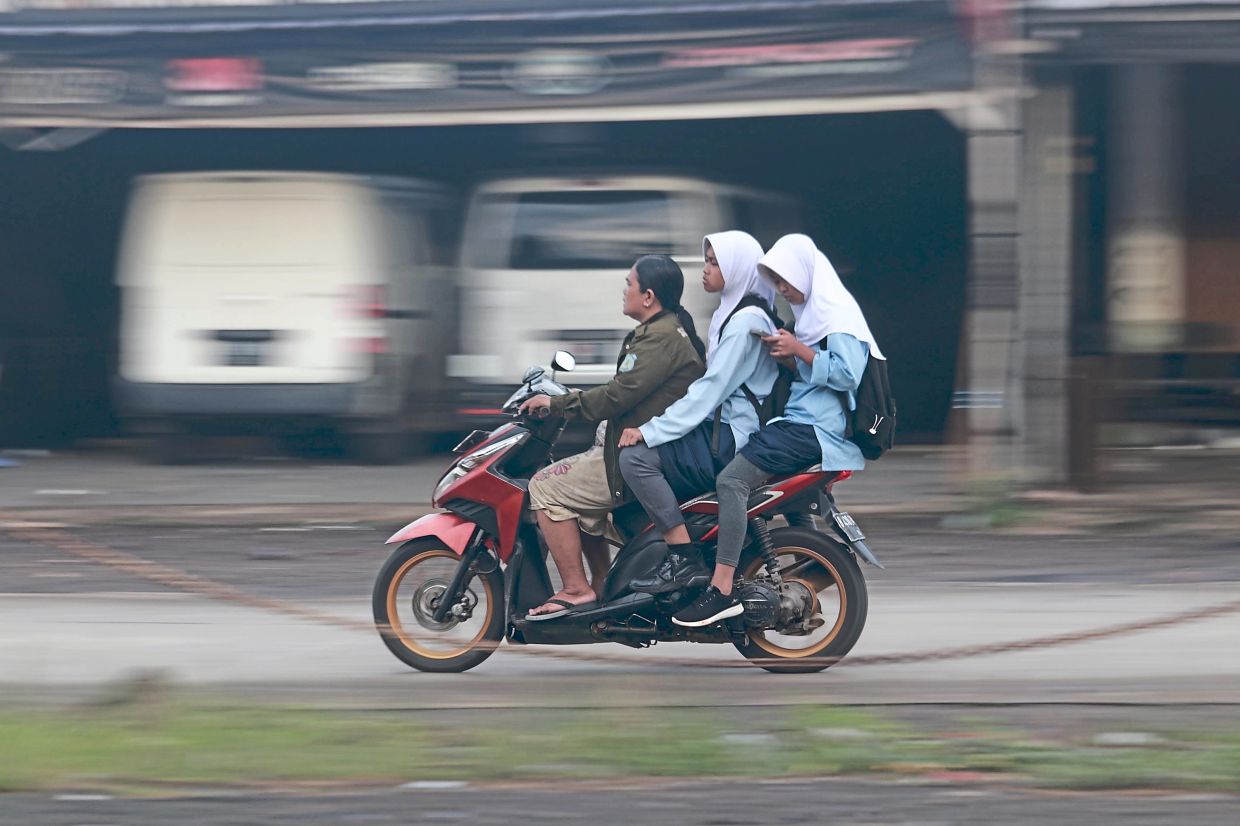
Every morning, millions of children head to their classrooms with backpacks on their backs, inhaling air that may not be safe.
On the roads, they breathe in vehicle emissions. Around residential areas, they are exposed to smoke from burning waste. And inside their homes, they face risks from cigarette smoke, stoves and poor ventilation.
Various types of pollutants are often found in the environment, including nitrogen oxides, sulfur dioxide, ground-level ozone, carbon monoxide, polycyclic aromatic hydrocarbons (PAHs), volatile organic compounds (VOCs) and particulate matter (PM2.5 and PM10).
PM2.5 is the greatest concern because of its very small size, allowing it to penetrate deep into the respiratory tract and trigger chronic inflammation processes.
The exposures accumulate into a burden that continuously enters the lungs of children every day. For adults, polluted air may only cause a feeling of tightness or a scratchy throat. For children, the impacts are far greater.
“The higher the level of air pollution they breathe, the greater the decline in lung function. This means that the impacts of pollution are not always immediately visible, but gradually harm children’s health,” said Cynthia Centauri, a pediatrician specialising in pediatric respirology from the University of Indonesia in Jakarta, in early July.
The member of the Respiratory Coordination Work Unit at the Indonesian Pediatrician Association (IDAI) emphasised that this condition endangers children because their respiratory organs are still in the growth stage, their immune systems are not fully developed and their breathing rate is faster compared to adults. As a result, more pollutant particles enter their bodies in the same amount of time.
According to IQAir data from 2025, Indonesia ranks among the 17 countries with the worst air quality in the world, while Jakarta and South Tangerang have repeatedly recorded very high levels of air pollution.
In urban environments, children have almost no space to truly avoid exposure.
The journey to school, outdoor play activities and the time spent indoors all carry the potential for exposure.
Even when the outdoor air quality improves, the threat may not necessarily disappear if the indoor air is filled with cigarette smoke, burning mosquito repellent or inadequate ventilation.
Recurrent infections
Cynthia once treated a three-year-old child suffering from recurrent respiratory infections that required hospitalisation due to bronchopneumonia. After a more thorough examination, the cause was not solely an infection, but rather an accumulation of various sources of pollution in the child’s living environment.
The child had recently moved into a house near a main road, next to a house still under renovation. The situation was exacerbated by the burning of trash in the neighbourhood, and he also lived with his father, who had begun using e-cigarettes (vapes).
“I always tell my patients it is pointless to undergo expensive treatments and be given asthma medication if the triggers are still present. As long as they are still exposed to cigarette smoke, the illness will never truly be resolved,” she stated.
Air pollution exposure, Cynthia continued, does not only attack the respiratory system; its effects are systemic, affecting individuals from fetuses in the womb to adults.
Pollution can increase the risk of premature birth or low birth weight; disrupt lung development; trigger oxidative stress; alter the immune system; and raise the risk of heart disease, neurological disorders, cancer and even blood clotting disorders.
In its 2024 research on school children in areas with the highest pollution levels in Jakarta, it was found that 13.3% of children who appeared healthy had experienced a decline in lung function based on spirometry tests.
Moreover, the higher the PM2.5 levels in the environment, the worse the lung function observed in those children.
“This indicates that lung function disturbances can already be found even in children who appear healthy. They continue to attend school, play and do not complain of shortness of breath, but examinations show that their lung function has already declined,” said Cynthia.
To that end, IDAI’s central management chairman Piprim Basarah Yanuarso invites the public to increase awareness of controllable sources of pollution. Several simple yet important steps include not burning waste, refraining from smoking or using vape in the presence of children, and avoiding taking children to renovation sites.
In addition, parents should have their children over the age of three wear masks when air quality is poor, and monitor the air quality index through the official application of the Ministry of Environment.
It would be even better to use air filters, increase proper ventilation, and plant trees and green plants around the house.
“Children are not yet capable of protecting themselves. For this reason, they must be protected by parents, teachers, healthcare workers and the entire environment around them so that they can grow and develop according to their best potential,” said Piprim.
This article originally appeared in Kompas and is republished through a content-sharing initiative of the Asia ESG Positive Impact Consortium (A-EPIC), which includes Star Media Group, Indonesia’s Media Group of Kompas Gramedia and the Philippines’ Inquirer Group of Companies.