What would nasi lemak look like, if reimagined as a food of the future?
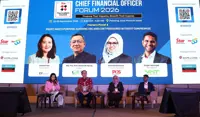
This was the question posed to the panellists during a session on “Potluck! What do you bring to the table?” during Green Denmark Day.
“I still want my nasi lemak to taste like nasi lemak, so I am not sure about putting crickets into the dish,” said Novonesis head of sales South-East Asia diary Too Ji Hoong, alluding to the trend of eating bugs as a sustainable protein source.
She predicted pathogen control to be applied on the undisputed national dish.
“In Europe, the shelf life of packaged salad has been extended from four days to 14 with the use of biosolutions.
“Good bacteria are sprayed on the salad to fight the bad bacteria, so maybe the cucumber – and the rice with coconut milk that is the first one to go bad – can last a bit longer,” she elaborated.
Food Lab head of DTU Skylab Roberto Flore opined that gastronomic trends might not necessarily change the product’s structure, but focusing more on the quality of the ingredients.
“Maybe the ingredients come from regenerative farming, like animals that have been raised with a specific standard of animal welfare,” he said.
The session, moderated by UNDP Malaysia head of SDG impact, finance and innovation Chong Yin Wei, focused on future-proofing food through improving food security and turning waste into value.
Carlsberg Malaysia corporate affairs and sustainability director Pearl Lai shared that spent grain from the beer brewing process is used as animal feed, while spent yeast is utilised to cultivate soldier fly larvae.
“While not a breakthrough in science or innovation, – it is unique in this part of the world because we are operating in the tropical climate. Managing this byproduct waste has to be done in a very disciplined, timely manner in order to avoid unpleasant surprises,” she said.
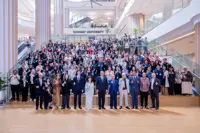
Green Denmark Day, held last month in Kuala Lumpur, spotlighted green transition as a must-win battle of our lifetime.
Zooming in on three interconnected areas of green transition, healthy urban living and future-proofing food, the event featured six sessions that aimed to address challenges such as stable and sustainable energy supply for data centres, the optimal cycle for waste management, and the impacts of urbanisation and climate change for public health.
Danish Ambassador to Malaysia Kirstine Vangkilde Berner said Denmark brings decades of experience in turning climate ambition into policies, technologies and business solutions, while Malaysia brings ambition, scale, industrial strength and enormous potential to drive green growth across South-East Asia.
“The opportunity is not simply to transfer solutions, but to combine our strengths and build solutions around real needs,” she said.
Malaysian Investment Development Authority (Mida) chairman and senior political advisor to the prime minister Tengku Datuk Seri Zafrul Aziz, in his speech, highlighted that roughly 40% of Danish exports to Malaysia are linked to food and agriculture.
“The opportunity now is to deepen it, through biosolutions, feed optimisation and advanced food-processing technology that let us produce more with less,” he said.
He added that between 2008 and March 2026, Malaysia recorded 11 approved Danish green investment projects worth around RM23mil, with seven projects worth approximately RM16.9mil realised.