ON A TYPICAL bidding day in Malaybalay City, anyone with internet access can watch the entire procurement process unfold live on the local government’s Facebook page.
For Malaybalay City Mayor Jay Warren Pabillaran, livestreaming government processes was not a trend to follow but a principle to establish – it was his very first administrative order, his opening move toward transparency and accountability.
It’s a practice that his administration consistently maintains, utilising radio and social media channels to openly report on the progress of public projects and to
educate citizens on how good governance works.
The numbers already show results. In 2025, the city saved over 361mil Philippine pesos through procurement reforms, according to Malaybalay City councillor Jason Chad Ayala. Those savings were redirected toward expanded programmes, which include antivenom serum available 24/7, mobile health clinics, housing for families in disaster zones and scholarships for over 400 students annually.
Through sustained local revenue generation as well as support from the national government, the city’s income steadily grew from 2.1bil Philippine pesos to 2.7bil Philippine pesos. These figures, as well as other notable achievements, are published in detailed annual reports on the Malaybalay City website. The reports are also easily accessible and downloadable.
Pabillaran, a lawyer by profession, did not plan for public service. After passing the bar, his intention was private practice, possibly in Cebu – but the 2007 barangay elections changed that.
Watching the campaign and election process unfold, he asked himself: “We loudly criticise the government, but we are not really engaged with our own society.” He ran for barangay kagawad without telling his parents, going house to house asking for votes and won.
Procurement reforms
By 2010 and 2013, Pabillaran was the city’s top councillor. He became vice mayor in 2019 and mayor in both 2022 and 2025.
As a councillor, Pabillaran observed recurring patterns of corruption in public projects. When he became mayor, he moved to dismantle them through legal infrastructure.
According to Malaybalay City Legal Office attorney Alfredo Cape Jr., Pabillaran’s Facebook Live requirement
for public bidding was already in place before the enactment of Republic Act No. 12009, the New Government Procurement Act, making Malaybalay ahead of the curve. The city also invested in professional training and certification for its Legal Office under the Government Procurement Policy Board.
Cape also says the mayor’s staff rotation policy in the procurement office “helps maintain unfamiliarity and the unbiased treatment of suppliers. The suppliers themselves are more transparent and disciplined.”
Mandatory cleanups
Pabillaran also pushed for better environmental management. City Environment and Natural Resources Office head Jessie Suson recalls the immediate challenges when he took office.
“There was a lack of garbage compactors; only two to three were functional, so we purchased nine so that waste collection would be done according to schedule,” she says. The goal: instil discipline among residents to segregate waste and adhere to collection schedules.
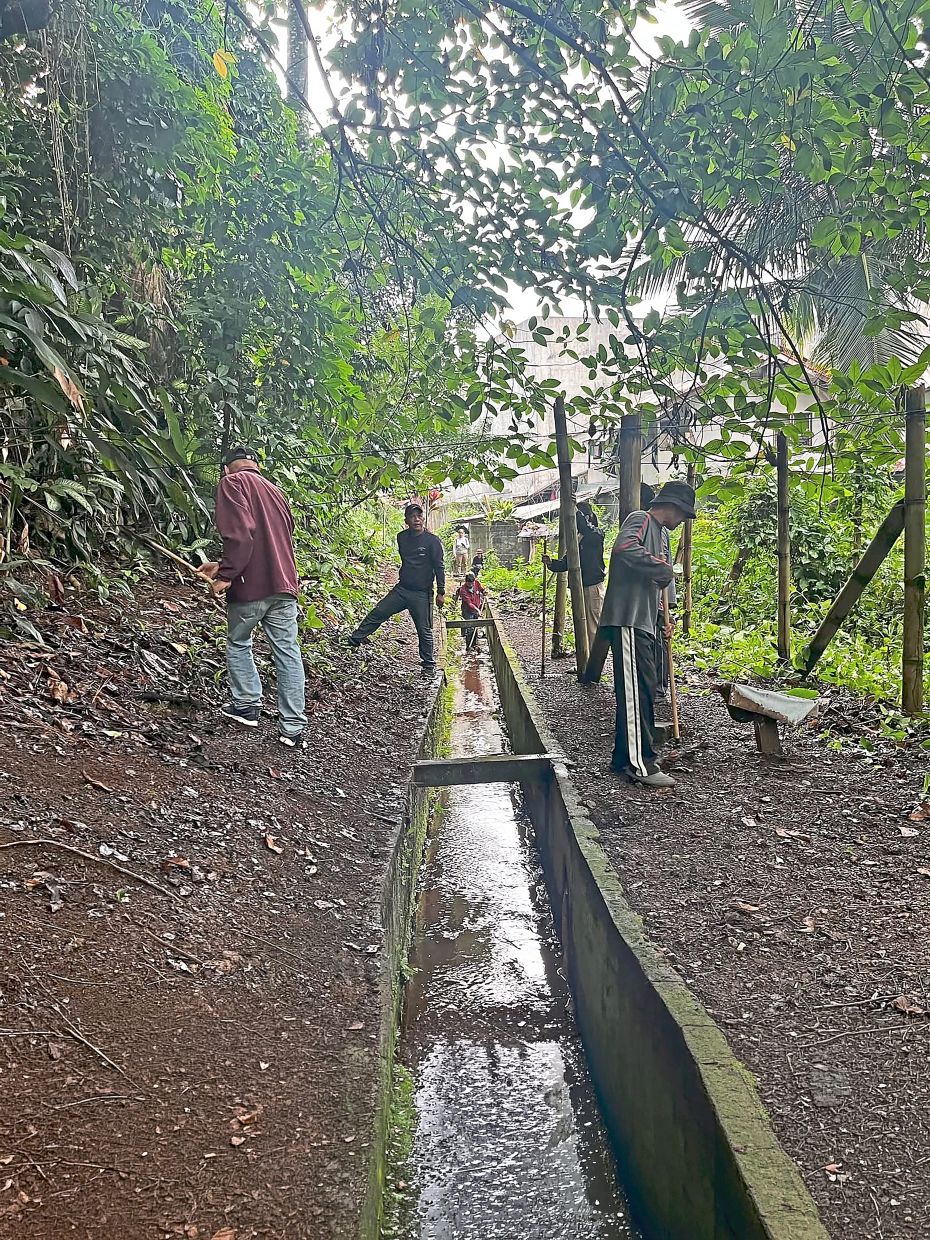
As a civilian, Pabillaran had led weekly volunteer cleanup drives. Once in office, he made these mandatory for all barangays. What sets Malaybalay apart is the frequency of assessments – while most cities evaluate barangay cleanliness quarterly, Malaybalay does it weekly.
Last month, in an update on Pabillaran’s official Facebook page, the city announced the Environment and Natural Resources Department’s (DENR) issuance of the Environmental Compliance Certificate for the construction of a level-three water system in Barangay Imbayao. The target is to have a water reservoir that can hold up to 2,400 cubic meters, which will give 12,000 households better access to running water.
Creek restoration efforts organise households along waterways for monthly cleanups. Tree planting shifted from annual token gestures to regular activities conducted with nongovernment organisations, sociocivic groups and the military. Even the city’s full-time firefighters participate in tree-planting during the rainy season.
The City Agriculture Office’s 2025 programme reflects the same long-term thinking. A 26mil Philippine peso hybrid corn programme has reached 5,252 farmers across 38 barangays, complemented by 9.45mil Philippine peso in fertiliser support. A vegetable seed distribution programme has benefited 24,230 households citywide.
A groundbreaking soil conservation programme provides sustainable land management technology to farmer-cooperators in hilly areas, while a 1mil Philippine peso Cempedak Fruit Production Project supports farmers in Barangay Miglamin.
In August, the Malaybalay City Fishermen’s Association received various fishing and aquaculture tools and equipment from the Fisheries and Aquatic Resources Bureau (BFAR) Provincial Office to help them increase fish production.
These agricultural programmes demonstrate a commitment to modernising industry practices, promoting environmental sustainability and enhancing food security.
Different reputation
Pabillaran does not claim to have solved the challenge of sustainability. With the Malaybalay Good Governance Movement, he is working to educate citizens about their rights by inviting thought leaders to speak and encouraging residents to question how public funds are spent.
“We are a democratic country, but we don’t know the process,” he says.
Pabillaran is happy to note that he is beginning to see small shifts – more
citizens asking about budget allocations and more interest in project timelines.
Malaybalay City, known for its cool weather and agricultural roots, is building a different kind of reputation: one of transparent governance and environmental accountability. Whether that reputation outlasts one mayor’s term depends not on the man but on whether the
people decide to demand nothing less.