
WHO among us hasn’t turned an empty plastic bottle or an upturned bucket into an impromptu percussion instrument?
One band is taking this playful creativity to the next level, transforming upcycled materials into performance-ready instruments.
The Reuz Band makes music with instruments crafted from discarded and recycled materials, including rubbish bins, PVC pipes, tin cans and plastic bottles.
A brainchild of the Solid Waste and Public Cleansing Management Corporation (SWCorp), the 10-member band comprises staff from various departments of the organisation selected through audition.
The band’s name is a nod to the concept of “reuse”, one of the 5R principles – refuse, reduce, reuse, recycle and recover – which form the core philosophy of the organisation.
“The unique spelling was chosen to create a more distinctive, modern and memorable identity, in line with its creative and innovative image,” the company said.
The band hopes to become a champion for environmental awareness by making sustainability more accessible to the public through a relaxed, engaging and relatable approach.
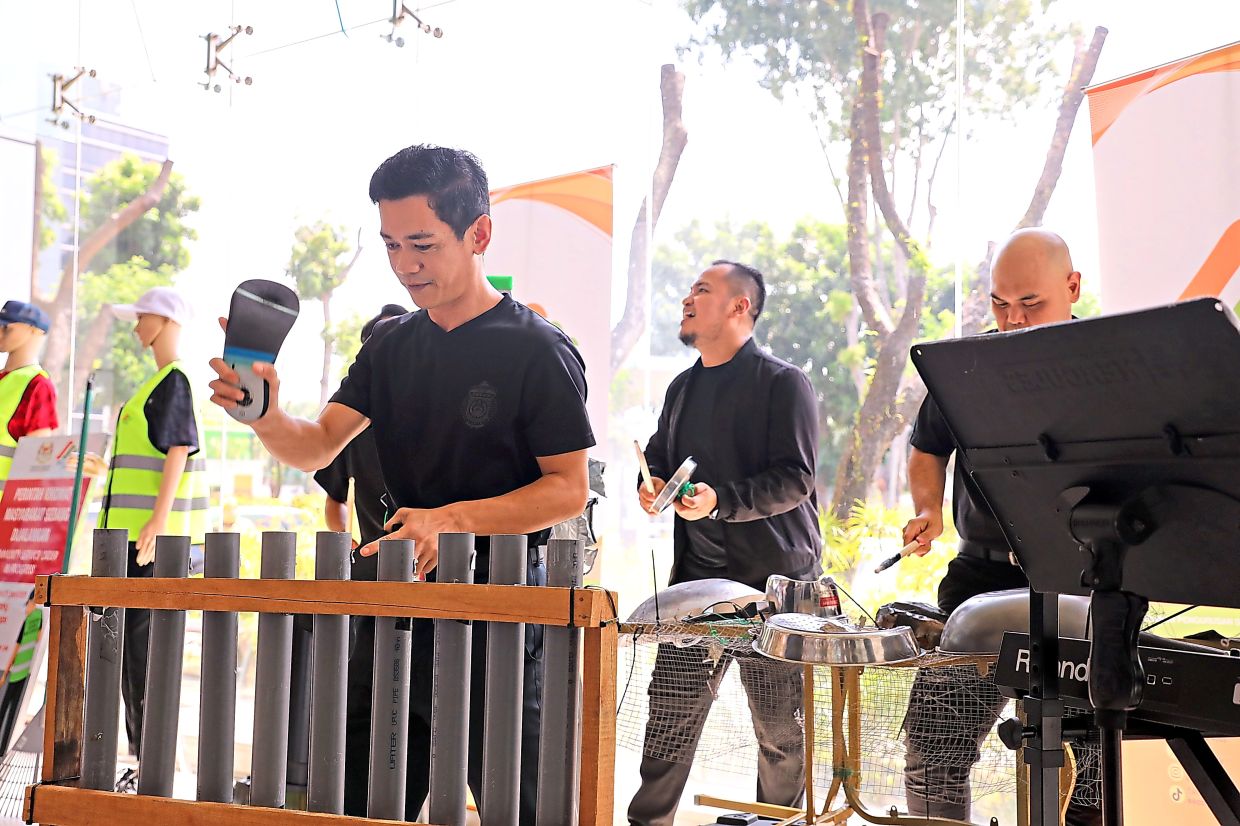
“Music is a universal language that can convey messages creatively in a way that is relatable and easy to understand for people from all walks of life, regardless of age, background or culture.
“For Reuz Band, music is not just a form of entertainment, but also a platform to educate, inspire and shape a society that is more conscious of the environment,” it said.
Beyond that, the band seeks to demonstrate that discarded items and materials commonly viewed as worthless can be repurposed and transformed into creative expressions with renewed value.
On audience reception, SWCorp said the response has been overwhelmingly positive, with many expressing surprise and admiration upon discovering that Reuz Band’s instruments are made from recyclable items.
The uniqueness of these instruments has become a key attraction at the band’s performances, sparking curiosity among audiences, particularly children and young people, it said.
Behind these instruments is a careful selection process, with each material chosen based on its shape, durability and sound-producing capabilities.
Each material has unique sound characteristics and is selected based on the musical function it is intended to produce.
Plastic rubbish bins can be repurposed as percussion instruments, creating beats similar to drums. PVC pipes create different tones based on their length and diameter, while old slippers can be used to produce rhythmic sound effects when tapped or combined with other materials.
SWCorp said the most challenging aspect of creating the instruments is achieving precise pitch, particularly for those made from PVC pipes.
“Unlike percussion instruments such as rubbish bins or plastic containers that focus on rhythm, PVC pipe-based instruments require precise measurement and shaping to ensure each pipe produces the correct notes and creates balanced harmony when played in a performance.
“Even a slight measurement error can cause the sound to be out of tune with other instruments.”
After the instruments are created, they undergo a tuning process, much like conventional instruments, to ensure they perform well together.
The band has brought its innovative instruments to life through cover performances of Zainal Abidin’s Hijau and Faizal Tahir’s Santai and Ragaman.
SWCorp noted that the musical arrangement process is not very different from that of conventional instruments.
However, the main challenge lies in understanding the sound characteristics of each instrument made from repurposed materials and adapting them to the musical arrangement being performed.
“Before performing a song, the band members first identify the original chords and structure of the piece. Each recycled instrument is then tested to determine the range of sounds and notes it can produce.
“Based on the instrument’s capabilities, the musical arrangement is adjusted while preserving the original identity.”