WE are in the 2026 World Cup fever, and the temperature is rising as countries fight to advance further in the tournament.
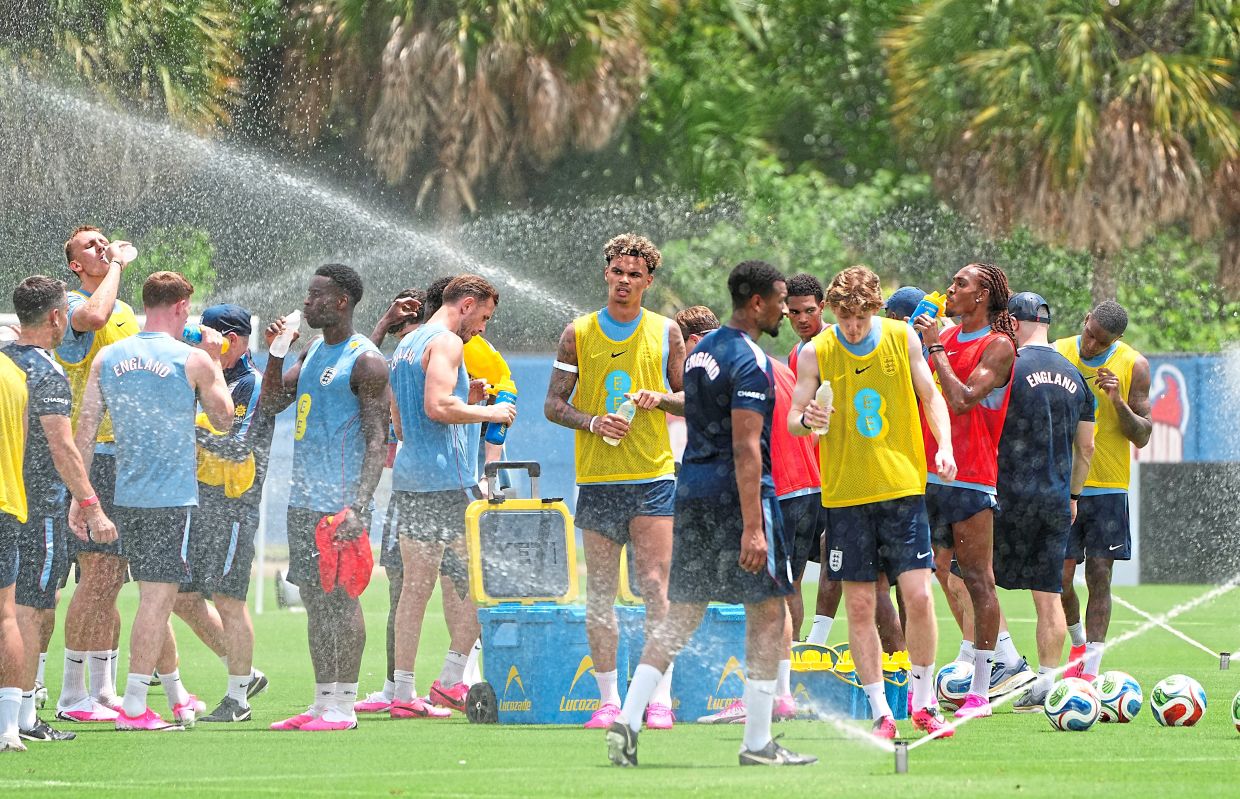
Quite literally, with sweltering temperatures across host cities in the United States, Canada and Mexico, three-minute hydration breaks have been introduced by FIFA, acknowledging the dangers of competing in extreme heat.
However, this intersection of extreme weather and tournament management highlights a deeper corporate sustainability challenge.
When broken down through the lens of ESG criteria, the 2026 tournament is an apt case study of tensions among commercial expansion, operational governance and climate reality.
Commercial interests versus regulation
Diving into the governance pillar, the initial response to rising temperatures has exposed significant governance friction between athletic necessity and commercial broadcasting.
Hydration breaks have become a point of contention, with critics arguing that they provide broadcasters with additional opportunities to air commercials.
Since the tournament began on June 11, fans watching on television have taken to social media to express frustration over missing live action while advertisements continued to air after matches resumed.
Uruguay coach Marcelo Bielsa was quoted by Reuters as saying that the breaks add nothing to football while weakening the sport’s cultural essence, in a report carried by The Star.
Nevertheless, the effects of rising global temperatures, driven by years of cumulative carbon emissions, are already being felt around the world.
Heat regulation frameworks
Matches have long included breaks to account for extreme heat and adverse weather conditions.
In previous tournaments, hydration breaks were implemented at the referee’s discretion when the wet-bulb globe temperature (WBGT) – a measure that takes into account heat, humidity, wind speed and cloud cover – reached certain thresholds.
FIFPRO, the international players’ union, recommends that hydration breaks be introduced when the WBGT exceeds 26°C, while matches should be delayed or rescheduled if temperature levels rise above 28°C.
Reports from the World Weather Attribution (WWA) indicate that 26 matches at the 2026 World Cup are likely to be played in conditions where the WBGT reaches or exceeds 26°C.
Adding to these concerns, a study published in the International Journal of Biometeorology found that 14 of the 2026 World Cup’s 16 host cities are expected to experience average WBGT levels above 28°C.
The United States National Weather Service has also warned that temperatures during the tournament could exceed historical averages.
Occupational health and human capital
Under the social pillar, heat stress represents a direct physical risk to human capital as it affects the elite players as well as the entire workforce who tirelessly execute the event.
As such, the heat stress can have a direct impact on both player safety and performance, Tunku Abdul Rahman University of Management and Technology Faculty of Applied Sciences deputy dean Prof Dr Ler Hui Yin pointed out.

“From a physiological perspective, football players generate substantial metabolic heat during match play.
“In hot environments, this internal heat combines with environmental heat, causing core temperature to rise rapidly.
“Once core temperature is high, around 39°C to 40°C, during competitive matches, repeated sprint ability, high-intensity running performance, decision-making and technical execution begin to deteriorate,” said Prof Ler, who is a member of the university’s Sports and Exercise Science Research Centre.
As temperatures rise, players are often forced to adapt their gameplay to manage the added strain on their bodies.
Universiti Putra Malaysia Faculty of Medicine and Health Sciences Community Nutrition Unit head Assoc Prof Dr Hazizi Abu Saad said studies have suggested that athletes respond to extreme heat by reducing the intensity of play.

They do so by limiting the distance covered and decreasing the amount of high-intensity movement during matches.
“If a match is in a hot environment, breaks and close observation of players’ condition are important to minimise risk for players so, the mandatory hydration breaks are a meaningful step in the right direction.
“The benefits of the break are compounded when active cooling strategies, such as using cold towels, misting fans or ingesting cold fluids, are applied during the break,” said Assoc Prof Hazizi.
Beyond affecting performance, athletes competing in extreme heat face an increased risk of dehydration from excessive sweating, cardiovascular strain, heat exhaustion and other heat-related illnesses, including exertional heat illness, exertional heat stroke and hyponatremia (a condition caused by low sodium levels).
Prof Ler said the breaks help players replace fluid losses, reduce cardiovascular strain and lower perceived exertion.
“However, if environmental heat stress remains extreme, players may still reach dangerous core temperature levels.”
The wider workforce at risk
Pointing out that social risk extends beyond the players of the pitch, Prof Ler highlighted that referees may actually be at greater risk than players in some cases.
“This is because they have fewer opportunities for substitutions, pacing adjustments or tactical rest periods. Referees often cover 10km to 13km during a match and experience significant cardiovascular and thermoregulatory (body temperature regulation) strain.”
She added that medical teams and stadium staff can be exposed to high temperatures for extended periods, often longer than the players themselves.
Unlike elite athletes, they may also be less acclimatised to the heat, which could place them at higher risk.
The climate cost of glory
While football grapples with rising temperatures and increasingly unpredictable weather, the game’s biggest event is generating emissions that add to the very challenge it must now overcome. The irony is difficult to ignore.
This World Cup edition kicked off with 48 teams, instead of the usual 32. While the expanded format promises more matches and doubles the excitement, it also brings a larger environmental burden.
The tournament is projected to generate around nine million tonnes of carbon dioxide equivalent (tCO2e), a significant increase from the approximately 3.8 million tCO2e recorded in the 2022 edition of the competition.
The projected increase is largely driven by the demand for long-haul flights throughout the tournament. With venues separated by vast distances, air travel is expected to become the primary mode of transport between matches, significantly increasing emissions as teams, match officials and fans move across North America.
Some teams are set to travel over 12,000 km from the start of the tournament to the finals. With the expanded format, the scale of carbon emissions cannot be ignored.
Air travel alone is expected to account for approximately 7.7 million tonnes of the total carbon budget. The dominance of air travel in the tournament is especially concerning because aviation remains one of the hardest sectors to decarbonise.
Universiti Kebangsaan Malaysia’s Institute of Climate Change research fellow Dr Maggie Ooi Chel Gee explained that decarbonising the industry is complex because long-distance travel requires energy sources that meet strict safety, reliability and efficiency requirements.
“Current alternative fuel sources have unique limitations that restrict widespread adoption. While some countries now mandate sustainable aviation fuel (SAF) blends, global supply remains low and costs remain high,” said the senior lecturer.
This reality highlights one of the toughest sustainability challenges facing this year’s tournament. The tournament’s projected rise in carbon emissions could further intensify the effects of global warming.
“The release of greenhouse gas emissions into the atmosphere would lead to accelerated global warming, triggering severe climate consequences like sea-level rise and extreme weather,” Ooi said.
Future-proofing mega-events
Climate change is becoming an increasingly significant challenge for the sporting world as it pressures the people involved to rethink how the game is played and adapted for the future.
As temperatures continue to rise, more comprehensive strategies will be needed to ensure the game can be adapted so it can be played safely, protect the well-being of players, staff and fans, and support the long-term sustainability of the sport.
Ooi said organisers of major sporting events should assess the sustainability performance of host venues and integrate sustainability measures into event planning and operations.
“These measures include opting for low-carbon transportation, using renewable energy sources to power the tournament, implementing carbon offset programmes and incorporating environmentally responsible practices throughout the event.”
Technological and structural adaptation
According to Prof Ler and Assoc Prof Hazizi, real-time monitoring through wearable technologies is expected to play a growing role in elite football as it helps manage player safety by tracking physiological strain, hydration levels and thermal load.
Another way to help protect player safety is through mandatory heat acclimation training.
“It is widely regarded as one of the most effective strategies to manage extreme temperatures. Around seven to 14 days of structured training can improve sweating efficiency, expand plasma volume, enhance cardiovascular stability and raise overall heat tolerance,” Prof Ler said.
Ultimately, operational adjustments on the ground must be matched by systemic changes at the executive level.
“While recent developments have been positive, to truly future-proof football, governing bodies may need to consider more flexible tournament calendars and greater use of night matches, climate-informed venue selection and revised heat-stress thresholds, supported by scientific evidence,” Prof Ler pointed out.