A decade after illegal fishing was curtailed, Ligao’s coastal waters are thriving again. Fish stocks have surged, coral reefs have regenerated and mangrove forests have expanded – a testament to the combined efforts of the local government unit and local communities.
Strict enforcement, active patrolling, livelihood programmes and environmental education, paired with residents’ engagement, have transformed once-depleted areas into vibrant marine ecosystems.
According to the City Environment and Natural Resources Office, marine sanctuaries have grown from just 21ha in 2004 to 135ha today along the western coast of the Albay province in the Philippines.
This expansion has allowed fish species that had previously vanished to return and coral reefs to flourish.
“After blast fishing activities were stopped in 2011, we now see schools of fish in areas that used to be empty. Even species unseen for years are making a comeback,” Bob Porcalla, coastal resource management officer and tourism coordinator, told the Inquirer.
Regular patrols
Porcalla also highlighted the return of leatherback and green sea turtles, whose hatching indicates the waters are clean and safe for marine life.
To maintain these gains, 21 Bantay Dagat (sea patrol) members conduct regular seaborne patrols.
“This is key to preventing illegal fishing and protecting the sanctuary,” Porcalla said.
For local fisherfolk, the change is tangible.
Rodolfo Uson, 62, a former blast fisher now serving as a Bantay Dagat member, described his role as a way to make amends for past mistakes.
“I’m proud to see the difference now. The next generation will enjoy the beauty and richness of our seas,” he said.
Residents Jaime Marbella and Paulito Mendoza have witnessed the benefits firsthand, enjoying bountiful catches thanks to Ligao’s Integrated Coastal Resource Management programme.
Established in 2012, the programme combines city government support and those of the Armed Forces of the Philippines, police and the Bureau of Fisheries and Aquatic Resources (BFAR) to enforce anti-illegal fishing measures.
The city’s approach also emphasises environmental awareness, ensuring that today’s actions protect resources for the future.
“Communities follow proper garbage disposal, practise strict segregation and take part in coastal cleanups. This is why our seas remain clean,” Porcalla said.
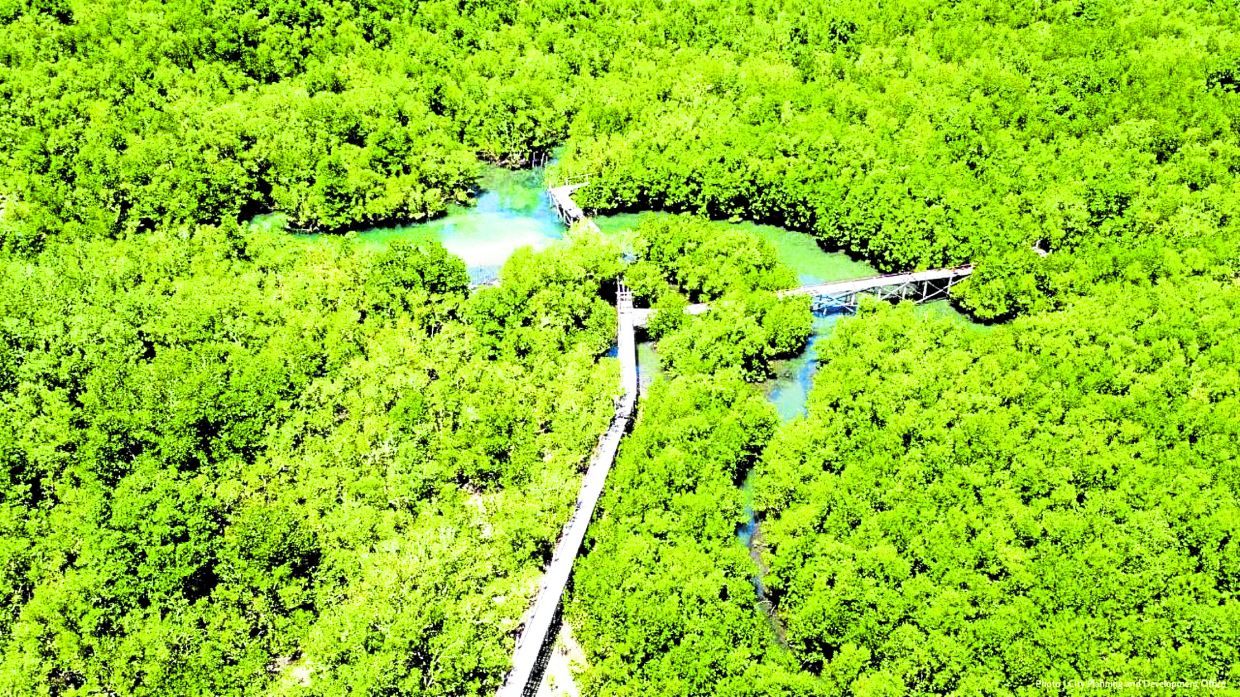
Mangrove rehabilitation has further strengthened Ligao’s resilience. Three coastal barangays – Cabarian, Maonon, and Catburawan – have planted over 130,000 mangrove propagules across seven species, including miapi, tangal, bakawan bato and tawalis. The restored mangroves act as natural barriers against typhoons and other disasters.
National recognition
Maria Soledad Prena, the city’s environment officer, noted: “Residents’ active participation in conservation benefits everyone, protecting both biodiversity and livelihoods.”
Ligao’s efforts have earned national recognition. In 2022, it was named a regional winner and one of the top five national finalists in the Malinis at Masaganang Karagatan (search for the country’s outstanding coastal community) by BFAR, receiving 2 million pesos (RM129,000) for coastal projects.
Wheng Bricia-Briones, BFAR Bicol information officer, praised the city: “Ligao deserves the title of the cleanest coastal municipality in the region. Its achievements in coastal resource management, participative governance and sustainable fisheries are exemplary. The partnership between the local government unit and the community sets a model that other cities should follow.”
For Ligao, the revival of its seas is not just environmental. It’s also a story of shared responsibility, pride and hope for generations to come.
This article originally appeared in Philippine Daily Inquirer and is republished through a content-sharing initiative of the Asia ESG Positive Impact Consortium (A-EPIC), which includes Star Media Group, Media Group of Kompas Gramedia and the Inquirer Group of Companies.