
A simple food choice today reflects far more than personal taste. It is shaped by nutritional science, sustainability concerns, digital platforms, supply systems and evolving consumer behaviour.
Behind every successful food concept lies a process of innovation that connects ideas, evidence and real-world application.
From alternative proteins to data-driven menu design and sustainable food systems, the food industry is no longer shaped by kitchens or laboratories alone.
It now depends on professionals who can combine culinary skills with food science, data analytics and operational strategy to translate knowledge into scalable, responsible and market-ready solutions.
As a consumer-facing foodservice operator and a client of Unilever Food Solutions, Secret Recipe Cakes & Cafes Sdn Bhd group chief executive officer Patrick Sim offered an industry perspective on the realities of food innovation at scale. He highlighted that scaling food innovation across multiple outlets requires more than culinary skills alone.
“In a central kitchen environment, maintaining consistency and quality is critical.
“This means having strong research and development (R&D) and quality control teams, supported by culinary experts who also understand food science, data and structured processes,” said Sim.
He further noted that as brands grow, the demand for talent with technical and analytical capabilities also increases.
This shift has created a demand for talent equipped to navigate the complexities of modern food systems, which is a need that traditional curricula have not fully addressed.
Recognising this gap between industry and academia, Sunway University launched the BSc (Honours) in Food Innovation programme under its School of Hospitality and Tourism Management.
Built on four core pillars, Gastronomy, Food Science, Entrepreneurship and Sustainable Well-Being, the three-year programme is designed to develop future-ready talent capable of translating food innovation into scalable, commercially viable and responsible solutions aligned with real-world foodservice and industry needs.
A key feature that distinguishes the programme is its strong industry collaboration. This is marked by a strategic partnership with Unilever Food Solutions (UFS) and formalised through the signing of a Memorandum of Understanding (MoU).
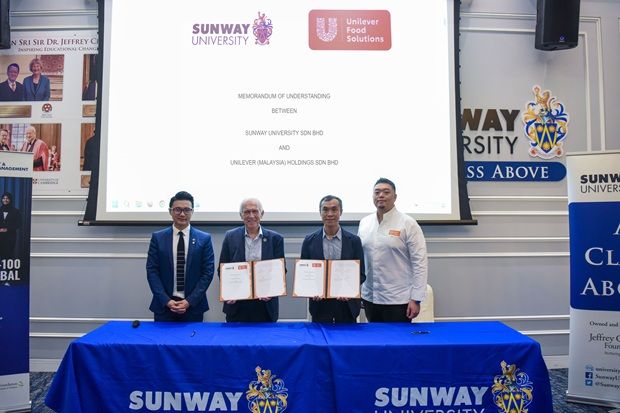
Through this MoU, students will gain industry-driven exposure to product development, applied culinary innovation and chef-led expertise.
This ensures the curriculum reflects real industry demands while remaining grounded in academic theory, equipping students with integrated skills that balance creativity with scientific rigour and operational understanding.
UFS Malaysia and Singapore country head Jimmy Mok said: “There must be a balance between culinary creativity, food science and consumer understanding that stems from an understanding of menu data via consumer trends and expert insights.
“Beyond flavour and presentation, it is essential for chefs and food service operators to consider broader factors in their day-to-day operations, including menu engineering, pricing foundations, ingredient value and management concepts,” he added.
Industry-linked education, such as this programme between Sunway University and UFS, prepares graduates for emerging roles across the food industry, including R&D chefs, food data analysts, smart kitchen specialists and food safety and quality auditors.
It offers students real-world exposure to industry practices and trends, boosting their employability and giving them a distinct edge in an increasingly competitive job market.
This shows how education and industry can work together to build a crucial talent pipeline and ecosystem that Malaysia’s food industry needs to thrive.
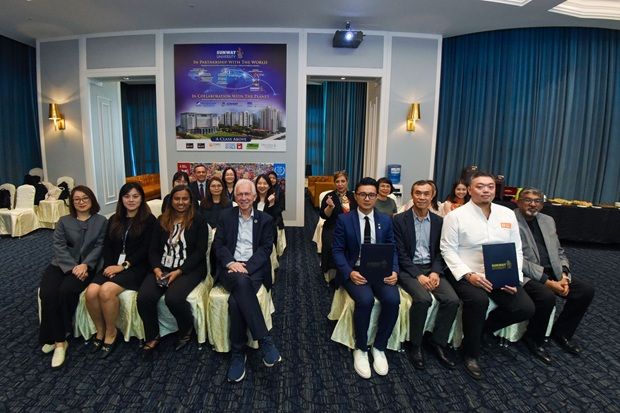
Sunway University Education, Employability and Alumni pro vice-chancellor Professor Chai Lay Ching said food innovation in this era is no longer about creativity in isolation.
“The BSc (Honours) in Food Innovation was deliberately designed to reflect this reality and to address an emerging need for professionals who can innovate, scale and deliver food that remains authentic and consistent across larger and more complex operations.
“We prepare graduates who are not only creative but future-ready, industry-relevant and able to contribute meaningfully from day one in a rapidly evolving global food ecosystem,” she reiterated.
The demand for skilled food professionals will only increase as the sector continues to grow and evolve. A holistic curriculum integrated with industry insights will prepare graduates to lead the next phase of food innovation.
Join the Sunway University and Sunway College Open Day on Jan 17 and 18 to learn more about the programme, or visit Sunway’s official website for more information.