
FOR most Malaysian families, the kitchen is the natural hub of the home, while the food on the table is a simple reflection of daily life and security.
However, as shifting global markets affect local prices, the straightforward path from the farm to the family meal has become increasingly complex.
At this vital link between a farmer’s livelihood and a household’s needs, the Federal Agricultural Marketing Authority (Fama) is evolving from its traditional role as a market player into a national market regulator tasked with safeguarding the country’s food supply.
Under the 13th Malaysia Plan (13MP), Fama is undergoing a historic strategic transformation with an audacious goal to double its gross domestic product (GDP) contribution to RM26.25bil, while ensuring that food security is felt in the kitchens of every Malaysian household every day.
Fama director-general Abdul Rashid Bahri notes that in 11MP, Fama acted as the ‘buyer of last resort’ with a focus on direct intervention to ensure crops did not go to waste.
“By 12MP, the focus shifted toward entrepreneur empowerment, where Fama acted as the ‘seller of last resort’.
“Under 13MP, Fama’s role is now strengthened not just as a facilitator, but as an agency that actively monitors and regulates the national agrifood market,” Abdul Rashid explains.
He adds that this shift ensures a market that is “more stable, transparent, and sustainable”, legally empowering Fama to curb market manipulation by middlemen.
“Market regulation isn’t just about rules; it’s about ensuring fair play so that no single entity can manipulate the prices of basic necessities.
“Our mandate is to ensure that the imbalance in the market, often caused by layers of middlemen, is corrected. The profit should go to the farmers, and savings should go to the rakyat,” he says.
A multi-pronged strategy
To achieve this, Fama has launched high-impact projects worth RM278mil. Central to this is the Pembangunan Pasaran Agromakanan (PPAM).
“PPAM is a market intervention mechanism that sources produce directly from producers to reduce the imbalance caused by middlemen.
“For the consumer, this translates to controlled prices and a guaranteed supply of basic food items,” he says.
He adds that an RM40mil allocation for the rejuvenation of market outlets will see 411 existing outlets upgraded and 241 new ones established.
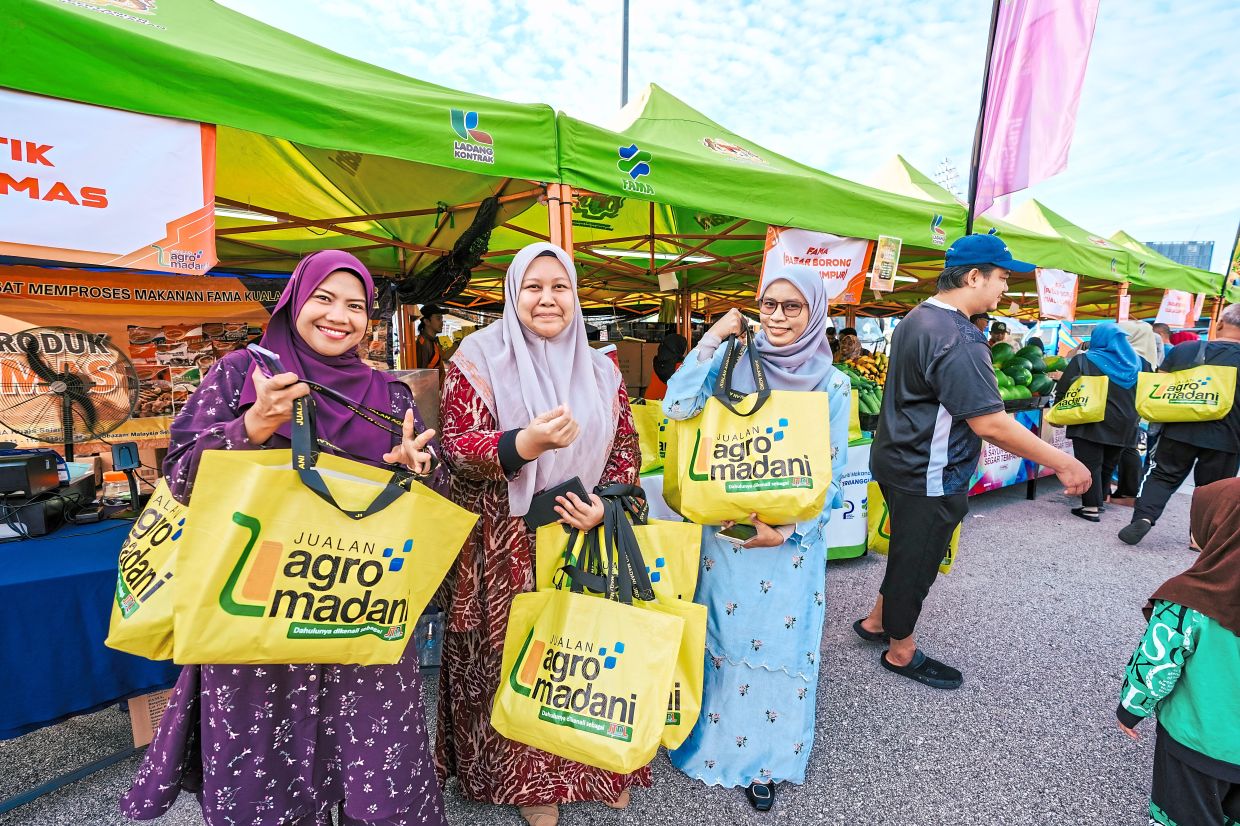
He notes that these modern hubs, including the widely successful Jualan Agro Madani, offer produce at prices 10% to 30% lower than local market rates, providing immediate relief to household costs.
To ensure end-to-end industry support, Fama’s strategic framework operates through three precise segments:
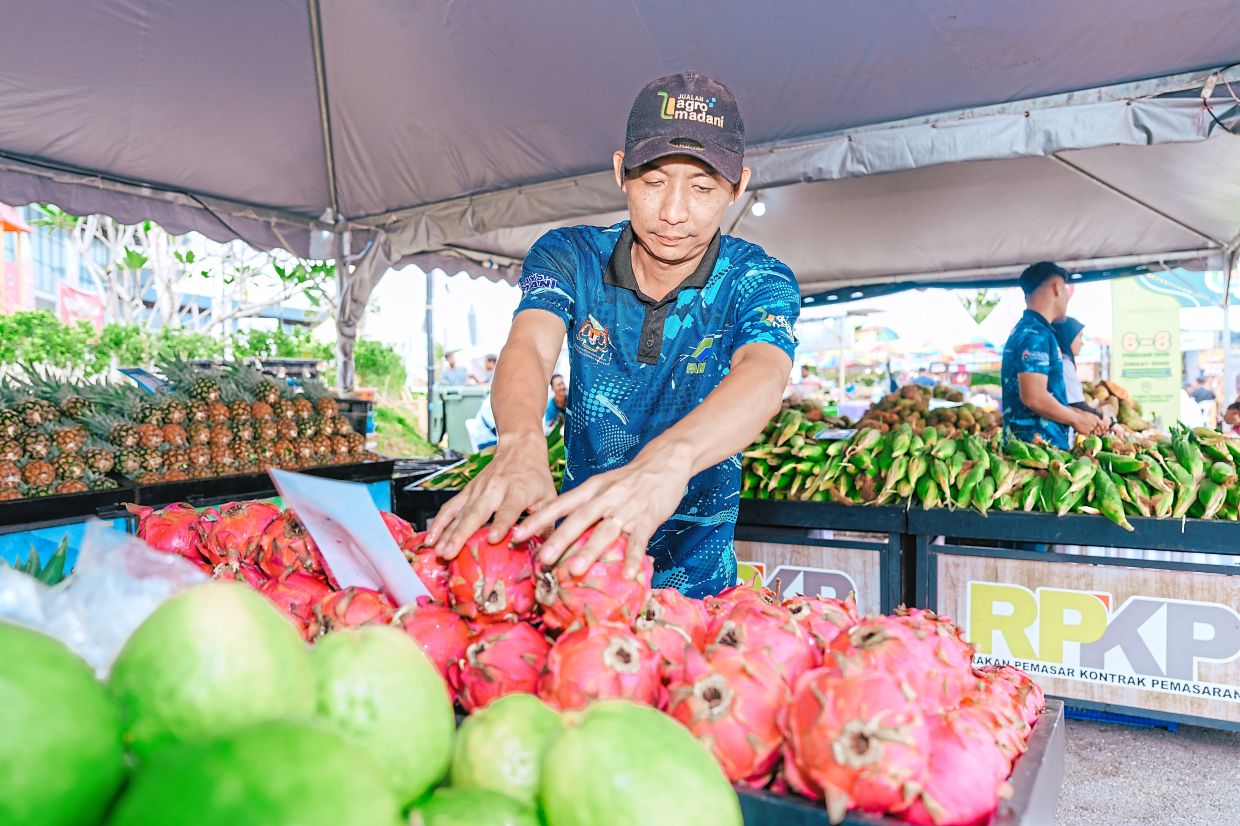
Upstream. The focus is on direct farm purchases and market interventions to stabilise supply and ensure fair pricing.
Midstream. The priority shifts to value-addition through the Micro-IAT initiative, guiding entrepreneurs through Halal, GMP, and MeSTI accreditations to enhance retail readiness.
Finally for downstream, Fama propels local products onto the global stage through the GLOBEX programme and “Malaysia’s Best” branding.
Digital and global ambitions
Digitalisation serves as the backbone of this evolution, anchored by the i-FAMA Super App and Surveillances And Intervention On Supply And Demand Of Agrofood (Sisda).
By leveraging Sisda’s predictive analytics, Fama can monitor global and local trends to provide early warnings on price and supply fluctuations.
“We are putting the entire marketplace into the pockets of our farmers and consumers,” Abdul Rashid explains, noting that the app integrates all systems to provide a one-stop digital architecture.
This effort is complemented by the DIGIFOOD Network, which introduces cashless payments, AI-driven promotions, and online sales capabilities to traditional markets.
“We are targeting 60% market data mastery by 2030 to make strategic decisions based on big data,” he notes.
He adds that Fama, by 2026, expects 80% of its supervised entrepreneurs to have a digital presence on platforms like Agrobazaar Online, linking producers to consumers via real-time data for supply-demand matching.
On the global stage, Fama aims to increase export values by 10% annually.
“By focusing on product reformulation for ready-to-eat meals and strengthening the ‘Malaysia’s Best’ endorsement brand, we are ensuring local produce meets rigorous international standards, such as those of the US Food and Drug Administration and the European Union,” he says.
Efficiency from farm to table
Recognising that high costs often stem from logistical inefficiencies, Fama is introducing the Third Party Logistics (3PL) and cold chain logistics project.
“By optimising backhaul journeys, Fama aims to reduce delivery costs for rural farmers by up to 20%.
“A total of five new integrated logistics centres equipped with blast chillers will be built to significantly extend the shelf life of fresh products and reduce food loss,” shares Abdul Rashid.
Protecting the rakyat
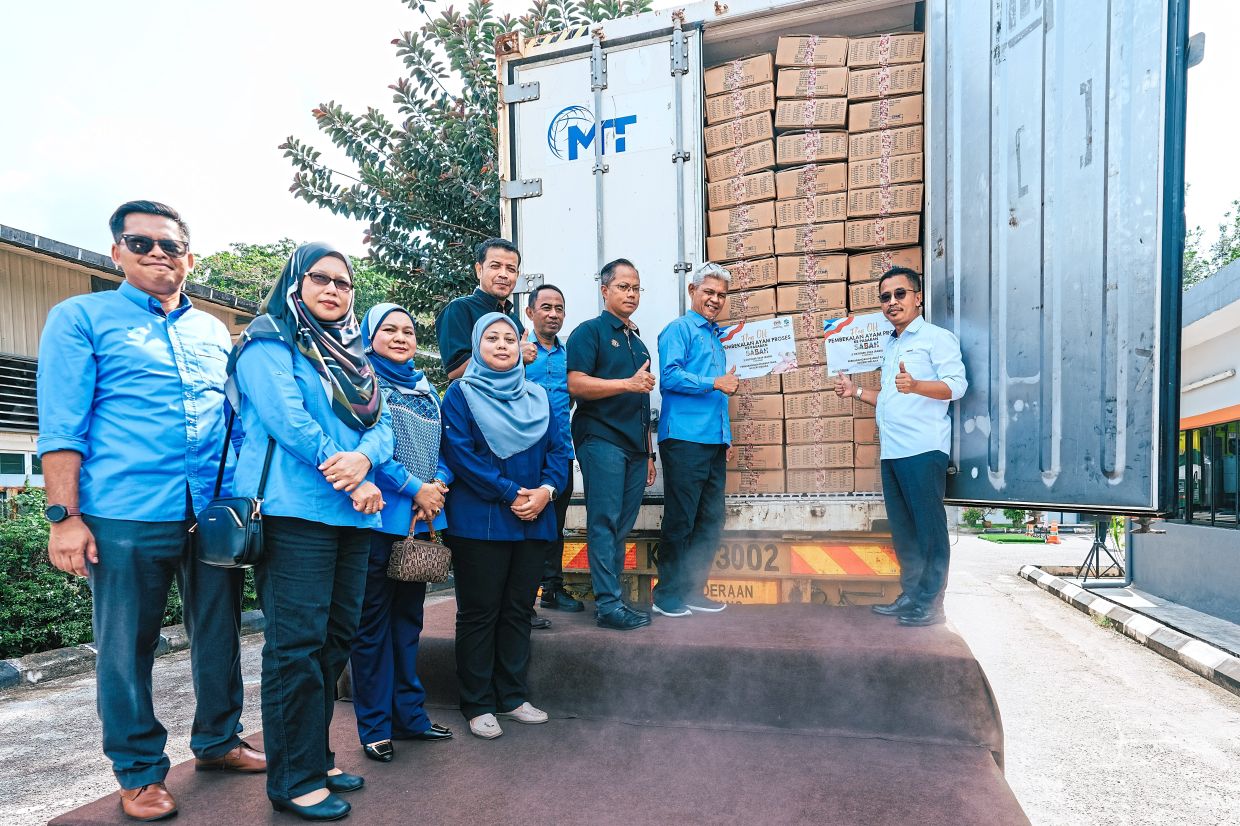
To maintain transparency and avoid public disputes, Fama prioritises engagement sessions with associations representing producers, exporters, and processors to find unified solutions.
This collaborative spirit is anchored by a commitment to food sovereignty, ensuring Malaysia can produce its own food and remain self-sufficient rather than relying solely on imports.
“Fama’s goals are to increase net farmer income by at least 30%, achieve a significant reduction in food loss through better supply chain management, and aggressively increase marketing efficiency both domestically and internationally.”
For the average Malaysian, this strategic evolution means protection from price manipulation and the peace of mind that the nation’s food future is secure.
Abdul Rashid concludes, RMK13 is ultimately about whether the rakyat can feel the benefits in their kitchens every day.
“At the end of the day, the success of 13MP is not measured in reports, but in whether a mother feels the difference in her grocery bill.”