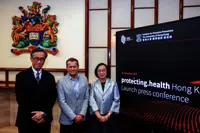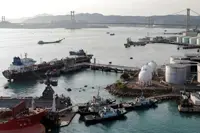
MY FIRST visit to the vibrant metropolis of Hong Kong coincided with the 8th Belt and Road Summit. Organised by the HK Special Administrative Region Government and HK Trade Development Council (HKTDC), the Summit commemorated the 10th anniversary of the Belt and Road Initiative (BRI). This was also the first in-person gathering since the fading echoes of Covid-19.
From Bangkok to Bangladesh, Singapore to South Africa, and Kuala Lumpur to Kuwait (and more), it was a magnificent spectacle, attracting over 6,000 global business leaders.
Post-Covid economic hunger
The aftermath of the pandemic left scars along BRI nations – to the lives and livelihood of its people. Yet, with steely determination, new economic and collaborative opportunities emerged and the bounce back began.
The rise of the digital economy coupled with smartphone and internet accessibility enabled businesses (especially SMEs) to capitalise on e-commerce.
Meanwhile, bigger companies accelerated renewable energy and green-technology transitions to develop new industries and create new jobs.
Post-pandemic, baseline economic data indicates a GDP growth of 5.8% across the BRI nations. This is higher than the global average GDP growth of 2.6%.
Additionally, international organisations such as OECD and ADB forecast that between 2023 and 2030, BRI nations will grow between 5.4% to 5.6% annually on average. Comparatively, the global economy’s growth is forecasted at 3.5%.
Business opportunities aplenty
According to HKTDC, over 280 investment projects were matched during the Summit covering energy, natural resources, public utilities, innovation and technology, urban development, transport and logistics infrastructure.
I was particularly impressed by the unique narrative emerging from Middle East nations. Present at the Summit were ministers, technocrats, and government officials from Saudi Arabia, UAE, and more.
They passionately promoted their region’s growth prospects, trajectory of change, and abundant economic opportunities.
A poignant moment during a panel discussion was when, in a reply to a question about ambition, a Saudi Arabian speaker shared his son's ambition to be Spider-Man and his daughter’s ambition to be a marine engineer to study the Red Sea for humanity’s benefit.
Both, he said (while light-heartedly noting one ambition being more plausible than the other), showed that it was an exciting time to be young and hopeful in the region.
Winning the talent war
Amidst the fervour, a pivotal conversation seemed amiss: What about the talent needed to drive BRI growth?
I had the opportunity to raise this point during the Belt and Road Global Forum, having been invited as one of the lead-in speakers.
The BRI belt is punctuated with nations burgeoning with youth. For instance, Pakistan has a median age of 22.5, Egypt boasts of a youthful 24.6 years, and Uzbekistan stands at 28.2 years.
In developed nations like Singapore and Hong Kong, talent is more “seasoned” at 36.4 and 35.6 years respectively.
Malaysia sits in between at 30.8 years.
With youthfulness comes optimism, with experience comes pragmatism. The war for talent is expected to heat up owing to the competitive nature of the emerging economic and jobs landscape. Nations and industries along the BRI have indicated a readiness to “fight” for the best talent.
But let us not forget that talent development is predicated on the jobs market. According to the Future of Jobs Report 2023 by the World Economic Forum, advancing technologies are expected to have a net positive on jobs over the next five years.
This means that the areas of growth earmarked by BRI nations, such as agritech, medtech, fintech, edtech, and robotics will present the best opportunities for talent.
However, there will be a net decrease of 14 million jobs in the next five years (or 2%) of current employment – which could pose a threat to BRI nations reliant on more traditional economic pursuits.
Hence, to truly reap the BRI’s promises, nations and industries must pivot towards investing in talent development.
This not only entails disciplines like engineering, data science, artificial intelligence, quantum computing, and biotechnology, but it goes beyond — we're also talking about nurturing leadership, honing intercultural sensitivities, ingraining sustainability, and fostering an understanding of planetary health.
The grandeur of the BRI’s goals can only materialise if we nurture the very people who stand to propel it.
Building on Malaysia-Hong Kong relations
Closer to home, the recent visit by the Hong Kong Chief Executive, John Lee, to Malaysia speaks volumes by pointing towards the shared goal of developing together and the BRI as a beacon of collaborative possibilities.
Along the same vein, one cannot help but muse over the deep-rooted ties binding Malaysia and Hong Kong. Economically, Malaysia has been one of Hong Kong's major trading partners, notably in electronics and palm oil. Culturally, there is a beautiful blend of traditions manifesting in popular festivals and shared culinary delights like mooncakes and dim sum.
And demographically, talent flow between Malaysia and Hong Kong has enabled economic opportunity across decades which have benefitted generations of people.
These intersections not only enrich the socio-cultural fabric but also bolster the economic synergy between the two regions.
Moving forward, amidst the many high-level dialogues and strategic meetings, it remains imperative to distill the crux of these interactions: Namely that in order to survive and thrive and see through the success of the BRI, nurturing people and developing talent will be at the heart of our endeavours.
Already a subscriber? Log in
Get 20% OFF The Star Digital Access
Cancel anytime. Ad-free. Unlimited access with perks.

Danial Rahman
Danial Rahman shares insights on LinkedIn and welcomes feedback at danialrahman0330@gmail.com.