




Beijing has slammed Western nations for interfering in China’s internal affairs over their criticism of the conviction of the now-disbanded alliance that organised Hong Kong’s annual Tiananmen Square vigils and its former leaders for inciting subversion.
Chinese Foreign Ministry spokesman Lin Jian used a regular press briefing on Monday to hit out at “certain countries and organisations” for using the case to smear Hong Kong and denigrate its rule of law.
He made the comments in response to questions about expressions of concern from the US and other countries over a Hong Kong court ruling last week, which found the Hong Kong Alliance in Support of Patriotic Democratic Movements of China, ex-chairman Lee Cheuk-yan and former vice-chairwoman Chow Hang-tung guilty of attempting to undermine the fundamental system of the People’s Republic of China under the national security law.
Albert Ho Chun-yan, another former alliance chairman, previously pleaded guilty.
The ruling triggered criticism from the United States, the European Union, the United Kingdom, France, Germany and Australia, which characterised it as an example of eroding freedoms in Hong Kong.
US Assistant Secretary of State Riley Barnes called for the defendants’ immediate release, while UN Secretary General Antonio Guterres said residents should be allowed to speak without fear of arrest or prosecution.
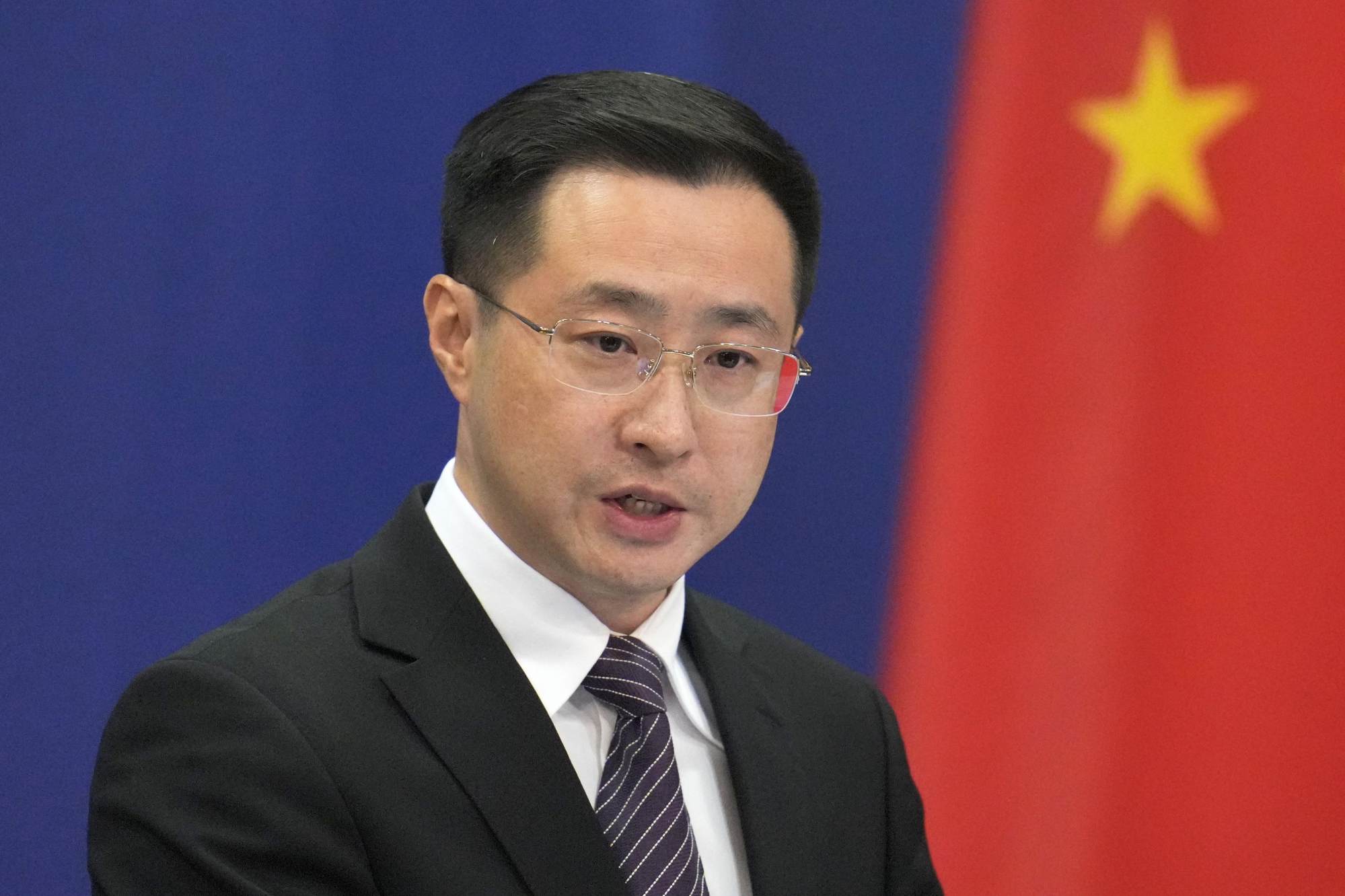
Lin described such criticisms as interference in China’s internal affairs. He said the alliance’s manifesto aimed to subvert state power, adding that their guilt was clear and that they had caused serious harm.
“The Hong Kong government’s actions to combat acts endangering national security in accordance with the law are reasonable and legitimate,” he said.
“Hong Kong is a society governed by the rule of law, and the central government firmly supports Hong Kong in safeguarding national security and cracking down on acts that endanger national security.
“Hong Kong affairs are purely China’s internal affairs. We urge the parties concerned to respect China’s sovereignty and Hong Kong’s rule of law, stop political manipulation and cease interfering in Hong Kong affairs or China’s internal affairs in any form.”
The Hong Kong government also issued a statement on Saturday rejecting what it called “baseless slander and smearing” by Western countries over the convictions.
It stressed that the defendants received a fair trial and were not prosecuted for their political beliefs.
Beijing’s national security office in Hong Kong said on Friday that the defendants should be harshly punished for seriously undermining the city’s fundamental interests and endangering the state’s constitutional order.
In a 216-page judgment, three judges found that the alliance, Lee and Chow had incited public hatred towards the Communist Party by likening the 1989 crackdown on protesters to local authorities’ response to the 2019 anti-government protests.
The court noted that while it was not unlawful for the alliance to organise the commemorations, the defendants had used the event to attract new supporters and instigate them to take action to oust the party.
Set up after the 1989 crackdown, the alliance organised annual candlelight vigils in Hong Kong’s Victoria Park to mark the event and call for accountability and democratic reforms across the border. The event was the only large-scale public gathering on Chinese soil to mark the 1989 crackdown.
Separately, Chief Executive John Lee Ka-chiu said in a Facebook post on Monday that balancing development and security was a long-term endeavour and a challenge not only for Hong Kong but also for countries and regions around the world.
He added that security was a prerequisite for development, while development guaranteed security, saying the two coexisted rather than stood in opposition.
Lee said the government would fulfil its constitutional responsibility to safeguard national security, while the public should also remain vigilant at all times. He said external hostile forces had never ceased their attempts at infiltration and subversion, while security risks of all kinds were difficult to predict. -- SOUTH CHINA MORNING POST


