On the tree-lined streets of Sterling, northern Virginia, Lindsay Shaw’s home sits across from an industrial neighbour that has consumed the past several years of her life: a data centre.
When Shaw sits outside, she can hear its constant hum. At night, the security lights blaze through her window, making it harder to sleep. Gas turbines, diesel fumes, and 24/7 industrial noise have choked Shaw’s neighbourhood since the data centre moved in.
Meanwhile, in Washington, US President Donald Trump is among those attributing community pushback in places like Sterling to foreign influence from China.
“It’s not China telling us anything. It’s not Russia telling us anything,” Shaw said. “It’s truly living next to it is what it is.”
Shaw came to this view gradually. She did not initially oppose the project. Shaw and her husband had worked in cybersecurity and understood the need for data centres to power cloud infrastructure and artificial intelligence.
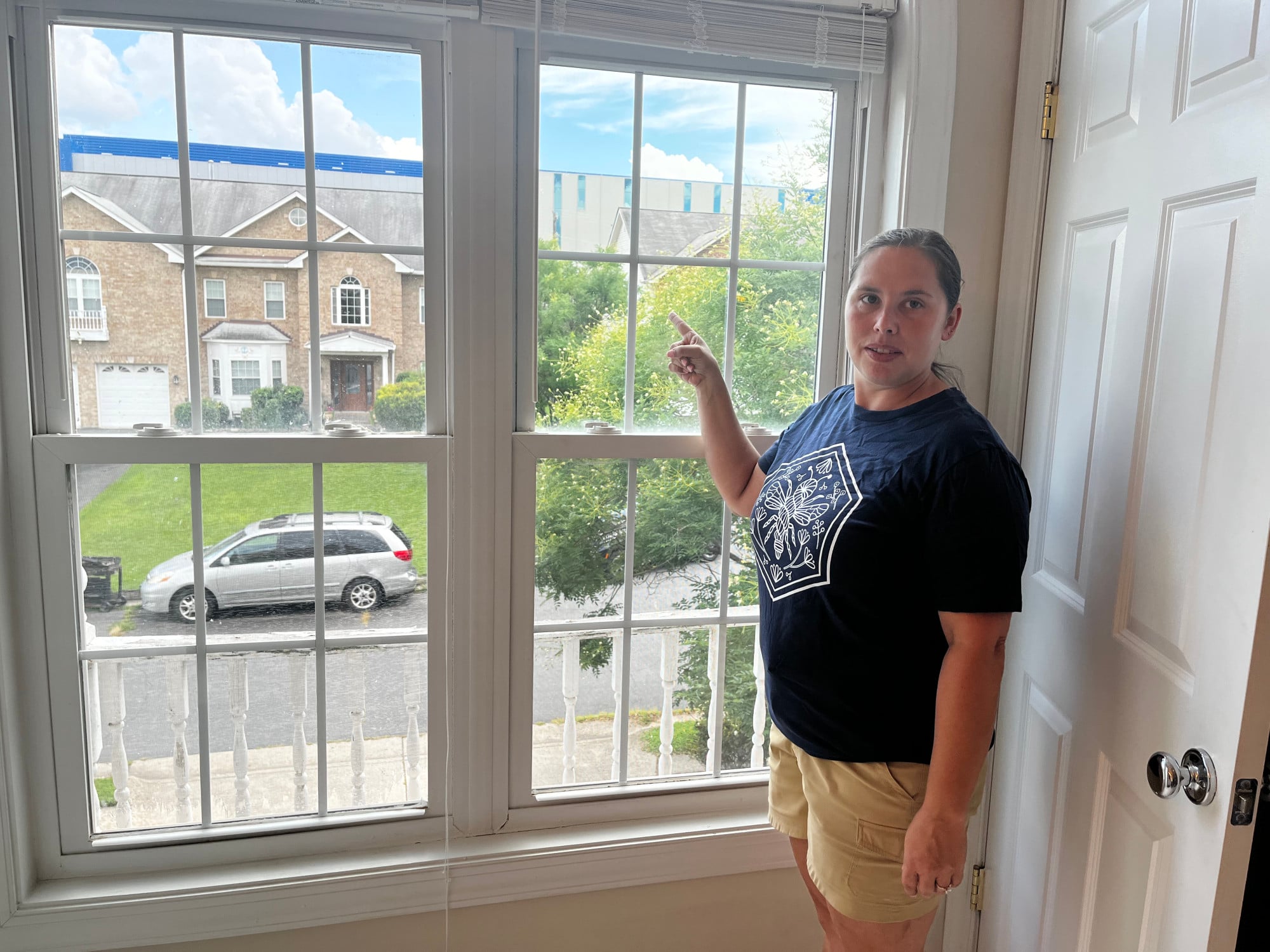
Their concerns only emerged after the facility was approved, when eight gas turbines were added to power it while it awaited a connection to the electrical grid – a process that can take years. It was not until it was up and running that the constant noise, occasional smoke and nightly lights came.
Mounting claims that China is to blame for data centre pushback in the US are fuelled by comments from Trump, Republican lawmakers and technology-industry advocates who allege that Beijing is funding or amplifying campaigns intended to slow America’s development of artificial intelligence infrastructure.
Several reports tied to the US tech industry, released in the past year, have claimed to find evidence that China is attempting to manipulate US debates over AI and technology policy.
But the reports do not establish that Beijing created or meaningfully drove the widespread local pushback. In Sterling, much of the opposition predates the allegations and centres on residents’ direct concerns about noise, emissions and broken promises.
The dispute highlights an important distinction in the increasingly politicised US-China AI race: foreign actors may try to exploit genuine domestic grievances without creating them or significantly shaping their impact.
Critics say failing to make that distinction allows politicians and industry groups to portray grass roots opposition as foreign interference – and potentially avoid addressing the legitimate concerns of US residents.
“It’s just completely unrelated to China – China is just a useful weapon to bash your domestic enemy with,” said Bethany Allen, head of China Investigations and Analysis at the Australian Strategic Policy Institute (ASPI), who researches China’s overseas influence operations.
“It’s just removed from reality.”
Opposition to data centres is so organic and widespread at both local and national levels that Allen considers it “literally impossible for anyone to have created that through an astroturf campaign”. Not everyone shares that view, however.
‘A big part of it is China’
Just a forty-minute drive away from Sterling in the nation’s capital, Trump remains focused on winning the increasingly competitive race against China to lead the world in AI.
While visiting California earlier this month, the president alleged in an interview that Beijing was fuelling community resistance against AI infrastructure in the US.
“A big part of it is China,” Trump told Fox News.
“Look, whoever wins the AI race is going to win AI ... It’s bigger than maybe anything that has happened for literally hundreds of years. The communities that are giving us a hard time, a lot of people think that’s China-oriented.”
When Jessica Medeiros, one of Shaw’s neighbours, heard what Trump said, she was in disbelief.
A juvenile pretrial officer, she says the data centre near her house has caused her to be diagnosed with dry eyes. Instead of China, she says she is focused on everyday quality-of-life issues.
“He blames everything on China, you know, anything that doesn’t go his way or doesn’t pan out,” Medeiros said of Trump.
“I don’t take any of it seriously.”
An issue of intent over impact
The local residents’ experiences do not, on their own, disprove claims of foreign influence, however.
Experts say China’s influence operations are often difficult for ordinary people to identify because they mask the origins of their content.
One of the main groups alleging Chinese influence is the Bitcoin Policy Institute (BPI), a Washington-based think tank, which has released two reports since May accusing China of trying to slow the US data centre buildout by funding US climate nonprofits and protests.
The reports acknowledge legitimate concerns among Americans about data centre impacts on energy, water use and grid capacity, but argue that Chinese-funded actors are amplifying those concerns.
House Republicans cited the BPI report in June when they called for an investigation into foreign influence on domestic data centre opposition.
According to ASPI’s Allen, the BPI reports are examples of how certain US industry interests are weaponising Chinese influence claims to smear local grass-roots opposition.
She points out that BPI is not purely a research organisation focused on Chinese influence operations, but rather an advocacy group for the cryptocurrency industry.
BPI disputed that characterisation in an email to the South China Morning Post.
Allen said that a similar report released in June by ChatGPT maker OpenAI was better because it focused on Beijing’s intent rather than impact and acknowledged that Chinese influence operations latch on to existing, genuine concerns.
OpenAI said it had banned two clusters of ChatGPT accounts, likely originating in China, for posing as Americans and making claims online that data centres were increasing electricity prices for American families, but concluded that there was “no evidence” of this having shifted public opinion.
Responding to questions from the SCMP, BPI’s head of research Sam Lyman, a former aide to US Treasury Secretary Scott Bessent, acknowledged that “most opposition to data centres in the US is indisputably organic, and many Americans have sincere concerns about data centres that deserve to be heard”, while adding that evidence of Chinese influence remains “indisputable”.
The data centre capital of the world
The showdown over data centres is playing out with particular intensity in the northern Virginia county where Sterling sits – Loudoun County, which has the most data centres per capita in the world.
One of the wealthiest areas in America, the county’s big houses, access to nature and proximity to Washington have long attracted residents wanting a certain quality of life.
Since the 2000s, an extensive underground fibre optic network and permissive land use regulations have given rise to “Data Centre Alley” there, with around 250 data centres in an area only slightly larger than Hong Kong and over 100 more in the works.
While the influx of tech companies has delivered massive tax benefits for the county – an estimated US$1.3 billion this financial year – it has also riled up residents who say that the companies have reneged on initial promises about their facilities having minimal impacts on the local quality of life.
In Sterling, for example, residents complain that the data centres rely on noisy, polluting gas turbines and diesel generators.
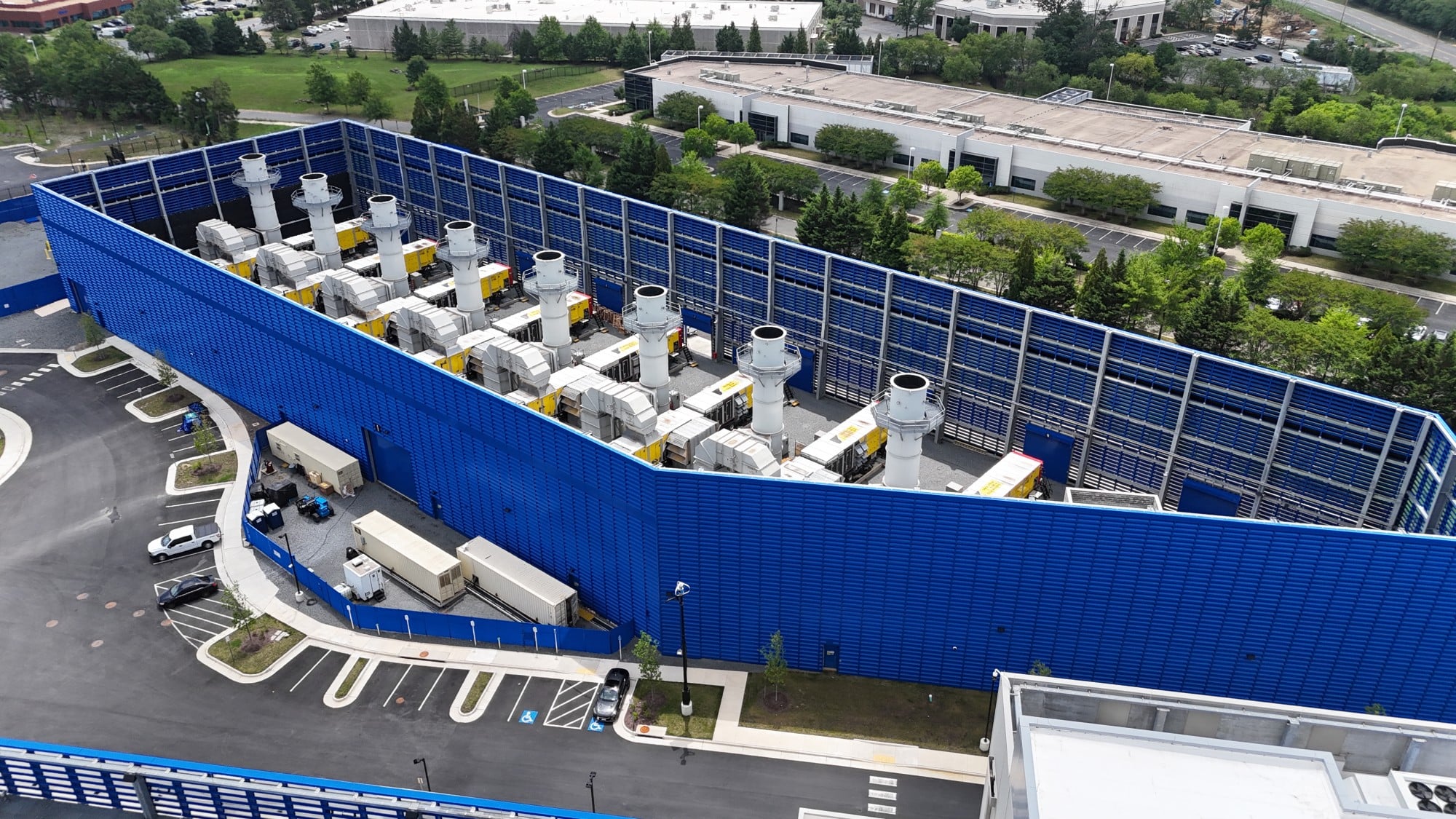
But Vantage, the Colorado-based company behind the data centre across from Shaw and Medeiros’ homes, had consistently told local residents and officials during the initial stages of the approval process that the facility would be powered by the local electrical grid, according to Sterling district supervisor Koran Saines.
After final approval for the data centre was given in March 2023, Saines said Vantage learned from the energy company Dominion Energy that it would not receive an immediate connection to the grid and subsequently amended its site plan to include gas turbines as an alternative power source.
He said the turbines were added through an administrative amendment, without returning to the county Board of Supervisors for a vote. The facility now also has backup diesel generators, the source of the black smoke.
“The high-pitched sound is coming from the gas turbines that run the data centres on a daily basis,” Saines said, though he noted that the “average” of the noise readings local officials have taken near the site has never exceeded the legal maximum level of 55 decibels – equivalent to the sound of moderate rainfall.
Mark Freeman, Vantage’s vice-president of global marketing, said that the VA2 campus complies with all state and federal emissions requirements and local noise ordinances.
Freeman said Vantage had maintained ongoing engagement with residents and officials during all stages of VA2.
Dominion Energy has not publicly stated when it will connect the Vantage data centre to its grid. Vantage told residents on Monday in a tense town hall meeting that the company was now looking at 2040 to be connected to the grid, after years of not disclosing a timeline.
‘Folks are experiencing this’
Working at the Virginia Conservation Network, one of the state’s main advocacy groups calling for stricter oversight of the data centre industry, Fatima Kamara has seen the community impact of the data centre buildout and thinks the China claims are “definitely a narrative”.
“What is happening is that when foreign actors are building resentment, they typically are doing it around things that folks can’t experience themselves,” she said.
“But in this case, folks are experiencing this first-hand. They don’t need a foreign actor to tell them to feel badly about it.”
One of the main resident concerns is environmental and long-term health impacts. An analysis by researchers working with the Piedmont Environmental Council estimated annual public-health damages ranging from US$33 million to US$63 million.
The researchers had previously estimated damages of up to US$99 million, but the figure was reduced after Virginia’s Department of Environmental Quality (DEQ) claimed the findings had “overstated the actual emissions from VA2” by using the facility’s maximum permitted emissions.
In Sterling, residents remain dogged by problems with the data centre with no solution in sight.
There has not been a single day in the past 16 years when a data centre was not under construction in Loudoun County, with data centres lined up along the highway and even cemeteries surrounded by data centres, the immovable holdouts of an ever-changing landscape.
For Shaw, the core issue is that data centre companies like Vantage will say they comply with regulations, while their impacts – recurring black smoke, constant whining noise and the year-round lights – have changed the fabric of the community.
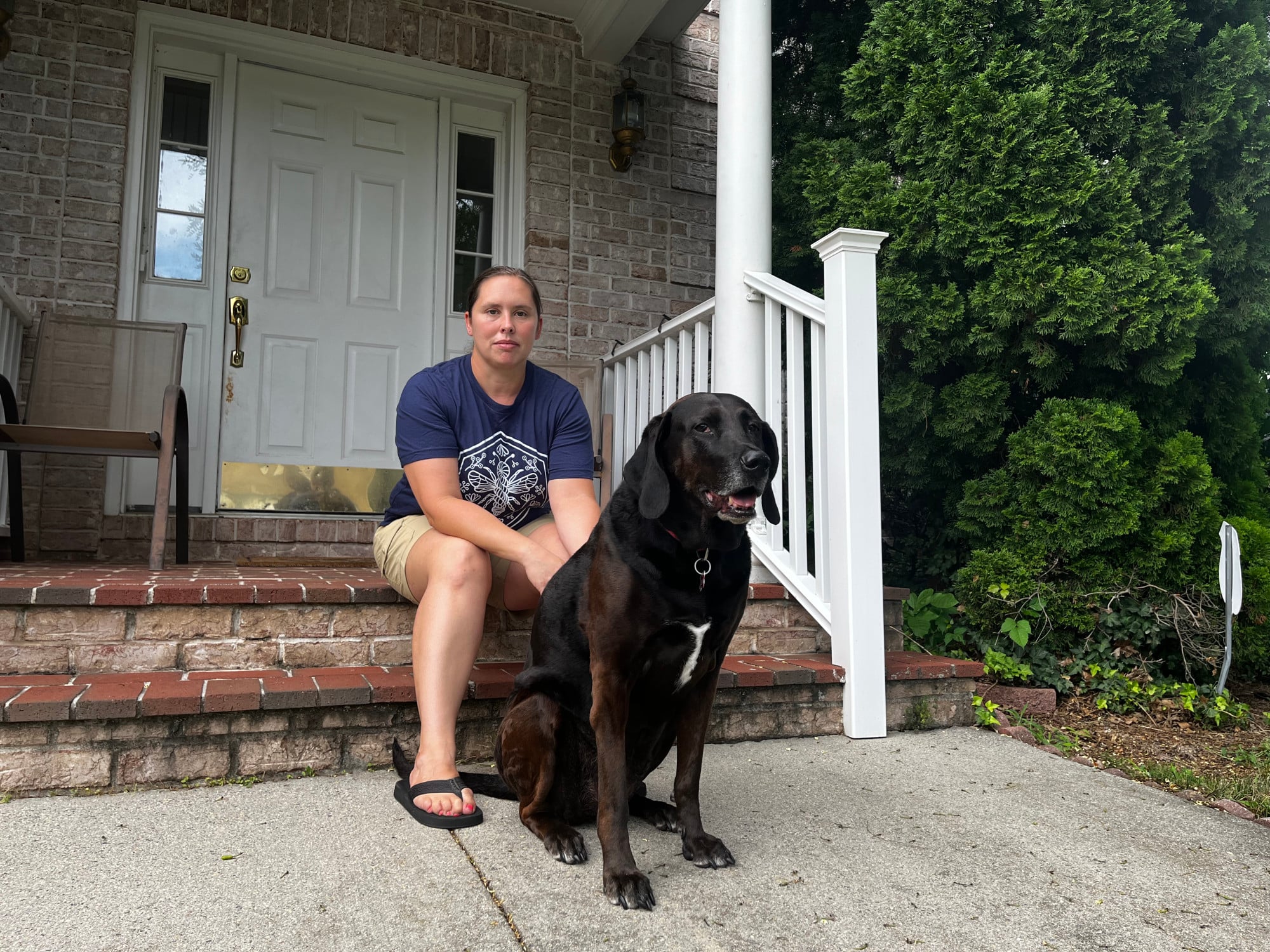
“It’s like your neighbour who gets his lawnmower out at 8:01. Is he [doing things] by the book? Yes. Is that a good neighbour on a Saturday morning? Probably not,” Shaw said.
Shaw says they want to warn other Americans about their experiences and encourage them to ask the right questions before one is built across the street.
“I’ve been living with this, thinking this was normal. And it’s not,” she said, as yet more of the data centre’s whistle seeped through her thick windows.
“I don’t know what normal is any more.” -- SOUTH CHINA MORNING POST