
China is likely to view the latest US dealings with Russia as “transactional”, according to observers, who said Beijing was likely to wait and see what the longer-term impact would be given the possibility that Donald Trump might abruptly change course again.
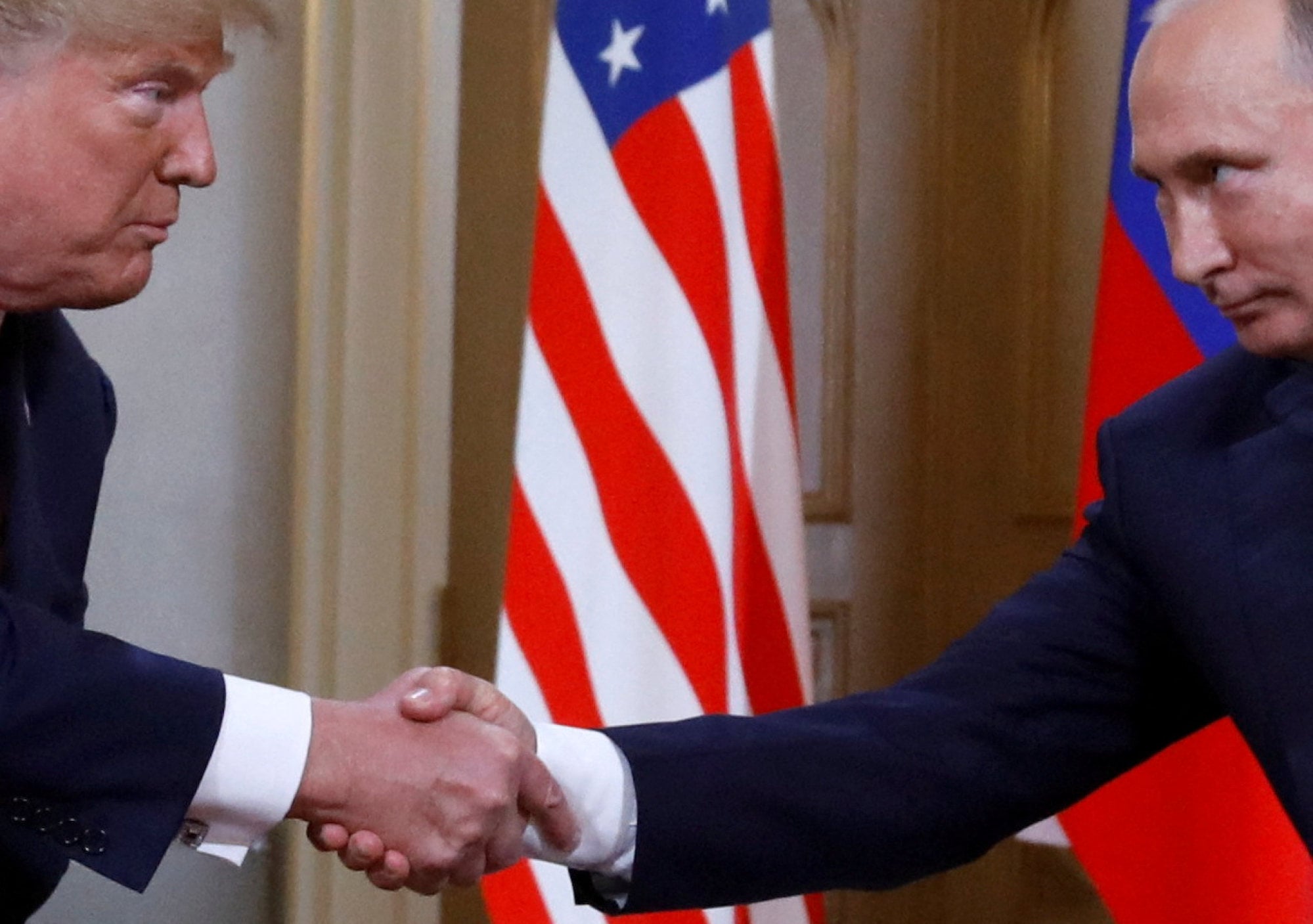
The US president announced that under a deal with Vladimir Putin, Russia would “immediately” supply more than 300,000 tonnes of diesel to the US and global markets.
He wrote on social media that another 500,000 tonnes would follow in November, with a further 1 million tonnes “within a short period of time”.
“Diesel Prices for Americans and, indeed, the World, will be COMING DOWN, IN RECORD NUMBERS, AND FAST!” Trump added.
Analysts said it was too soon to say if this was a temporary fix driven by domestic political concerns or the first step in a wider push to dismantle Western sanctions.
The agreement marked a sharp reversal from the United States, coming just three weeks after Trump signed the Lindsey O. Graham Sanctioning Russia and Iran Act, which allows him to penalise major buyers of Russian energy.
It was also struck less than a month before the midterm elections on November 3, where soaring fuel prices threaten the Republicans’ hold on Congress.
The Kremlin said the deal was made during a “very substantive and friendly” call focused on the war in Ukraine.
On Sunday, Trump also said both sides had agreed an “energy ceasefire” “effective immediately” but Ukraine said it knew nothing about it and Russia continued to strike power plants.
Asked about the diesel deal on Monday, foreign ministry spokeswoman Mao Ning said China’s position on Ukraine was clear and consistent, and that it believed dialogue was the only way to resolve the crisis.
Cui Hongjian, head of European Union studies at Beijing Foreign Studies University, said China would watch how the deal developed.
He said Ukraine and Europe were hoping it would be an emergency “stopgap” rather than a “first step that sets off a domino effect” on sanctions.
He added that China’s view would be shaped by whether Russia used the deal as a springboard to “pry loose the West’s entire set of energy sanctions against it”.
“So China’s approach right now, in my view, will still be to wait and see which direction things develop in,” Cui said.
He also said it was likely to have little impact on China’s energy trade with Russia, as Moscow still needed to sell to its largest buyer.
“The question is to what extent will [the deal] actually affect China’s energy security or whether China can protect its interests in the overall energy market,” he said.
“I don’t think China will be too concerned at the moment about what major direct impact this might have. It still requires a period of observation and assessment.”
Zhang Chi, a senior researcher at the University of Hong Kong’s Centre on Contemporary China and the World, said the diesel deal was “self-contradictory” and reflected the “selective” nature of the US approach.
But he said the Graham Act could be used as a bargaining chip in talks with Russia, China and India.
“Even as the US pursues Russian energy for its own benefit, the secondary tariff or secondary sanctions mechanism under the Graham Act could still be triggered to target other major importers,” Zhang said.
Beijing would also need to closely monitor the sunset provisions of the Graham Act and how the resolution of the Russia-Ukraine war might affect its implementation, Zhang added.
Ma Bo, an associate professor of international relations at Nanjing University, said Trump was hoping the deal would help limit Republican losses in next month’s elections.
“Therefore, I think this is a very transactional matter, perhaps a one-time offer, and it may be adjusted after the midterm elections,” he said.
Ukrainian President Volodymyr Zelensky has criticised the deal, saying any easing of sanctions on Russia without a lasting de-escalation agreement was “an obvious weakness”.
Ukraine, which Trump asked to stop “knocking out diesel fuel in Russia”, continued to target Russian refineries after the diesel deal was announced, prompting the US leader to call on Saturday for Zelensky to be replaced.
Ma said Beijing would have to wait and see if these latest developments had any impact, and that China and other Asian importers should not take Trump’s deal with Putin as “a clear indicator of future tariff decisions or cooperation with Russia”.
“If countries adjust their strategic planning or expect a permanent US policy shift [on secondary sanctions], that could backfire when the midterm election results are in,” he added.
Zhang said the diesel deal would be a fresh test case for the evolving US-China relationship.
“How the US uses and adjusts its sanctions system based on the new strategic positioning of US-China ties is a new observation point to verify the progress of improvement in US-China relations,” he said. -- SOUTH CHINA MORNING POST