
CHINA wants to grow its own durians, but replicating the success of South-East Asia’s prized tropical fruit may prove more difficult than expected.
The country has begun cultivating durians domestically to meet rising demand for a fruit it sources largely from beyond its shores. For Malaysia, known for premium varieties such as Musang King, Black Thorn, and Udang Merah, the prospect raises an important question. Could China’s growing durian industry eventually threaten our export market, or can its domestic production create an even greater appetite for imported fruit?
Taking over the high-end fruit market
There are precedents for China turning once-premium imported fruits into mass-market produce. Shine Muscat grapes, developed in Japan, spread to China and South Korea, where large-scale cultivation and lower prices challenged Japan’s premium market position.
China has also overtaken the United States in blueberry cultivation and emerged as the world’s largest blueberry producer, illustrating how quickly it can scale up fruit production when geography and agricultural technology permit. Durian, however, presents a different challenge because its narrow tropical growing requirements limit the areas in China suitable for commercial cultivation.
Fruit of opportunity
China’s entry into domestic durian cultivation could help expand the market rather than threaten existing suppliers, says Dr Ooi Shir May, a senior lecturer in International Business at Universiti Utara Malaysia.
Ooi, whose research focuses on international trade and the durian export market, says that as Chinese agribusinesses promote locally grown durians and expand cold-chain logistics across inland provinces, they are introducing the fruit to millions of potential first-time consumers in smaller regional and prefecture- level cities.
“As these consumers develop a taste for durian, their preferences will inevitably mature up the ‘quality ladder’, eventually seeking out the ultimate luxury experience such as Malaysia’s tree-ripened Musang King and Black Thorn,” she explains.

Ooi argues that far from displacing Malaysian exports, China’s domestic production will expand the overall consumer base, anchoring Malaysian durians as the coveted “Champagne of Durians” at the top of the global market.
China’s durian dreams
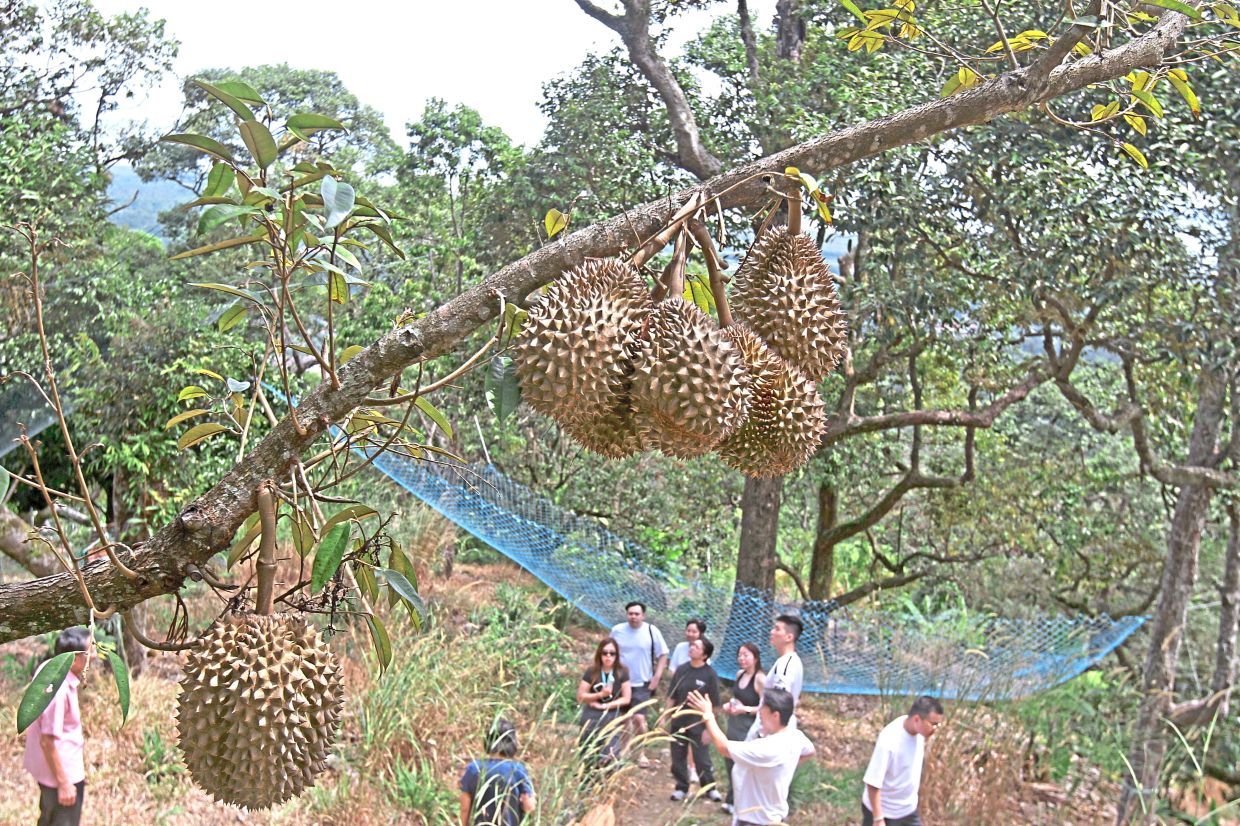
For now, China’s durian cultivation remains in its infancy, with production concentrated mainly in Hainan and trial sites in Yunnan. Domestic harvests are still far from meeting rising demand.
Hainan achieved its first commercial durian harvest in 2023, with cultivation confined to its tropical southern areas, but most trees have not reached full production age yet.
Meanwhile, several pilot plantations in Yunnan entered large-scale fruiting in 2026.
China continues to rely heavily on imports to meet demand. It imported 1.07 million tonnes of durian in the first half of 2026, a 47% jump from the previous year. Thailand currently leads the durian export market, while Vietnam is aggressively expanding market share. Since 2022, China has approved durian imports from six countries: Thailand, the Philippines, Vietnam, Malaysia, Cambodia, and Laos.
Despite China’s initial harvests, domestic production remains tiny compared with demand, says Ooi.
“Hainan’s 2025 domestic harvest reached approximately 2,000 tonnes, representing less than 0.1% of China’s annual fresh durian imports.
“Even if Hainan achieves its medium-term target of 6,600ha by 2028, domestic supply will account for less than 2%-3% of national consumption,” she says.
Significant investment and advanced technology have yet to overcome the geographical and climatic challenges facing China’s durian growers.
“Unlike temperate or subtropical crops, durian is an ultra-endemic equatorial tropical perennial that requires consistent year-round warmth above 22°C, high humidity, and zero frost risk.
“Hainan, sitting at a latitude of 18°N, marks the extreme northern limit for durian cultivation,” she says.
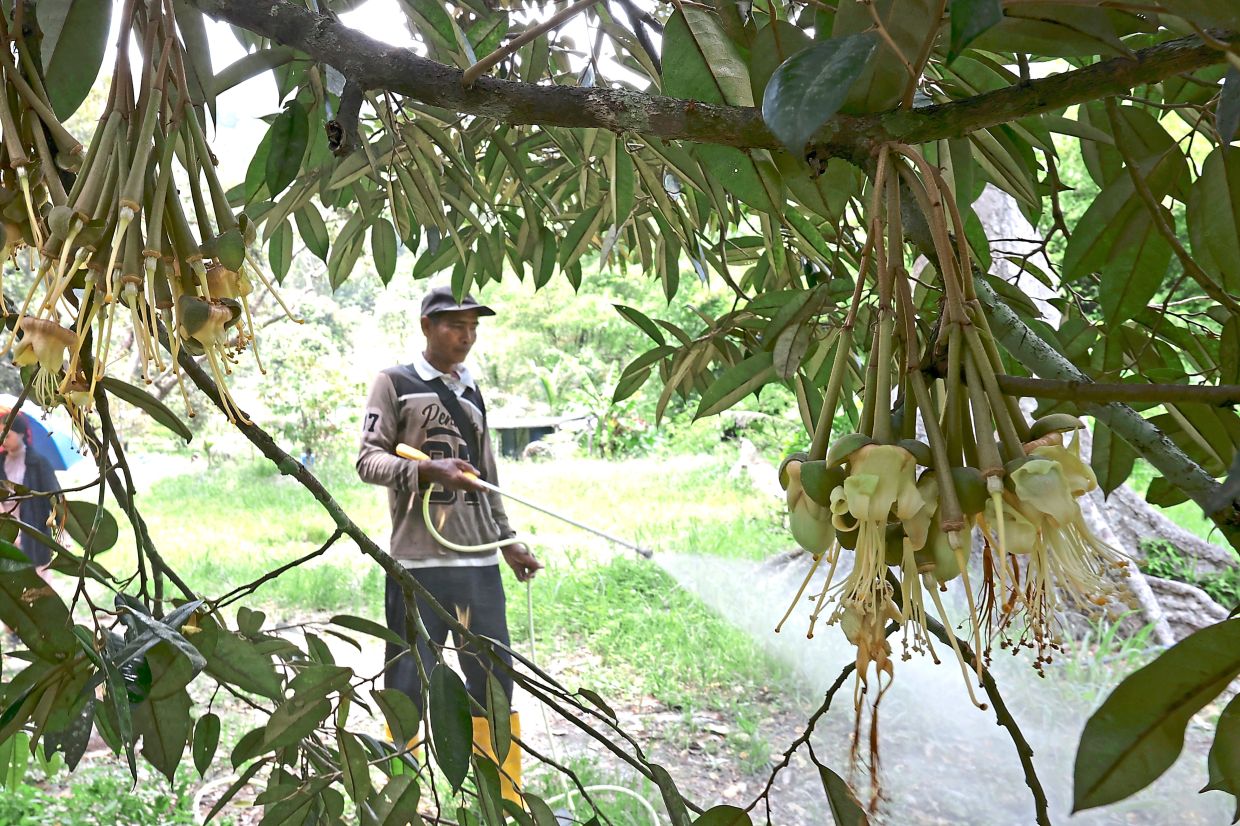
Ooi explains that Hainan’s primary agricultural threat is severe autumn typhoons , which can break fruiting branches, strip blossoms, or uproot trees. Yun-nan’s trial sites face winter cold snaps that impair flower retention and fruit setting.
She notes that durian cultivation in China also involves higher investment and operating costs. Developing cold-resistant varieties, installing automated irrigation systems, constructing typhoon-resistant support structures, and higher land and labour cost further increase initial capital expenditure, putting China at a disadvantage compared with South-East Asia.
Protecting Malaysia’s premium edge
Unlike blueberries and grapes, which can grow across a wider range of climates, durian requires specific tropical conditions that limit where it can be commercially cultivated. This makes China’s domestic expansion more challenging, Ooi says.
According to Ooi, Hainan durians currently retail at US$11 to US$17 (RM44.90 to RM69.45) per kilogram, two to three times the price of imported Thai or Vietnamese varieties. She describes Hainan’s durians as “localised luxury novelty” rather than a mass-market alternative. With China’s demand for durian continuing to outpace domestic supply, China’s domestic crop is unlikely to pose a major threat to Malaysian exports, particularly in the premium segment.
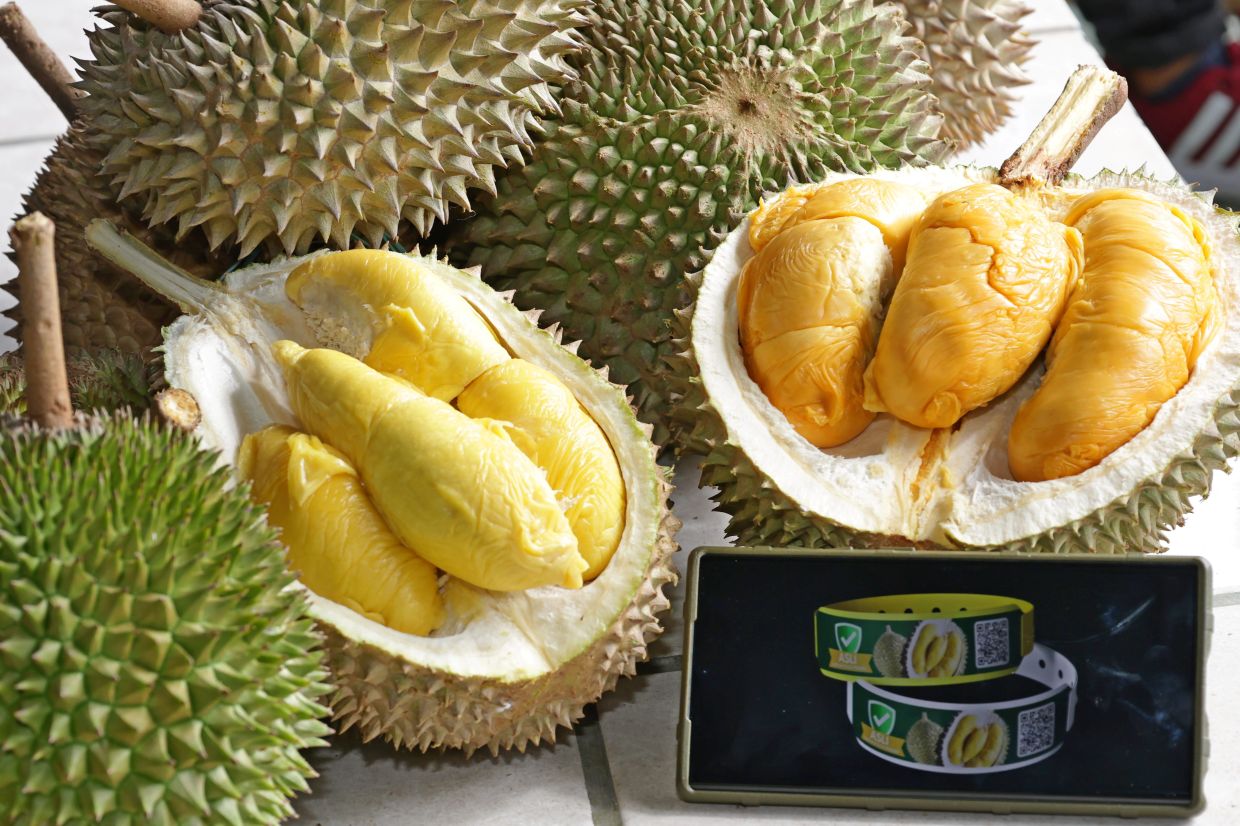
Malaysia’s strengths lie in its established varieties and reputation among Chinese consumers, says Ooi. Musang King and Black Thorn are prized for their distinctive flavour and creamy texture, while a bilateral agreement in June 2024 opened the door for fresh, tree-ripened Malaysian durians to enter China more directly.
“Malaysia’s flagship varieties, the Musang King and Black Thorn, thrive on unique equatorial soil and microclimatic conditions, for example in Pahang, Johor, and Penang. They deliver a complex, bitter-sweet flavour profile and rich, custard-like texture that Thai cultivars, such as Monthong, which forms the basis of Hainan’s domestic plantings, cannot replicate,” says Ooi.
However, Malaysian exporters face challenges such as inconsistent supply, weather-related harvest fluctuations and high air freight costs. Ooi says Malaysia must also strengthen distribution and consumer education in China’s smaller inland cities to capture growing demand.
Ultimately, Malaysia’s success depends on maintaining its premium positioning while addressing supply and distribution constraints. As domestic production expands, Malaysian exporters will need to ensure their durians remain a distinctive and sought- after choice among not just Chinese, but global consumers.