
FOR decades we have lived in a world that seemed to transcend geography.
Information, money, goods, germs and weapons have come to defy distance. Whispered confidences and billion-dollar bounties are traded instantaneously.
Smartphones, satsumas and sandals are delivered to your doorstep from across the globe. Ballistic missiles can traverse continents in minutes.
But such everyday assumptions have been challenged by the economic havoc wrought by the blockage of a vital shipping and energy route in the Persian Gulf.
The conflict in the Middle East, set off by US-Israeli attacks on Iran in February, has driven up energy prices. It has also helped push up interest rates, disrupt factory production around the world, jeopardise harvests and stoke angry protests from Syria to Guatemala.
Geography is back with a vengeance.
“As we think about the global economy or the modern economy, we often forget just the basic plumbing, and that is logistics,” said Shannon O’Neil, senior vice-president of studies and the Maurice Greenberg chair at the Council on Foreign Relations. “Stuff still needs to get from here to there.”
Countries and armed groups that can’t match the military, technological or economic power of the United States have to some degree held the world’s economy hostage simply because of their position on the map.
Iran disrupted traffic in the Strait of Hormuz, the only sea passage to the Persian Gulf and the world’s most important energy chokepoint.
And the Iranian-backed Houthi militia in Yemen seized control of another critical transit point, the Bab al-Mandab Strait, the narrow pathway at the southern entrance to the Red Sea.
Even now, as oil has started flowing again through the Persian Gulf, it has happened mostly by brute force – with tankers guided by the US Navy.
These flare-ups are reminders of how key transit routes still wield enormous influence over commerce and in turn, the welfare of tens of millions of people.
The world’s strategic and economic geography is also being reshaped by climate change, which is disrupting centuries-old passages and etching new routes across the planet.
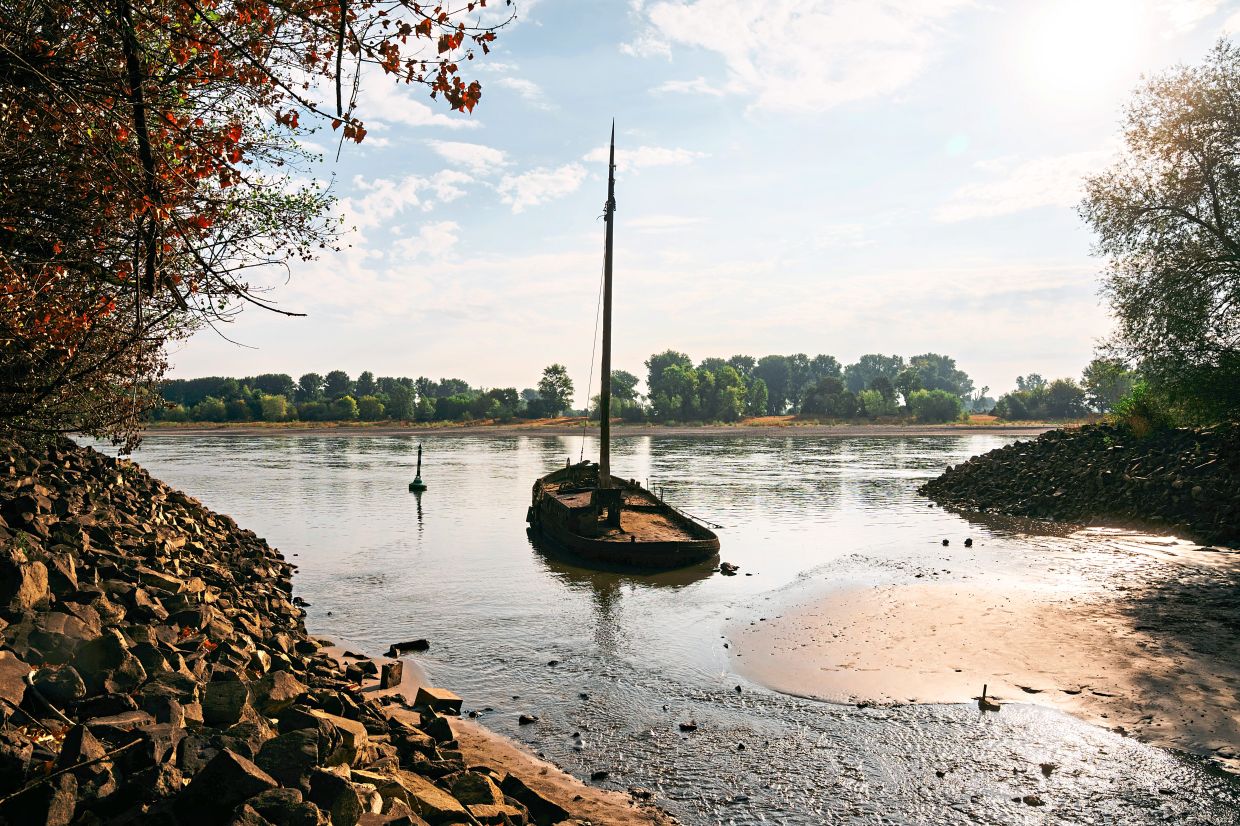
This summer, drought drained waterways like the Rhine and Danube rivers in Europe, upending freight transport, raising shipping costs and curtailing industrial production.
In Latin America, operators of the Panama Canal, which carries roughly 40% of US container traffic, restricted traffic because of low water levels exacerbated by El Nino.
Thousands of kilometres to the north, Chinese shipping companies recently took advantage of warming waters to establish the first regularly scheduled commercial transit of the Arctic Ocean.
The development promises to heighten strategic competition with the United States, as President Donald Trump’s grab for Greenland illustrates.
Geography has always been a potent force in world affairs. In the 5th century BC, Sparta used its control over the Dardanelles strait to cut off Athens’ grain supply during the Peloponnesian War.
In our lifetime, though, since globalisation gained momentum in the 1990s, technology has often eclipsed geography.
But that international order rested on a vision of mutually beneficial global cooperation and a system of rules and laws that is eroding.
Confrontation and coercion have become go-to approaches rather than last resorts. Trust even among allies has broken down.
Trump’s speech to the United Nations in September could serve as graveside commentary to the more optimistic post-war vision.
“To the victor belong the spoils,” he said of his decision to seize Venezuela’s oil reserves, an example of his winner-take-all approach to world affairs.
Trump has clearly accelerated the disintegration of the post-war order, but the roots are deeper.
The very networks that made globalisation so successful are the same ones that created new vulnerabilities and power imbalances.
During the era of hyperglobalisation that began in the 1990s, both the United States and China, for example, increasingly relied on their control of economic rather than physical chokepoints.
The United States has used its dominance of the global financial system to penalise adversaries by freezing assets or cutting off commercial transactions. China has used its store of rare earth metals to pressure rivals.
So it should perhaps be unsurprising that weaker powers would look for their own pressure points.
In Iran’s case, it’s geography.
In the 2000s and 2010s, Teheran was under punishing sanctions but never got close to closing off the Strait of Hormuz, said Edward Fishman, a senior fellow at the Council on Foreign Relations.
“I think that it kind of signals just how far we’ve moved away from this globalisation paradigm that even geographic features are being weaponised,” said Fishman, a former diplomat. “And I think that’s only going to be a continuing trend.” — ©2026 The New York Times Company
This article originally appeared in The New York Times
Already a subscriber? Log in
Get 20% OFF The Star Digital Access
Cancel anytime. Ad-free. Unlimited access with perks.