



IN a historical theme park set among the wheat fields of rural western France, Viking boats and pianos emerge from ponds, and knights ride on horseback.
Now France’s most popular theme park after Disneyland’s sites near Paris, it has opened an outpost in Spain and aims to build one in England soon.
But many in France hate the park, called the Puy du Fou.
Critics have called it a peddler of “far-right propaganda”, an accusation that has gained in resonance as ultra-conservatives edge closer to power for the first time since World War II.
The critics accuse it of weaponising history to popularise the values of its founder, Philippe de Villiers, a former lawmaker who supports far-right politicians and has long campaigned against the European Union, marriage equality and immigration.
He recently wrote that the park is part of a larger “cultural battle” for the country’s soul, and that “cultural victories precede political victories”.
But his son Nicolas, who has run the park since 2012, said his only ambition is “to create shows that make people love France,” adding, “For me, that is my only cultural battle.”
The park is four hours southwest of Paris by car. With thousands of trees, growing amid human-made rivers and ponds, Puy du Fou feels more like a national park than an amusement park.
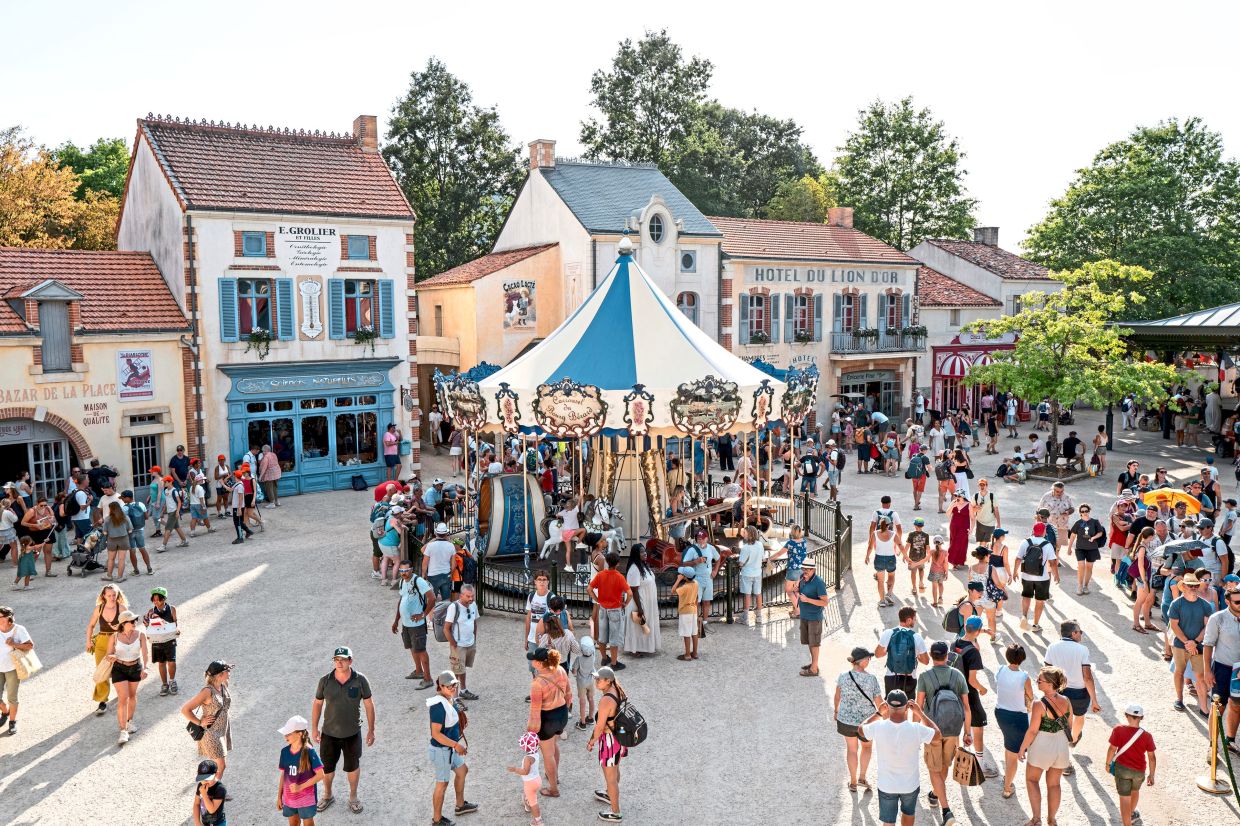
There are no carnival rides and few vendors. Instead, dirt paths lead visitors to immersive sets as well as performances, mostly about French history, that unfold in large outdoor arenas and indoor theatres, and usually last around half an hour.
The draw, for most, is not just the mythic French stories, but the spectacular special effects and animals.
In a show about the Romans, charioteers race teams of festooned horses around an Egyptian obelisk that later splits into a giant galley boat.
In another show, more than 300 live birds, including vultures and bald eagles, wheel over spectators’ heads.
Before the 100ha park existed, Philippe launched a single show in 1978 beside a ruined castle called Puy du Fou, which he has said is Old French and Latin for “hill of beech trees”.
Then a student at the country’s elite university for civil servants, Philippe wrote the script for a performance about the region’s bloody experience during the French Revolution, when locals took up arms against the new government and were massacred.
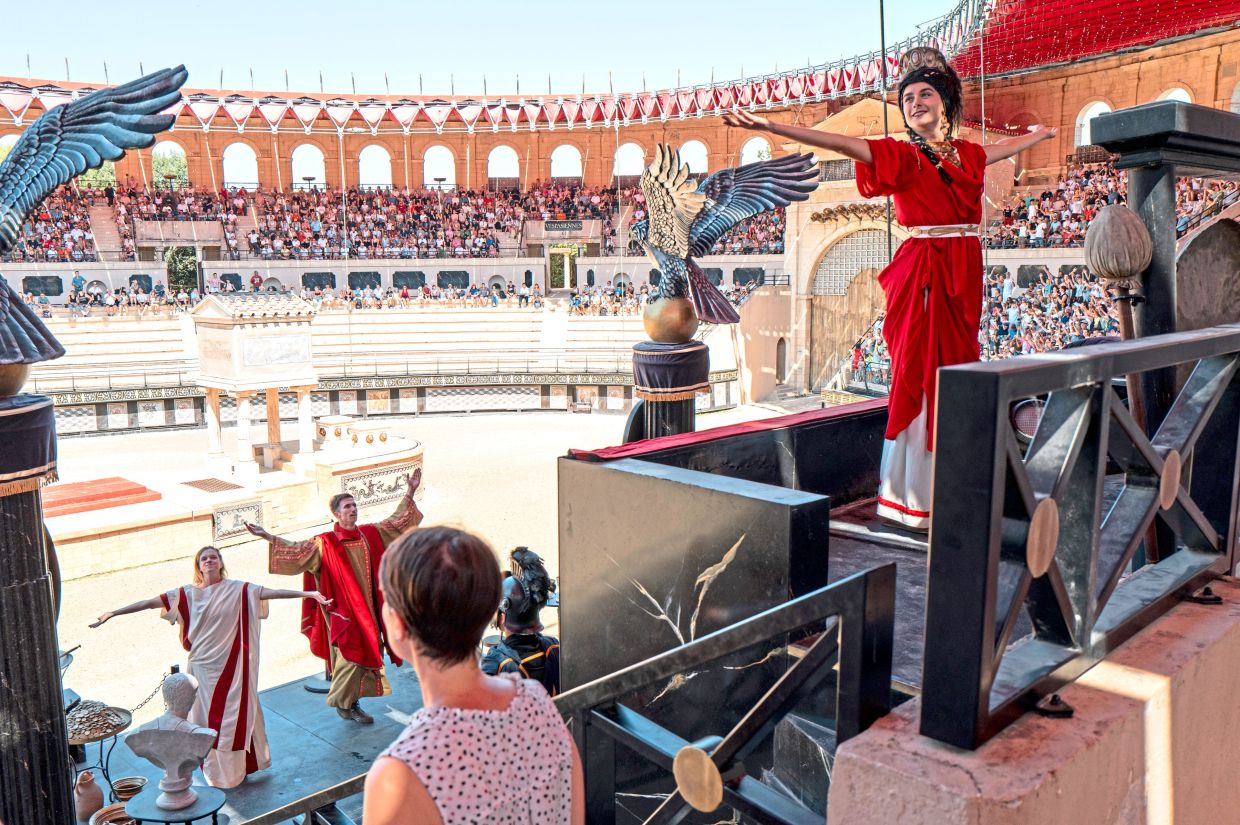
Since de Villiers couldn’t afford to pay actors or stagehands, community members volunteered.
The show, called the Cinescenie, has since expanded, and is still run by thousands of volunteers in summer.
Philippe went on to become the country’s secretary of state for culture and an elected lawmaker.
In 1989, after a trip to the Walt Disney World Resort in Orlando, Florida, he saw the business potential.
He created a new park next to the Cinescenie, staffed by professionals.
He set about writing the scripts for new shows that would offer the country what he called its “founding narrative”.
“We must give the French back their past,” he wrote in his 2025 book Populicide, which said immigration was causing civilisational collapse in France, where the book was a bestseller.
Today, the park has around 3,000 workers staffing in around 20 shows, five history-themed hotels and 26 restaurants.
The company earned roughly US$350mil in 2025 with a record-breaking three million visitors, Nicolas said.
In 2021, he opened a park in Toledo, Spain, that focuses on Spanish history, and in 2025, he applied to open a British version near Oxford.
With its mounting success, the park has come under intense criticism from left-wing politicians and historians, who have for years pointed out inaccuracies in its shows and accused it of warping history for political reasons.
That criticism was amplified in 2022, when four historians published a scathing book called Le Puy du Faux, or The Puy of Falsehood,” that calls the park “ideological”, where visitors will “learn nothing”.
“It’s the erasure of the French Revolution and the praise of Christianity. That right there is the Puy du Fou recipe,” said Florian Besson, one of the authors and a medieval historian.
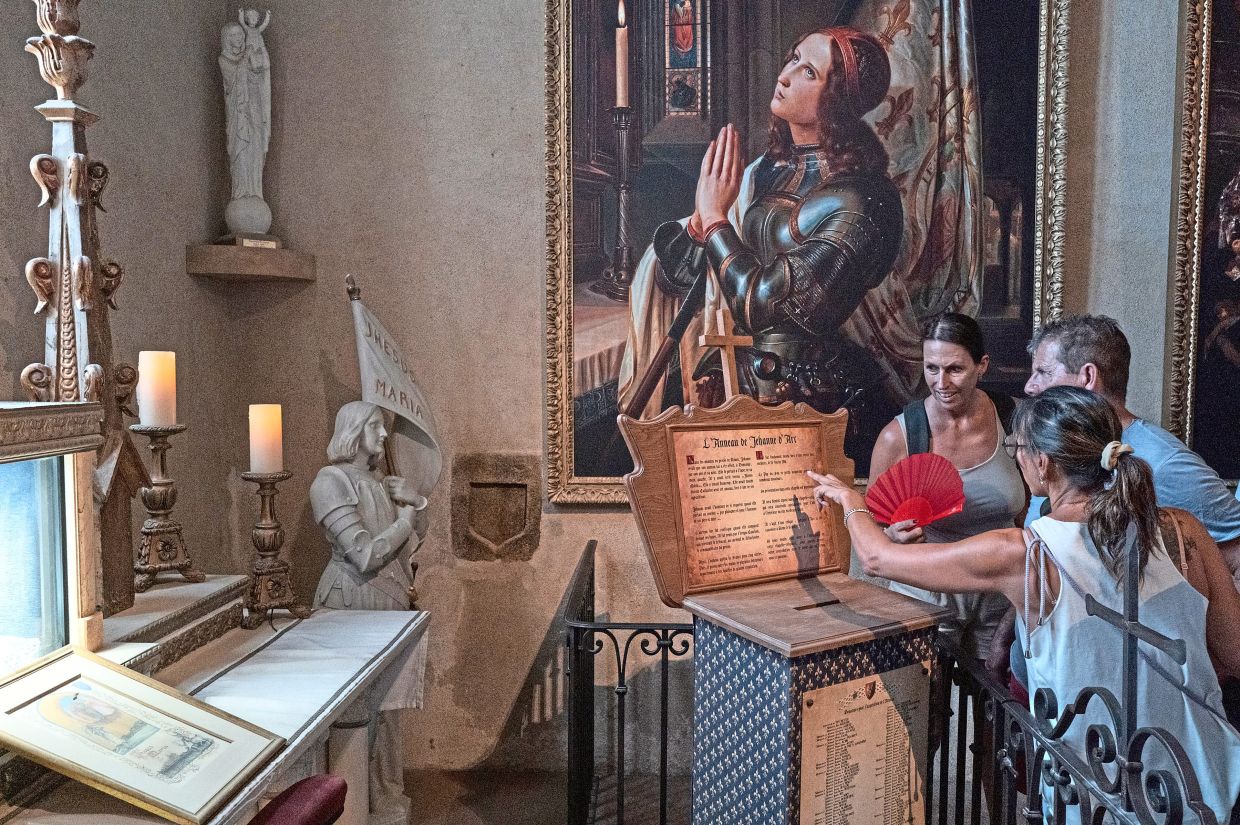
Many of the shows centre on Catholicism. The marauding Vikings set on attacking a Christian village are stopped by a ghostly saint and swiftly converted. The Romans are portrayed as cruel pagan overlords who – until they, too, converted – persecuted the Christian Gauls.
“It’s a complete reversal of history: Christianity came to Gaul from Rome, yet there it is presented exactly the opposite way,” said Pauline Ducret, another historian and co-author of the book.
The park presents an “eternal France” that is under attack, Ducret said, if not by Vikings, then by a revolutionary army or Germans – an echo of Philippe’s anti-immigration views.
Then there are the choices of which parts of French history to present.
There is nothing, critics point out, that touches on France’s darkest moments: slavery, colonialism or Vichy – the government during World War II that collaborated with the Nazis.
Philippe did not respond to interview requests.
But Nicolas, 46, speaking in a room above a restaurant in the park where servers sing French folk songs, said prescribing political aims to the park is “ridiculous”.
“Are Vikings right wing or left wing? Were Romans right wing or left wing?” he said.
“That question is completely out of step with the shows we present.”
But he does see the park as helping to build the country’s collective memory.
“If we want as a people in France to have a common destiny,” he said, “we need common memories.”
And he made no apologies for omitting certain historical chapters.
“We always prefer glory against shame,” he said. — ©2026 The New York Times Company
This article originally appeared in The New York Times
Already a subscriber? Log in
Get 20% OFF The Star Digital Access
Cancel anytime. Ad-free. Unlimited access with perks.
