CAN US President Donald Trump distinguish truth from fiction? Does he know what is real and what is the product of a computer programme?
One wants to believe that the president of the United States, cloaked in immense power, would understand the difference between reality and fantasy. One would hope, given the terrible stakes of his decision-making, that he had the capacity to understand and internalise objective reality, even if he did not like it.
But then consider recent presidential activity.
On Aug 28, the president announced a “historic” deal with the interim government of Venezuela to give the United States direct control over a huge portion of the nation’s proven oil reserves.
“At my direction, Secretary of State Marco Rubio, and Secretary of War Pete Hegseth, working closely with Highly Respected Interim President of Venezuela, Delcy Rodriguez, and, through a partnership with private business, have secured majority US control of more than 65 BILLION BARRELS of proven Oil Reserves in Venezuela, at no cost to the American Taxpayer,” the president wrote on Truth Social. Trump contends that this will lead immediately to low gas prices.
Except, of course, that it won’t.
Behind the boast lies a murky arrangement that leaves us with a host of unanswered questions.
Venezuela’s oil infrastructure is in disrepair – who will restore the nation’s actual capacity to extract and refine oil? Who will pay for it?
And given the current instability of Venezuelan politics, including the uncertain role of the United States as imperial caretaker after it deposed Nicolas Maduro, what are the odds that this deal lasts beyond Trump’s time in office?
Will American companies risk billions on the hope that this arrangement will outlast his administration?
And perhaps most relevant to the president’s political standing, when, if ever, will this deal lower the price at the pump?
These are basic concerns. There is no indication they have ever reached Trump’s mind. And even if someone did raise these issues, his effusive and ebullient announcement suggests that he paid little attention to those concerns.
He wants the deal to be great, and so it is – the power of positive thinking.
Even more unsettling, on the question of the president’s interest in objective reality, is his use of artificial intelligence.
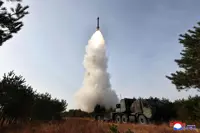
The day after his oil deal announcement, the president posted an AI-generated video of the destruction of Kharg Island, an Iranian stronghold.
“Kharg Island being blown to smithereens!!!,” he wrote.
The post came shortly after the United States military resumed its attacks on Iranian forces.
Trump does not like to receive traditional briefings about American operations in the region. Instead, he is shown a brief highlight reel of destruction, what one official described as “stuff blowing up”. For the record, the most recent Kharg Island bombing was in April.
One would like to assume that Trump can distinguish between footage of actual combat and AI-generated propaganda. But can he?
For his part, Trump shared the Kharg Island video as if it were real. And it is not as if the president has ever acknowledged the reality of his war in Iran.
For more than six months now, he has said the same thing: that the Iranian military has been destroyed, that the United States controls the Strait of Hormuz, that Iran’s surrender is just over the horizon and that both peace and US victory are imminent.
Are these lies, or does he believe them the same way he believed that the crowd at his second inauguration was larger than the one in 2009? Or is he, again, trying to change reality through the power of positive thinking?
There is one other recent set of moves that raises similar questions about the president’s ability to grasp objective reality: his strategy for the upcoming mid-term elections.
By any measure, Trump is brutally unpopular. His average approval rating has sunk to the mid-to-low 30s, he is underwater on virtually every issue – including immigration and inflation, the ones that brought him to office a second time – and the public disapproves of most of his schemes and stunts, such as his pathetic move to rename Lake Ontario to spite Canadian leaders.
He has dragged down Republicans in the House, who are projected to lose their majority, and is dragging them down in the Senate as well, where a once favourable map has turned sideways, as Democrats make headway in Republican-led states such as Texas, Alaska and Ohio.
In these circumstances, the typical president would keep his distance from his co-partisans in the legislature, mindful of the way his presence might harm their odds.
Not Donald Trump. He practically forced them to stand by his side at a “mid-term convention”, where they defended him and his record to the country at large. This is pure political malpractice. But Trump can’t see it.
Trump exists in a world where he can do no wrong. Where he is loved by the people and feared by his enemies. His deals never fail, his wars are overwhelming victories and his party is on the march to another majority.
It is, again, the power of positive thinking.
The problem is that this relentless – almost religious – positivity leaves you ill-prepared to deal with crises. And the presidency is a job defined by crises, either sudden or of your own making.
Trump’s unusual relationship to the objective world leaves him dangerously unable to pivot, shift gears or change course.
It is not that he thinks he can steer around the iceberg; it’s that he doesn’t believe it is there in the first place, even when it is staring him in the face. — ©2026 The New York Times Company
This article originally appeared in The New York Times
Already a subscriber? Log in
Get 20% OFF The Star Digital Access
Cancel anytime. Ad-free. Unlimited access with perks.