



UNSURE but excited to begin a new chapter in our life, my friend and I hopped on our bicycles and headed to our high school principal’s house. We had just learned that we passed our high school exam, and my friend wanted to thank and say goodbye to him.
As we were bidding our farewells, he mentioned a new organisation in Phnom Penh that was recruiting female high school graduates. He tore a piece of paper from his notebook, scribbled a phone number on it, and handed it to us.
Harpswell Foundation, the note said.
“You can call the manager to learn more about it,” he said.
That piece of paper changed my life.
When I dialled the number from a village phone booth, the manager told me that Harpswell Foundation is a new organisation with a mission to empower young Cambodian women by offering housing and leadership training while they attend college. She invited me to visit and apply to the programme.
I was 18 then and had not seen much beyond my village. When I told my mom about Harpswell, she was a bit sceptical because it was so new but she did not stop me from applying. I liked what I saw when I visited the organisation and was overjoyed to be accepted after I passed my interview and written tests.
When I moved into the Harpswell dormitory, I met 30 other female students from the different provinces across the country. We all shared similar backgrounds. Most grew up without electricity or running water due to the civil war and economic collapse of the post-Khmer Rouge genocide.
Our parents had survived the genocide; somehow, we managed to complete high school and make it to college. Millions of Cambodian women, however, were not as fortunate.
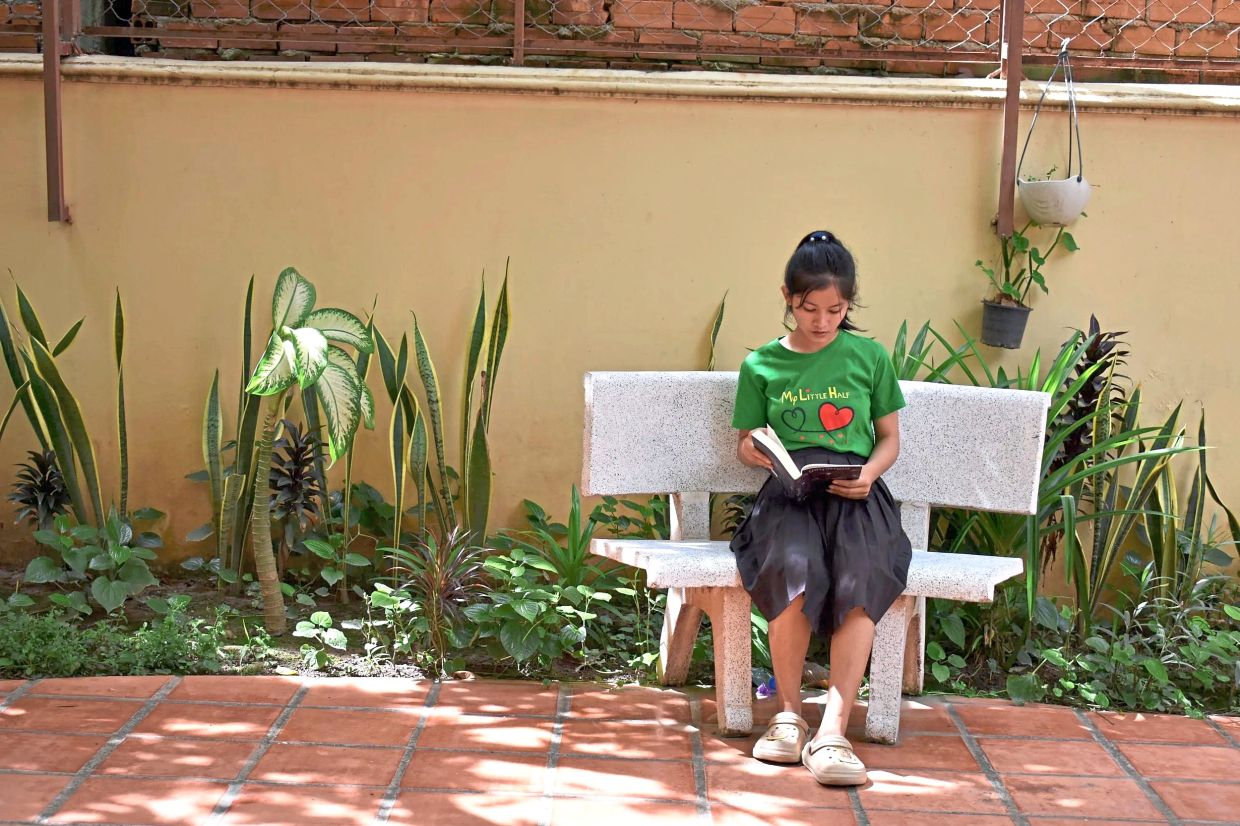
Building a network of women leaders
Harpswell Foundation was founded in 2006 by Dr Alan Lightman, an author and professor at Massachusetts Institute of Technology. Lightman had met a young Cambodian woman who attended law school in Phnom Penh and lived underneath a building because she could not afford housing in the city. He was so moved by her courage and perseverance to pursue higher education that he decided to set up a foundation to help empower Cambodian women to become the country’s next generation leaders through education and skills training.
Harpswell Foundation started by operating one dormitory in Phnom Penh and offering a leadership development curriculum for 32 students while they attended college. Later the organisation built a second dormitory and expanded its total housing capacity to accommodate up to 76 students.
This year, Harpswell celebrated its 20th anniversary. Harpswell has seen 269 young women graduate with tertiary education, 90% of whom first-generation college students. Almost half (42%) have gone on to obtain graduate degrees in Cambodia and abroad.
More than a number
The impact, however, goes beyond the numbers. Harpswell graduates are lifting their families and communities in inspiring ways, and they are shaping Cambodia’s economy and future. They hold successful careers in leadership roles, as entrepreneurs, law firm partners, engineers, doctors, pharmacists, psychologists, social workers, academics, and many more. They actively mentor other young people, and many are financially supporting their younger siblings to go to school and caring for their parents.
Kim Sokngim from class of 2013, returned to Cambodia after completing a civil engineering degree from the University of Georgia in Athens, Georgia, US. She is now a road engineer with the Cambodia office of an international engineering firm.
“Harpswell has brought me to where I am today, a road engineer, which is my dream job,” she says.
Sokngim spends her weekends supporting two public libraries that she opened for children in her hometown.
“I have been helped by many people. I am grateful for the support I received from Harpswell and want to show my gratitude by helping others as much as I can,” she shares.
New challenges in a changing landscape
As Harpswell reaches this milestone, much has changed in Cambodia and globally. Artificial Intelligence dominates the global discourse, and with steady economic growth, Cambodia is scheduled to graduate from the United Nations’ Least Developed Country category in 2029.
The profiles of students admitted into the Harpswell programme in Cambodia have also changed. Students today are further removed from the country’s genocide history. They grow up with smart phones, the internet, and K-pop. They have more aspiration for economic mobility while grappling with Cambodia’s growing income inequality.
However, structural barriers to higher education in Cambodia remain, especially for girls and young women. Between 2008 and 2019, census data shows only a modest increase in the number of Cambodians completing education beyond secondary level, going from about 1.5% in 2008 to roughly 2.8% in 2019 among those who were literate.
Safe and affordable housing for students attending university is among major factors preventing women from pursuing higher education in Cambodia. Most universities are in Phnom Penh and do not offer on-campus housing. The Cambodian government has recognised this challenge and recently announced the construction of a 120-room dormitory just outside of Phnom Penh city center. The dormitory will accommodate up to 500 female students at no charge to the students. But the need remains high.
Meeting the moment
In support of Cambodia’s investment in education, Harpswell offers an impactful model. It focuses on helping students build vital skills, such as problem solving, critical thinking, entrepreneurial, and interpersonal skills. These skills help prepare the students for today’s fast changing job market. Additionally, Harpswell’s approach to building trust and long-lasting community creates a critical support network for the students as they navigate careers following their time at Harpswell.
Harpswell Foundation executive director Jacyl Shaw says these values are reflected in the confidence of the graduates and how they support one another as “sisters” beyond their Harpswell time.
This community is a “strong and resilient global diaspora who are visible and positive ambassadors and role models,” she adds.
Recent freshman Tem Sreyloch agrees. She appreciates Harpswell’s tight-knit community most, she shares.
“At Harpswell, everyone is kind and friendly. I feel safe and warm as if I were living with my own family.”
Coming from a farming family of six children, Sreyloch says that “without Harpswell, going to college would be different. I would have to rent a small room and work while going to school [to afford it].”
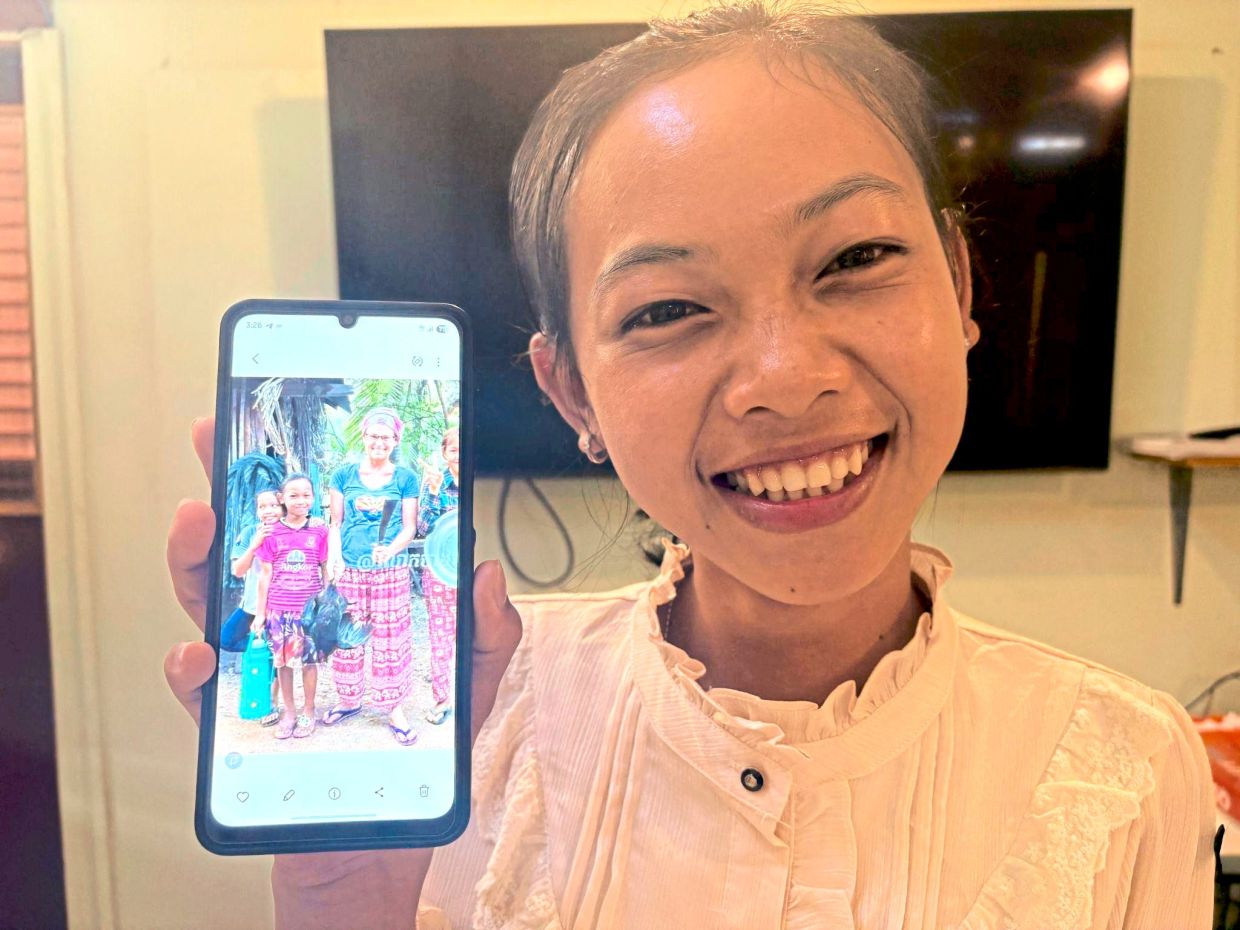
Strengthening regional ties
Beyond its core programming in Cambodia, Harpswell has broadened its impact in South-East Asia. Through its Asean Summit programme, Harpswell brings together young women professionals from across the region for a hybrid five-month leadership programme, culminating in a two-week in-person conference.
The summit focuses on building leadership skills, self-confidence, civic engagement, and most importantly, a strong network of women leaders who support one another in the years to come. To date, the programme has graduated 140 women and continues to grow.
For Novannisa Priadi, a Harpswell Asean Summit alumna from Indonesia, the programme is “life-long learning”.
“Every time we revisit the experience and the materials, we get more to implement in our daily life,” she says.
Novannisa founded PT Fauxell Aditama Indonesia, a nine-employee social enterprise that provides legal services to Small and Medium Enterprises (SMEs) in Bandung. Novannisa knew that she did not want to practice criminal or civil law after law school, because “it’s hard for the poor to win,” she says, adding that the wealthy can pay bribes and win. But building and growing a social enterprise is demanding. To keep the business alive, Novannisa found herself focusing on results and felt she lost a sense of connection to people around her. This led to some management challenges at her company, especially difficulty retaining employees.
After joining the Harpswell Asean Summit programme, Novannisa realised the importance of connecting with friends and family and understanding people’s different perspectives. The programme inspired her to connect deeper with her employees and try to understand their motivation. This helped her resolve her management challenges.
“Suddenly they (employees) have all this energy to work on our projects without me having to scold anyone,” she says with a laugh.
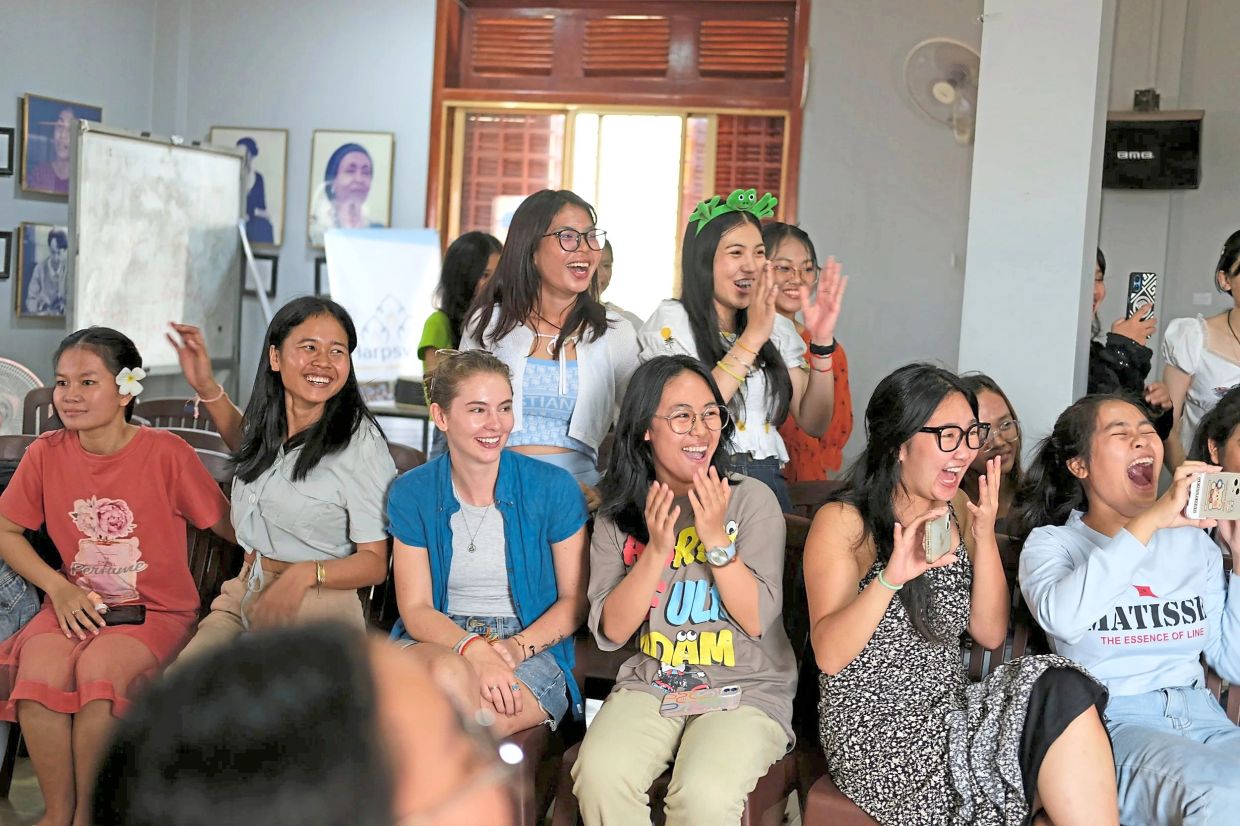
This year, the summit will be capped off with an inaugural gathering of women leaders and allies from across the region and world titled IKAT from Nov 6 to Nov 8 in Phnom Penh.
Set to be a bi-annual conference, IKAT’s name is inspired by the rich weaving traditions of South-East Asia, and is designed to bring together more than 150 women leaders from different corners of the world, “each one a distinct thread woven into a stronger, more connected whole”. Together, they will form a vibrant network of changemakers, united by a shared commitment to leadership, collaboration, and impact in South-East Asia.
Stepping into a new decade for the foundation, Shaw’s vision is to continue to deepen Harpswell’s investment in Cambodia and wider Asean, while expanding impact through new partnerships and alliances.
This includes launching new initiatives designed to empower and equip women leaders in the region with the necessary knowledge, skills, confidence, and opportunities.
“Women’s leadership is a powerful force for social and economic progress in South-East Asia,” she notes.
Menghun Kaing is an alumna of the Harpswell Foundation and a public policy professional.
For more on IKAT, go to www.ikat-harpswell.org/
