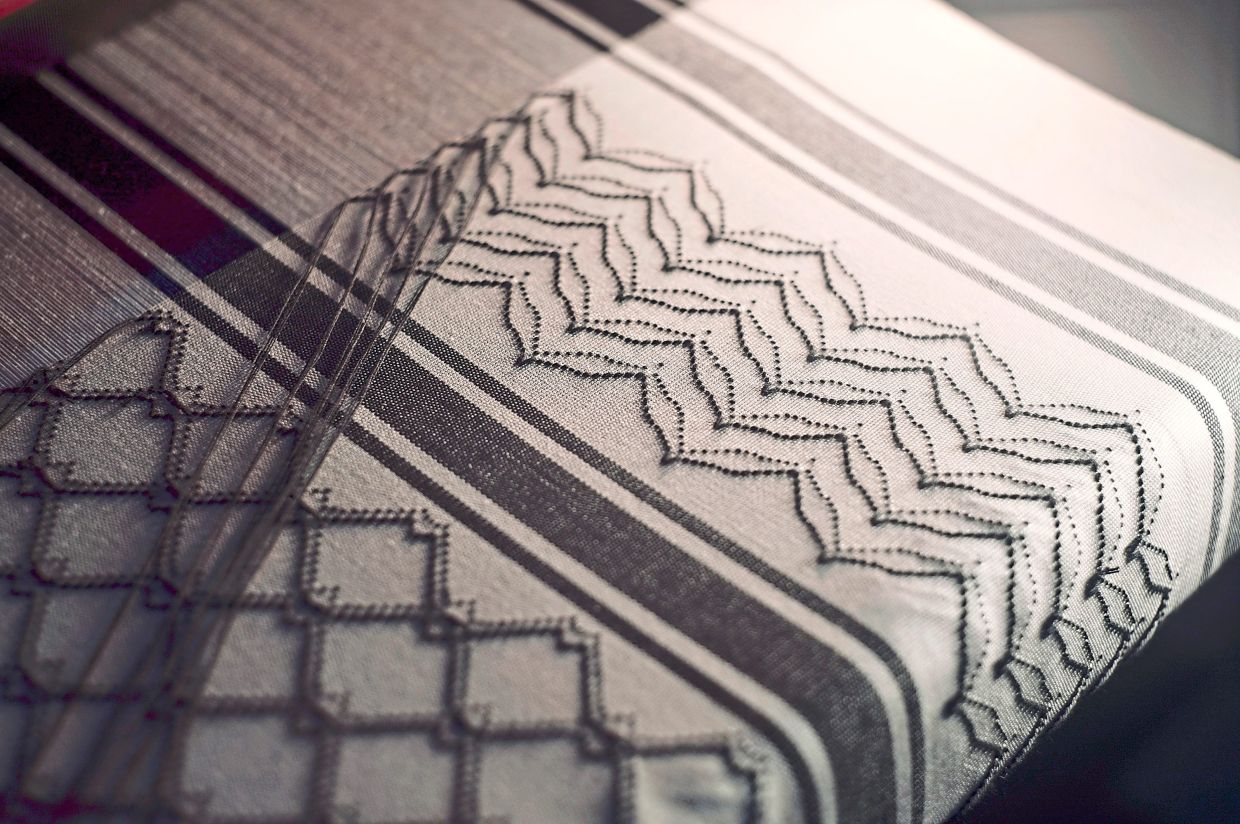
IN Laos’ capital of Vientiane, a small group of weavers work diligently to produce a Palestinian keffiyeh made of traditional Lao silk.
Each hand-woven keffiyeh often takes over a month to complete, and its design also incorporates the Lao Unesco heritage symbol of the “naga” (serpent) interlocking into a fishnet pattern – representing protection, strength, and resilience.
“According to traditional mythology, the Naga wrapped itself around Lao people to protect them from brutal Siamese conquests in the past, and exchanged weaving knowledge with the Laotians.
“Meanwhile, the Palestinian fishnet symbolises their connection to the sea,” explains Souvixada Somsacksy, founder of The Silk Keffiyeh Project.
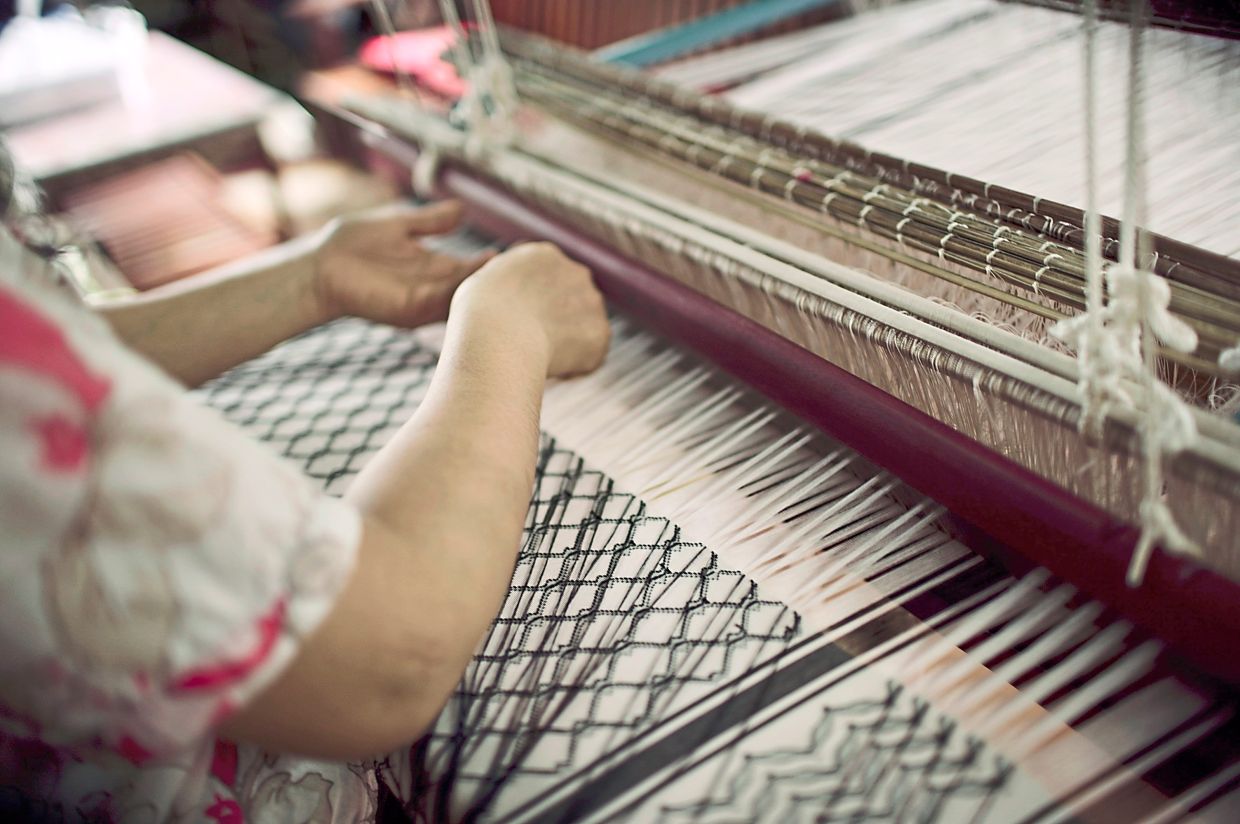
The project, which began in December 2024, aims to become an independent, worker-led alternative for Lao textile weavers wanting to ease out of factory work – while also raising funds for Palestine.
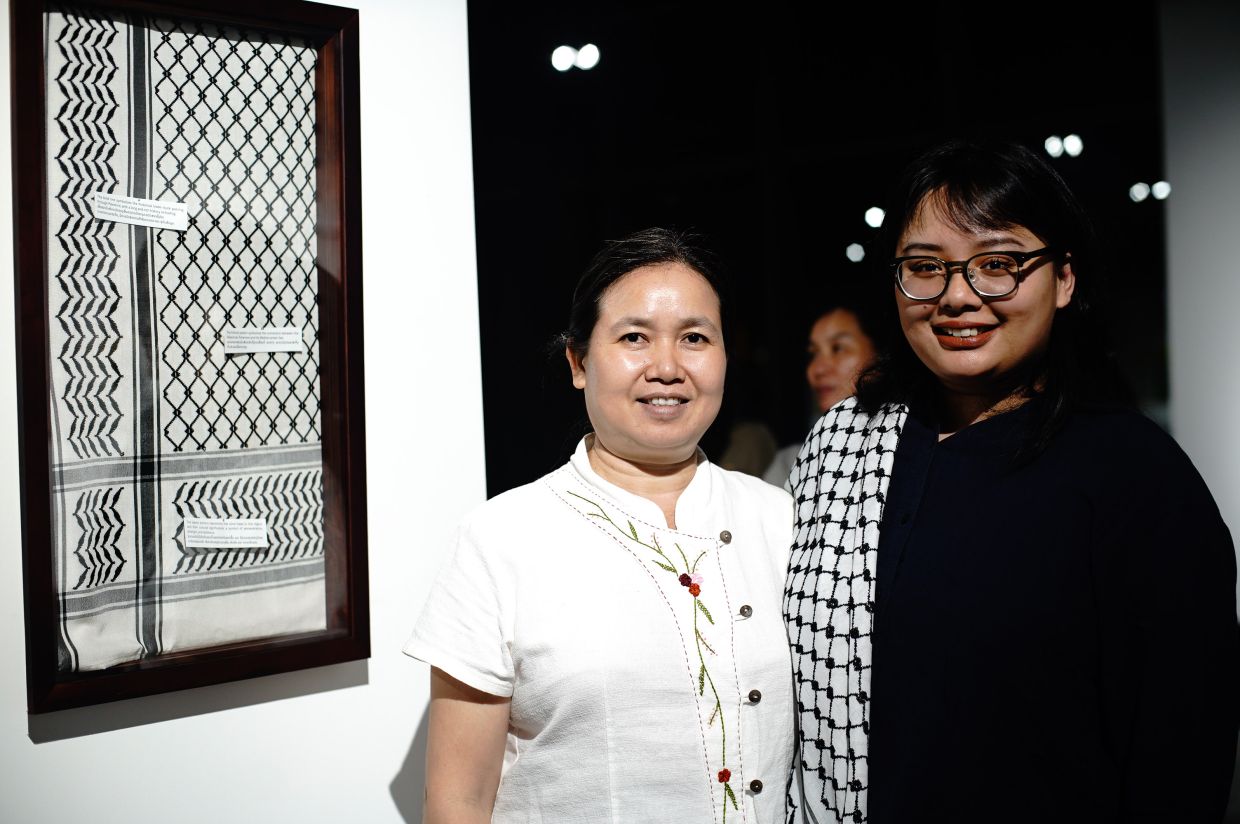
Souvixada jointly launched the project with her godmother, Bouakham Phengmixay (also known as Mae), who had previously worked in a textile factory for over 30 years, and is keen to pass on her craftsmanship in a slowly fading tradition to younger generation Laotians.
They now run a full-time residency for people to learn how to weave traditional Lao textile – while also incorporating weekly activities such as Palestinian tatreez embroidery circles – combining traditional motifs from both Lao and Palestinian textiles.
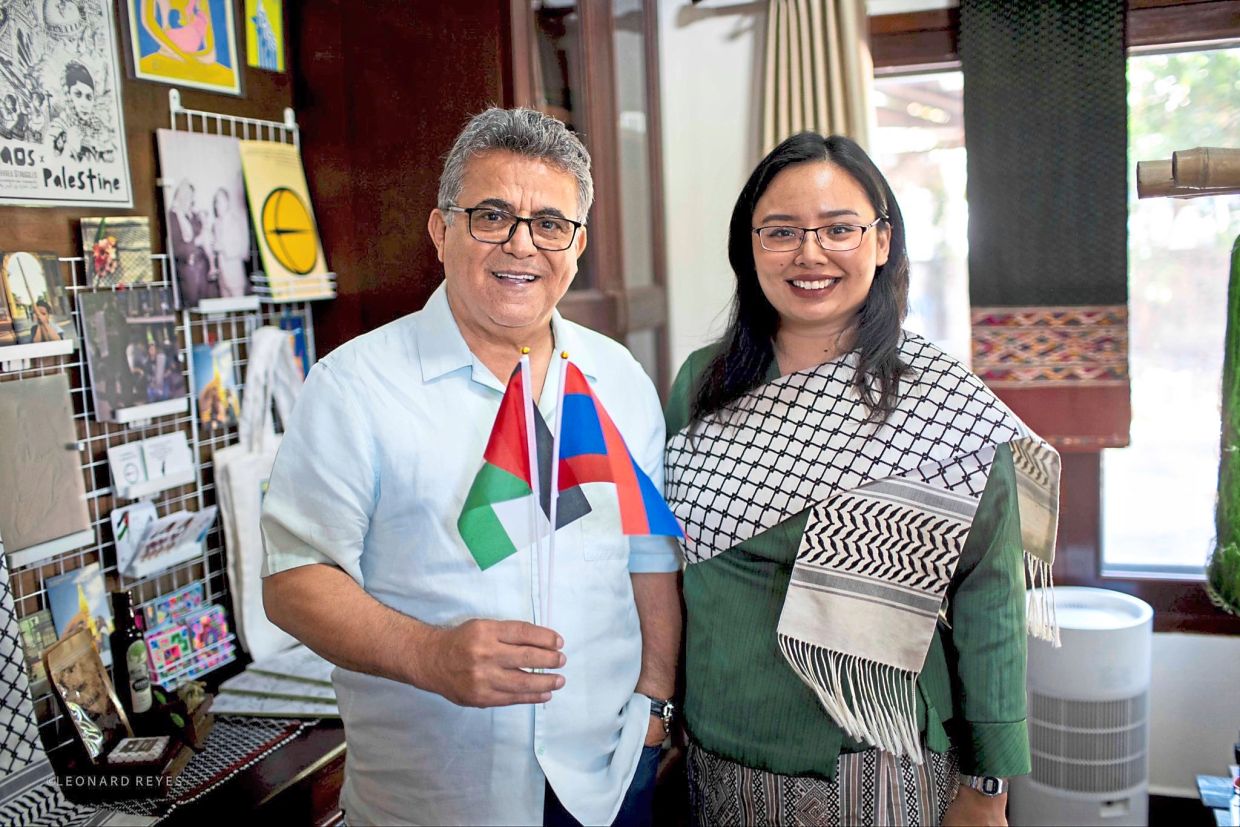
In May, Saadi Salama, Palestinian ambassador to Laos, Vietnam and Cambodia, spent a few days with the weavers after finding out about The Silk Keffiyeh project.
“The ambassador was extremely emotional and very, very moved. He was so ecstatic and happy to find out that this project existed, and it was so meaningful to me.
“He told me how special this project is, and how much it means to the Palestinian people that I am doing this. He insisted that I have to keep it going, and it gave me the confidence to keep pushing for this project’s survival,” Souvixada recalls.
She reiterates that the long-term goal of this project had always been for Mae to eventually teach Lao silk weaving as a sustainable career – hoping to pave the way for other lifetime weavers to do so as well.
Despite the financial challenges of keeping the project alive, Souvixada and Mae have recently managed to employ another full-time weaver, Maiphon Vivongxay (also known as Pa Mai) – another former textile factory worker.
Pa Mai, who had grown up during the 1964-1973 “US Secret War” in Laos, learnt how to weave traditional silk while surviving American air raids.
Laos remains the world’s most heavily bombed country per capita throughout modern history. Between 1964-1973 alone, the United States had dropped more than two million tonnes of bombs on Laos across 580,000 bombing missions – killing roughly 10% of the local population.
To date, more than 30% of these cluster munitions still remain as unexploded ordnance (UXO), scattered across the country, and over 20,000 people have since been killed – even decades after the war ended in 1975.
Nearly half of those killed by unexploded cluster munitions in Laos are children.
Separately, more than 64,000 children have also reportedly been killed or injured in Gaza since October 2023, according to Unicef estimates.
Alongside raising awareness for the Palestine cause, especially among the local Lao population – Souvixada also stresses the importance of the project as a bridge to understanding and recognising Laos, especially for those who have otherwise not heard about the country and its history.
“This project humanises the plight and struggle of our people, the people who remained steadfast to their land despite the bombings and dehumanisation tactics that the US continues to deploy on our Arab brothers and sisters.
“It shows that if a small country like Laos can persevere in spite of all the bombs, then so can, and so will Palestine,” says Souvixada. — Asia News Network
Dania Kamal Aryf is a reporter and digital sub-editor at the Asia News Network.
To find out more about The Silk Keffiyeh project, go to https://silkkeffiyeh.org/
Weavers of hope
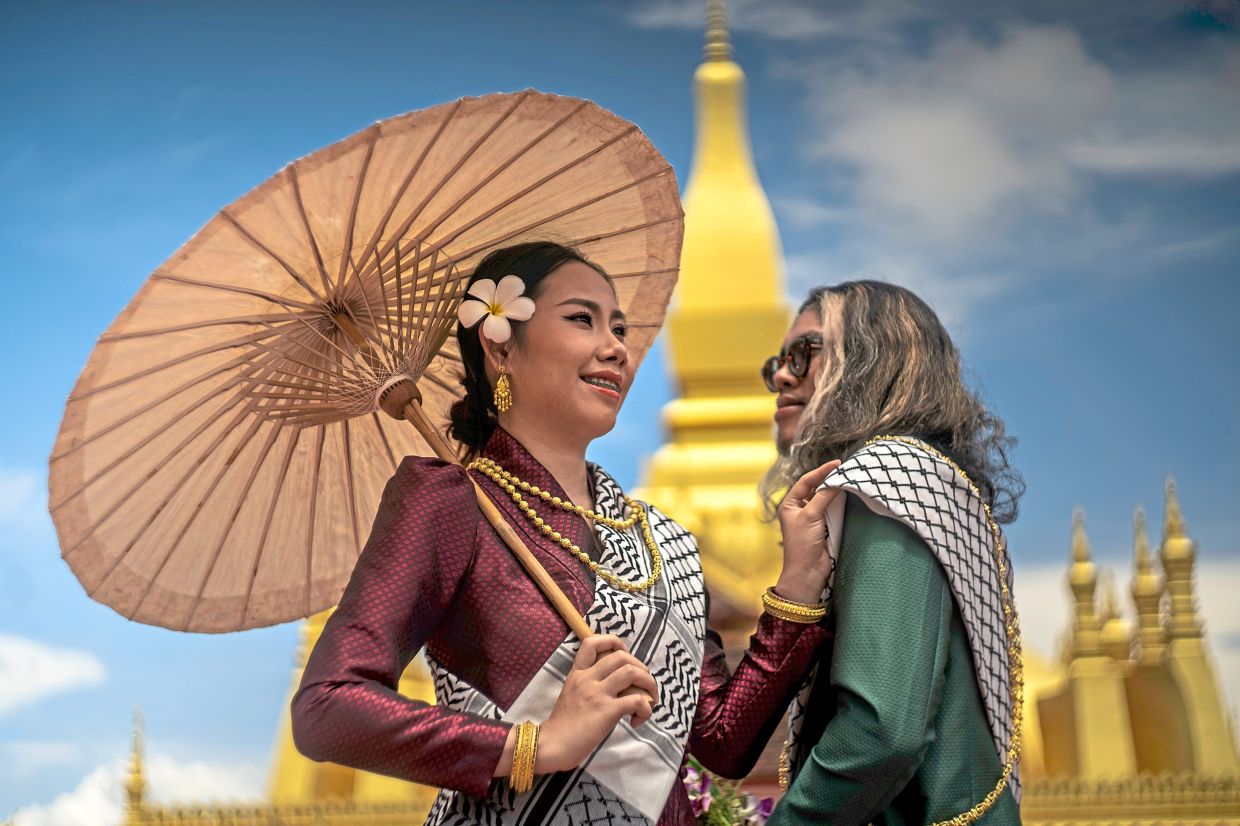
Two models wear the keffiyeh as a pha bieng (traditional Lao shawl) with their traditional Lao attire, demonstrating the similarities between the Lao and Palestinian spirit. — PHOTOS: LEONARD BENJAN REYES/The Silk Keffiyeh Project
The keffiyeh design incorporates the Lao Unesco heritage symbol of the ‘naga’ interlocking into a fishnet pattern.
Souvixada (right) with Palestinian ambassador Saadi Salama, who also tried tried his hand at weaving a few lines of silk keffiyeh at the residency in Vientiane.
Mae (left) and Souvixada at an exhibition showcasing a hand-woven silk keffiyeh in Vientiane.
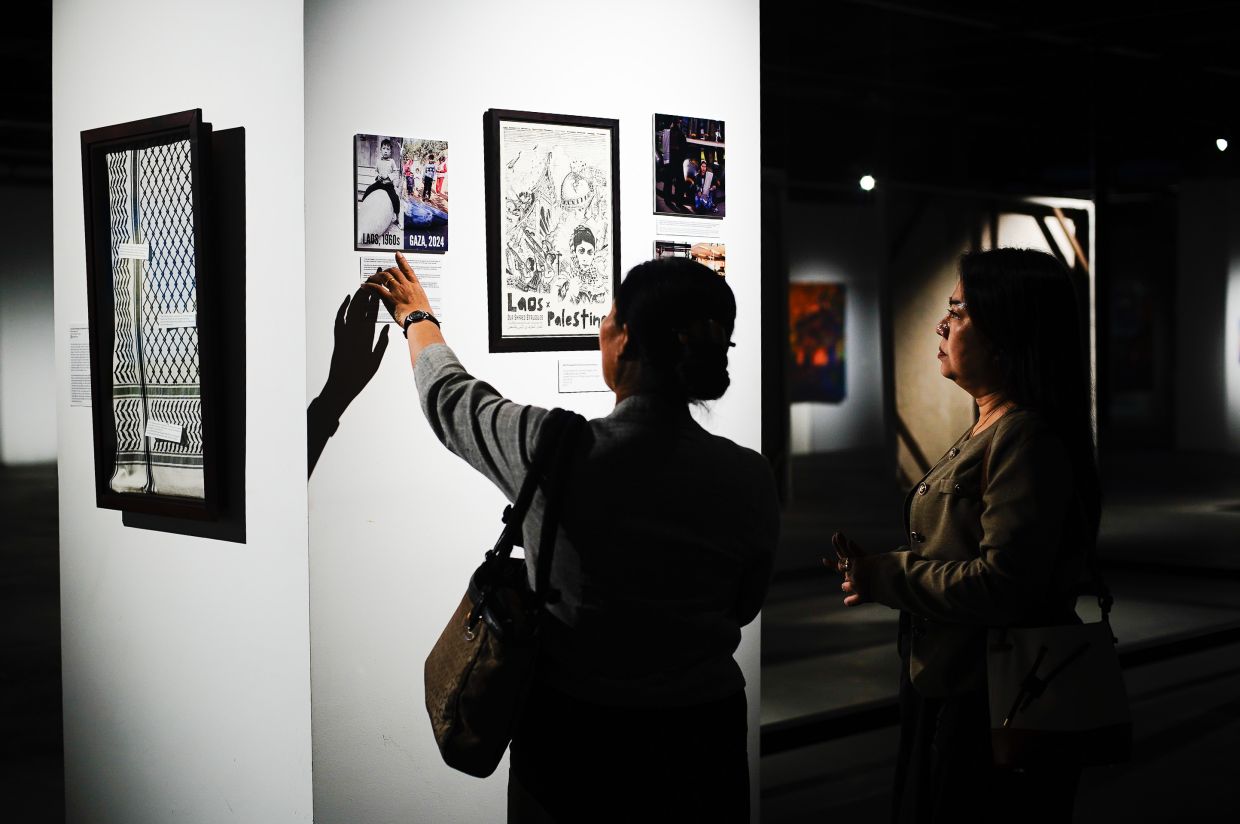
Visitors viewing the Laos-Palestine solidarity exhibition run by the Silk Keffiyeh Project in Vientiane.
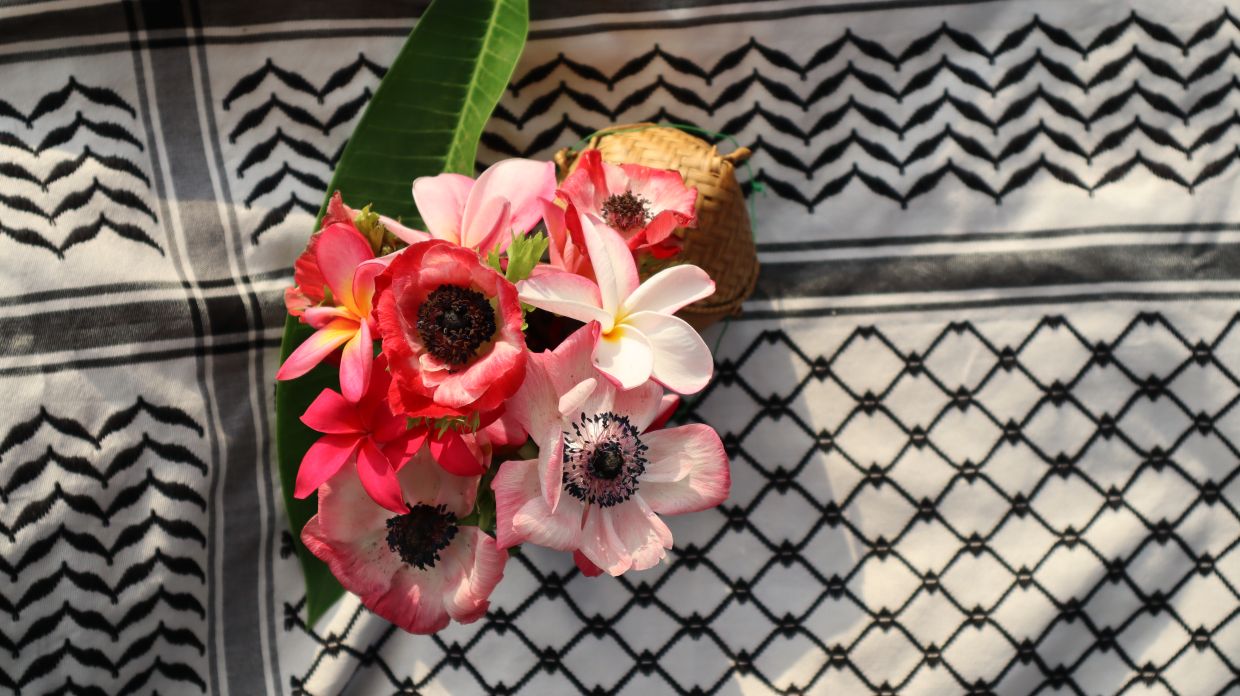
Plumeria and poppy flowers are often associated as cultural symbols of Laos and Palestine respectively.