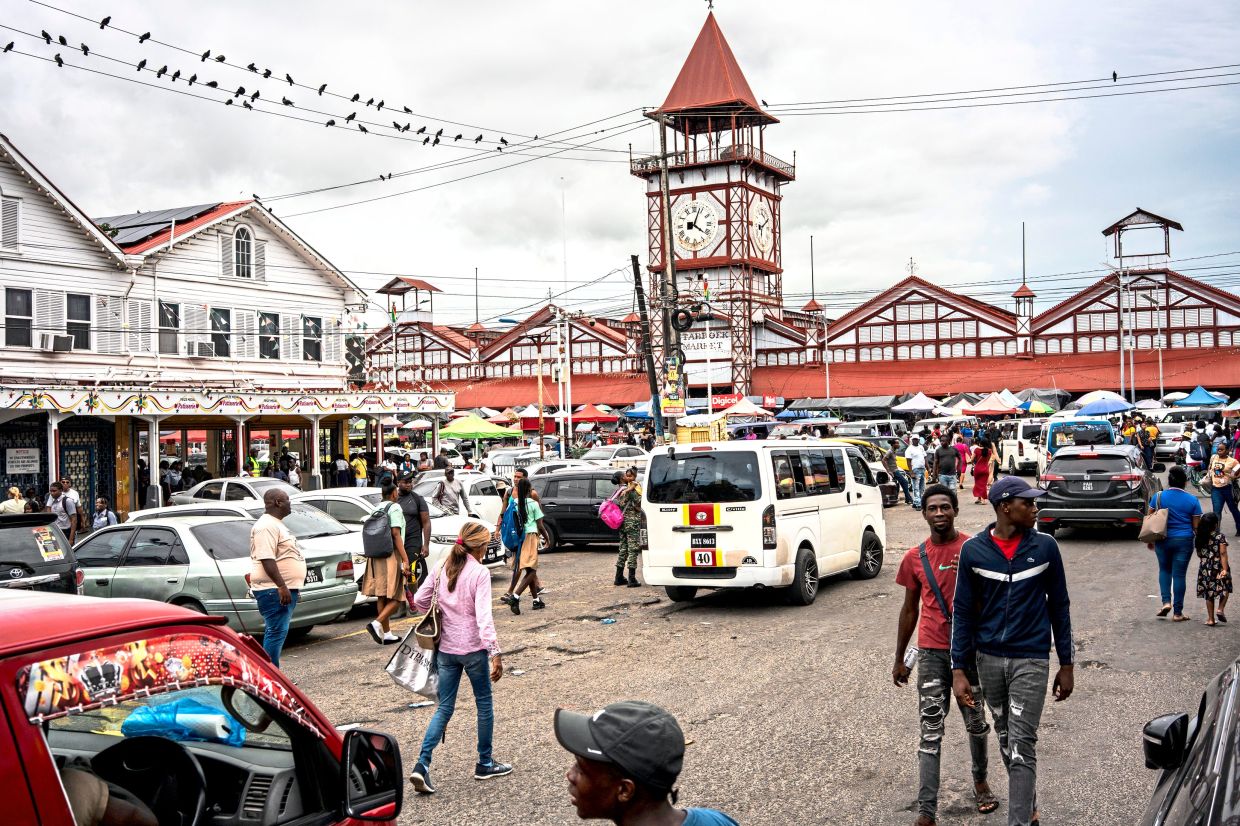
FERRARIS and Lamborghinis creep through traffic-choked streets. New steakhouses serve imported cuts of Wagyu beef. Music festivals fly DJs in from Miami and Jamaica. Opulent weddings are the talk of the town.
Such luxury trappings are popping up in Georgetown, Guyana’s capital. The city is far removed from the widening conflict in the Middle East, which has severely restricted energy flows, casting a pall over economies around the world.
But Guyana, a small South American country bordering Venezuela that began producing oil just a few years ago, is reaping a windfall from the turmoil.
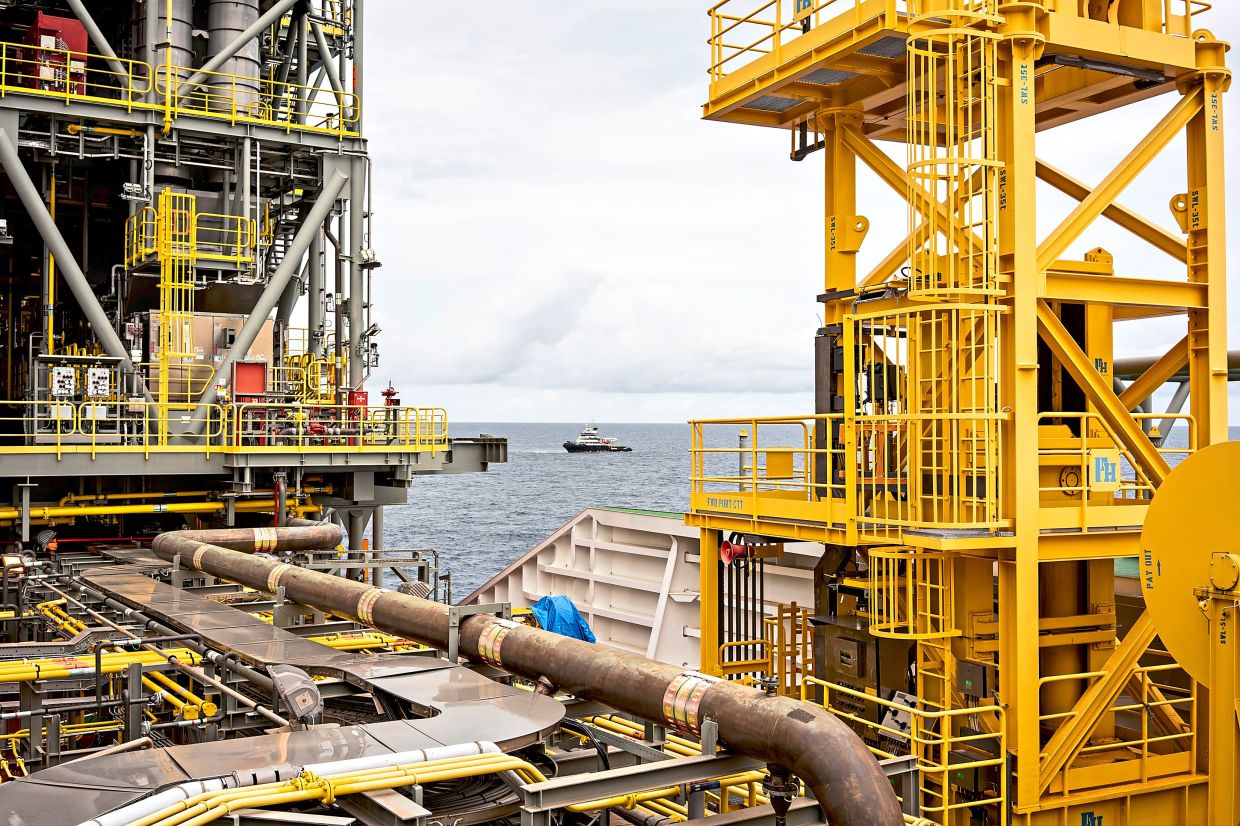
The English-speaking nation with just a million people is positioned to take in an estimated US$6.5bil in oil revenue this year, more than double the amount forecast at the start of the year, as the Iran conflict drives oil prices higher and countries race to secure supplies far from drone-infested chokepoints.
This torrent of oil money underscores Guyana’s new standing as a lynchpin in a sweeping realignment of global energy markets.
Blunting the loss of Middle Eastern oil, production is surging up and down the Americas, strikingly in Guyana but also in Canada, Brazil, Argentina and perhaps soon in Venezuela.
The Americas now produce around 37% of the world’s oil, up from 27% a decade ago, according to S&P Global Energy, a research firm.
“Guyana is suddenly punching well above its weight,” said Richard Rambarran, an economist in Georgetown. “But this is only the beginning.”
Guyana’s output now stands at about 900,000 barrels a day. Its production capacity is projected to surge to 1.7 million barrels a day by 2030, Rambarran noted.
Economic growth reached a staggering 33% in the first half of the year, according to government data, making Guyana the world’s fastest-growing economy.
But the boom also carries the risk of inciting or magnifying tensions and grievances across the former British colony. Far from creating a shared prosperity, many in Guyana complain that a small elite is amassing fortunes while ordinary people face rising inflation, rampant corruption, a housing shortage and substandard public services.
The rifts have stark implications for the United States.
Guyana is becoming one of the main growth engines for Exxon Mobil, the largest US oil company, as the Trump administration seeks to assert greater control over Western Hemisphere energy resources.
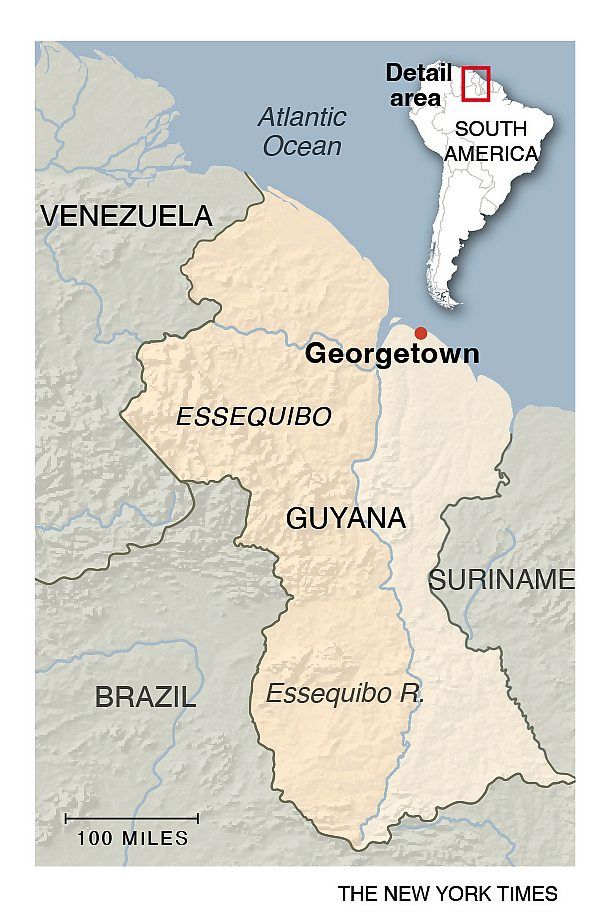
Guyana’s chronically strained ties with neighbouring Venezuela are also worsening as Venezuela’s leaders press ahead with a claim to more than half of Guyana’s territory and Venezuelan migrants pour into Guyana in search of jobs.
Government officials and economists argue that oil revenues are fundamentally improving living standards in what was one of Latin America’s poorest countries, citing tax cuts, new infrastructure like bridges and highways, the elimination of college tuition and one-off cash payments of about US$500 to citizens.
Guyana’s population is so small and its oil so plentiful, that such initiatives are quickly becoming the new normal.
The per capita value of Guyana’s oil reserves was recently estimated to be second highest in the world, after Kuwait.
After a state-run ferry capsized in July, killing about 100 people in Guyana’s deadliest event since the 1978 Jonestown mass murder and suicide, some people at vigils and protests asked how this could happen in the world’s fastest-growing economy.
The disaster’s casualties, demonstrators emphasised, were among those struggling to eke out a living even as the government is increasingly flush with oil money.
“We’re sick of hearing about a boom that means nothing to most Guyanese,” said Romola Lucas, a lawyer arrested with other protesters and accused of unlawful assembly after demanding that government officials be held accountable for the tragedy.
As Lucas emphasised, there can be a jarring disconnect between Guyana’s stunning economic growth and conditions on the ground.
The World Bank has noted Guyana’s rise to high-income status. Annual per capita income in Guyana stands at about US$32,000, ahead of every other country in Latin America, including relatively prosperous Uruguay and Chile.
But at street level in the capital, Guyana does not feel like it is suddenly turning into an advanced economy.
Raw sewage flows through Georgetown’s canals. Families cram into squalid housing vulnerable to flooding or fires. Pedestrians take their lives into their hands just to cross anarchic intersections. Robberies at gunpoint are a common hazard.
Georgetown’s rapidly changing cityscape is another point of friction as developers raze the city’s famed, often-decaying Victorian wooden architecture designed for its tropical climate, replacing it with high-rises made of concrete and steel.
“The sheer ugliness of it all is what gets to me,” said Thomas Singh, a professor of economics at the University of Georgetown.
Gerry Gouveia Jr, a business leader involved in aviation and lodging ventures, said such fears were overblown.
He listed legislation requiring foreign energy companies to utilise local businesses and workers and Guyana’s creation of a sovereign wealth fund, with limits on what leaders can immediately withdraw, as factors enabling Guyana to avoid those problems.
“Guyana’s leadership knows where other countries got it wrong,” Gouveia said.
Citing infrastructure investments and a robust farming sector, he added, “We’re showing that we have a chance to get this right.”
Guyana’s government did not respond to requests for comment. But in public remarks in recent days, President Irfaan Ali said the economic boom would benefit “every household” in Guyana; he also said authorities were adopting measures to shield citizens from rising inflation.
Guyana is also affected by the political and economic turmoil in Venezuela, which lays claim to over half of Guyana’s territory. After Exxon found oil more than a decade ago in the waters off Essequibo, the region in dispute, the feud escalated drastically.
Under previous leader Nicolas Maduro Venezuela intercepted a seismic research vessel hired by Exxon, built a military base directly facing the Essequibo border and sprayed a Guyanese military vessel with gunfire.
Less than a year ago, a Venezuelan man was arrested in connection with the detonation of explosives at a Mobil gas station in Georgetown that killed a six-year-old girl.
Authorities called the blast an act of terrorism, raising the possibility that it could be part of a campaign aimed at destabilising Guyana. Venezuela’s government rejected any involvement in the attack.
When US forces toppled Maduro in January, many in Guyana thought the dispute would ebb.
But the opposite happened.
Venezuela’s new leader, Delcy Rodriguez, elevated the feud to one of her top foreign policy objectives, even travelling to the International Court of Justice (ICJ) in the Netherlands to present Venezuela’s case.
Her moves have perplexed Guyanese officials, especially after the United States previously showed support for Guyana with defence partnerships and warnings of retaliation if Venezuela attacks.
With the ICJ’s ruling in the dispute expected by early 2027, some in Guyana have questioned whether the Trump administration is effectively playing both sides, potentially as a way to exert greater dominance of the energy resources in Essequibo.
“The US does not have friends, only interests,” said Singh, the economist.
A US State Department spokesman said President Donald Trump is prioritising security and prosperity in the Americas, without going into any detail regarding the territorial dispute. — ©2026 The New York Times Company
This article originally appeared in The New York Times
Already a subscriber? Log in
Get 20% OFF The Star Digital Access
Cancel anytime. Ad-free. Unlimited access with perks.