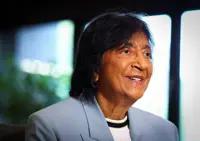
THE Nobel Peace Prize has from time to time been a contested symbol. Sometimes it has been awarded to genuine champions of justice, other times to figures whose legacies were stained by war and compromise. But in honouring Navanethem Pillay, better known as Navi Pillay, the Nobel Committee has chosen rightly.
The former United Nations Human Rights chief and judge at the International Criminal Court (ICC) is no ordinary laureate. She is a beacon of human rights, justice, and the rule of law – a woman whose life’s work embodies the very ideals the Prize was meant to honour.
Her recognition is not just a personal triumph; it is a vindication of decades of struggle against racism, apartheid, and colonial domination.
Yet, instead of applause, the United States and Israel responded with venom.
Their rejection of Pillay’s award is not simply a diplomatic snub – it is a mockery of the very principles they claim to defend.
It exposes the hypocrisy of democracies that preach freedom while practicing domination.
It reveals the fragility of their moral posturing, the emptiness of their rhetoric about liberty and justice.
A life of struggle and principle
Born in apartheid South Africa, Pillay’s life story is itself a testament to resistance. She confronted racial discrimination not as an abstract principle but as a lived reality.
Her legal career was forged in the fires of struggle, defending political prisoners and challenging the machinery of apartheid. She understood that justice is not a gift bestowed by the powerful but a right wrested from them through courage and persistence.
Her background shows her commitment to fight for the equality of man, to confront discrimination based on race and ethnicity. This is not the language of convenience; it is the language of sacrifice.
Pillay’s rise from the margins to the highest offices of international law demonstrates that integrity and perseverance can carve pathways even through the most entrenched systems of oppression.
A relentless pursuit of justice
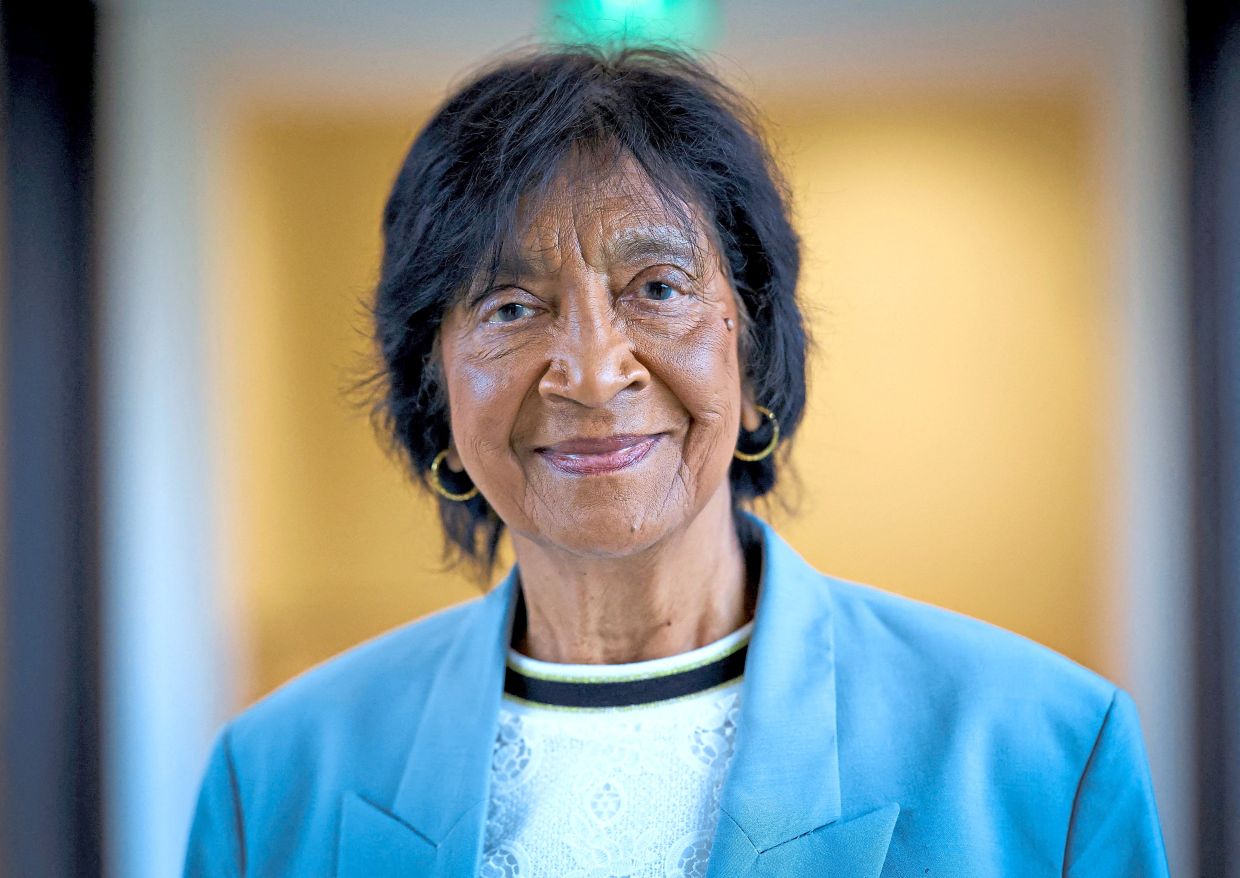
At the United Nations, Pillay’s work stretched over decades. She was not content with platitudes about human rights; she demanded accountability.
Her investigative work focused on upholding justice and the rules based system that the UN is supposed to embody. She was instrumental in exposing atrocities, documenting violations, and insisting that international law must be more than words on paper.
Her tenure was marked by diligence and faithfulness to principle. She pursued justice for the Palestinians with clarity and courage, refusing to be silenced by the powerful.
Just before her retirement, her investigations firmly established that Israel had committed genocide against the Palestinian people. This was not a reckless accusation; it was a conclusion grounded in evidence, testimony, and the standards of international law.
Of course, the Zionist state never accepts the truth unless it aligns with its objective of seizing all of Palestine. Denial is the Zionists’ default posture, distortion their weapon. But Pillay’s findings stand as a record that cannot be erased, a testament to the crimes that occupation has inflicted on generations of Palestinians.
The backlash and politics of hate
The immediate response from Israel and the US was telling. Donald Trump, still nursing his own failure to ever win the Peace Prize, lashed out at Norway, accusing it of leaving an “indelible stain” by honouring an “unknown liberal.”
His narcissism cannot abide rejection, and his contempt for international justice is matched only by his disdain for Palestinian lives. His tantrum was not about Pillay – it was about his own wounded ego, his inability to accept that the world does not revolve around his ambitions.
Marco Rubio went further, threatening “war” on the ICC. He promised sanctions, demanded that America’s allies fall in line, and warned that failure to comply would invite Washington’s wrath.
These are not the words of democrats; they are the threats of imperialists who see justice as an enemy. Rubio’s rhetoric exposes the deep hostility within the American political establishment toward any institution that dares to challenge its impunity.
Together, Trump and Rubio’s reactions reveal the depth of hatred harboured by Washington and Tel Aviv toward the very idea of Palestinian humanity.
Their rejection of Pillay is a rejection of justice itself. It is a declaration that the lives of Palestinians are expendable, that their suffering is invisible, that their rights are negotiable only when convenient to Empire.
The struggle against the Empire
What does this show? It shows that the struggle for Palestinian freedom is not only against Israel’s colonial settler extremism but also against the US' imperial shield.
Any action that promotes Palestinian statehood will be resisted, vilified, and crushed by these powers. Their rage at Pillay’s recognition is not about her – it is about the cause she represents: the right of Palestinians to live free from occupation and genocide.
The Nobel Committee’s decision has torn away the mask. It has revealed the depth of hypocrisy in Washington and Tel Aviv. It has shown that their commitment to democracy is conditional, their respect for human rights selective, their embrace of justice hollow.
They will champion freedom in Ukraine but deny it in Gaza. They will speak of sovereignty in Taiwan but trample it in Palestine. They will invoke international law when it suits them but threaten war against the ICC when it does not.
The broader context: Colonialism and Resistance
The rejection of Pillay’s award must be understood in the broader context of colonialism and resistance. Israel’s project is not merely a national struggle; it is a colonial settler enterprise rooted in dispossession.
The US’ support is not merely diplomatic; it is imperial sponsorship designed to maintain hegemony in West Asia. Together, they form a partnership of domination, a coalition against justice.
But history teaches us that colonial projects are never permanent. Apartheid fell in South Africa. Empires crumbled across Asia and Africa. The Palestinian struggle, though long and painful, is part of this continuum. Pillay’s recognition is a reminder that the arc of justice, though bent and battered, continues to move toward liberation.
Standing with humanity
So, what must we do?
As people who stand on the side of humanity, we must continue to resist. We must stand up to the colonial settler ideology embraced by Zionists and their supporters.
We must refuse to let threats from Trump, Rubio, or Netanyahu silence the truth. We must amplify the voices of the oppressed, challenge the narratives of empire, and insist that justice is not negotiable.
This means supporting the Palestinian struggle not as a distant cause but as a moral imperative.
It means recognising that the fight against occupation is inseparable from the fight against racism, inequality, and imperialism everywhere.
It means building solidarity across movements, linking the struggle in Gaza to the struggles in Ferguson, Kashmir, and beyond. Justice is indivisible; oppression anywhere is a threat to freedom everywhere.
Navi Pillay’s award is not just a recognition of her life’s work – it is a rallying cry. It reminds us that the struggle for Palestine is inseparable from the struggle for justice everywhere.
The Nobel Committee honoured Pillay; the US and Israel exposed themselves.
One side chose justice, the other chose hypocrisy.
History will remember who stood with humanity – and who stood with genocide.
Dr Abdul Latiff Mohd Ibrahim is head of the Research and Publications Division at the International Institute of Advanced Islamic Studies, Malaysia. The views expressed here are solely the writer’s own.