KOTA KINABALU: Bahasa Malaysia, as the national language, has harmoniously united the state's diverse ethnic groups, cultures and dialects, says Chief Minister Datuk Seri Hajiji Noor.
He said Bahasa Malaysia served as a unifying force, enabling Sabahans of different ethnic backgrounds to communicate, understand one another and work together in a spirit of goodwill.
However, he stressed that efforts to elevate the national language did not mean restricting or marginalising Sabah's rich diversity of mother tongues and ethnic languages.
Hajiji called on all Malaysians to strengthen their resolve to make the national language a language of unity, knowledge and pride for the entire nation.
Hajiji said the younger generation needed to master multiple languages to enhance their competitiveness without neglecting efforts to uphold the national language, particularly when communicating on social media platforms.
"To the younger generation, amid the widespread use of various social media platforms, the spirit of prioritising the correct and courteous use of the national language must remain strong.
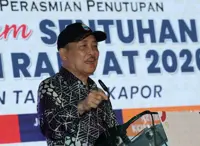
"While freedom of expression is exercised across various platforms, it must be guided by courtesy and proper language," he said when officiating at the Sabah-level National Language Month (BBK) 2026 celebration at Dewan Amil Jaya, Dewan Bahasa dan Pustaka (DBP) Sabah Branch here on Tuesday (Oct 27).
Hajiji said the Sabah government will continue to give serious attention to strengthening the national language amid challenges posed by digitalisation and artificial intelligence (AI), including expanding its use in public places and ensuring greater compliance in official matters.
These efforts would also include promoting the traditional Malay poetry art of pantun and Jawi script, researching various languages and ethnic literature, as well as developing the book industry featuring Sabah writers, Hajiji said.
"I also want to see Sabah's young people, digital influencers and local creative industry players harness technology to promote greater use of the national language," he said.
Hajiji said the Sabah Maju Jaya (SMJ) Development Plan focused not only on economic growth, infrastructure and strategic sectors, but also on human capital development and the well-being of a society with an independent spirit and a strong sense of identity and character.
He said the State Government would continue to strengthen cooperation with DBP and the Education Ministry to elevate the status of the national language and literature through various activities, research and publications.
He also appreciated DBP's efforts to expand book publications across various fields of knowledge, including works featuring local perspectives, while nurturing young writing talents and conducting research to document local languages and ethnic heritage for future generations.
Hajiji said the State Government hoped to strengthen cooperation with DBP, relevant agencies and writers' associations to make Sabah a model state in cultivating a culture of knowledge, advancing literature and promoting excellence in the use of the national language.
He said efforts to position Kota Kinabalu as a City of Literature should be intensified through more language and literary activities.
He also welcomed the Bahasa Kita, Tanggungjawab Kita (Our Language, Our Responsibility) Carnival, which featured discussions on strengthening language use in the media, Jawi script and the art of pantun recitation.
Commenting on the BBK 2026 theme, "Our Language, Our Identity," Hajiji said it was in line with the spirit of Bahasa Jiwa Bangsa, reminding society that language was not merely a tool for daily communication but also a reflection of a nation's identity, character, thinking and values.
He said the proper, eloquent, courteous and respectful use of the national language also reflected the maturity and dignity of a civilised nation, in line with the Malaysia Madani aspiration, which was founded on the values of compassion, sustainability, well-being, innovation, respect and trust.
He said racial unity could be strengthened through the thoughtful use of the national language while respecting ethnic and cultural diversity, and that writing, literature and creative media could serve as platforms to nurture creativity and develop a first-class society.