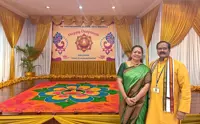
KOTA KINABALU: Every Deepavali, Datuk Dr K. Mathavan gets up before sunrise at 5am, has an oil bath, performs prayers at home and set off with his family – all in new clothes – to the temple.
He then returns home and prepares to welcome guests to his house.
It does not sound very different from any Hindu in Malaysia but Dr Mathavan is in Sabah. He is among just a handful of people who celebrate the festival in the state.
Just a few decades back, people in Sabah had little knowledge about what Deepavali was. Many had not even heard of the word before, said Dr Mathavan, a Kuala Lumpur-born who came to Sabah 43 years ago as a houseman.
“We were a rare community,” he added.
Back then, he said, Deepavali was not yet a public holiday in Sabah, Sarawak and Labuan.
It was only when Datuk Yong Teck Lee was named the chief minister back in the 90s that Deepavali was declared a public holiday in Sabah.
“When I first came to the state, I could hardly see an Indian except in hospitals (where they served as doctors), or lawyers or engineers.”
It was much later before families started to celebrate in a grander style, inviting friends and family as well as neighbours to share the Deepavali joy, said Dr Mathavan.
He said other Sabahans started to learn and see for themselves how Deepavali was celebrated, what food was served and what the festival of light meant.
“Festival of light means triumph of good over evil, or victory of light over darkness,” he explained. That, he said, was why there would always be lights, lighted candles or diyas or oil lamps during Deepavali.
Dr Mathavan said temples then began holding programmes or open houses for devotees and the public while state departments, agencies and NGOs also followed suit.
As more Sabahans of diverse cultural and religious backgrounds came to enjoy the festival together, relations and understanding also strengthened and improved.
He said while the Indian and Hindu communities are still considered a minority in Sabah, it was heartening to see how far this celebration has come, with the state even hosting several state-level open houses over the past decade or so.
“This year, our temple Sri Pasupathinath Alayam will have an open house as well, where breakfast will be provided for devotees and guests,” said Dr Mathavan.
“The Sabah Indian Chamber of Commerce will host an open house for lunch, sponsored by the state government,” he said, adding that state leaders, prominent figures as well as the head of state, Tun Musa Aman, are expected to attend.
As for his family, he said their celebrations centre around the temple programmes with the public and later a smaller gathering with close family and friends.
The usual dishes prepared consist of idly, vadai, murukku, kesari and athirasam, along with sambaar and chutney for the vegetarians and mutton or chicken curry for the non vegetarians.
“We celebrate Deepavali in Sabah much like those in the peninsula. We just have a smaller crowd.”