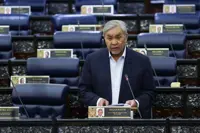
KUALA LUMPUR: Putrajaya is collecting data on refugee communities nationwide through the Refugee Registration Document (DPP) programme, says Datuk Seri Dr Ahmad Zahid Hamidi.
The Deputy Prime Minister said the programme, implemented under National Security Council Directive No. 23 on the Policy and Mechanism for the Management of Refugees and Asylum Seekers (2023 revision), was currently in its first phase.
“The data collection exercise is aimed at enabling the government to manage, coordinate and monitor the presence of refugees in the country temporarily before they are sent to third countries or returned to their countries of origin,” he said in a written parliamentary reply on Monday (Oct 26).
He was responding to Mohd Sany Hamzan (PH-Hulu Langat), who enquired about the Government’s stance on international organisations operating in Malaysia, including the UNHCR, which had allegedly failed to cooperate as expected and refused to share refugee data.
Ahmad Zahid said the initial phase focused on individuals held at Immigration detention depots.
“Meanwhile, the second phase, which would cover United Nations High Commissioner for Refugees (UNHCR) cardholders outside the depots, is expected to begin in the near future,” he said.
He said international organisations remained important to Malaysia as platforms for cooperation and the sharing of expertise in addressing cross-border issues that could not be tackled independently.
He said such cooperation also helped strengthen the country’s capacity and reduce the burden of managing humanitarian issues.
He also cited Malaysia’s experience in handling Vietnamese refugees on Pulau Bidong from the late 1970s to the 1990s, when the country worked with the UNHCR and the international community to manage refugee arrivals, provide temporary protection and secure resettlement in third countries.
Ahmad Zahid said the government continues to require the UNHCR’s assistance in facilitating refugee resettlement, as countries receiving refugees use UNHCR cards to verify their identities and refugee status.