
PETALING JAYA: South-East Asia’s journey towards sustainability has entered a transformative era, with Malaysia taking decisive legislative and economic action to enforce strict climate accountability.
Natural Resources and Environmental Sustainability Minister Datuk Seri Arthur Joseph Kurup said the nation is moving beyond gross domestic product intensity reductions under its Nationally Determined Contribution 3.0.
Instead, Malaysia is adopting an absolute emissions target, aiming for emissions to peak by 2030 and achieve net-zero carbon emissions by 2050.
“The ministry is developing the National Climate Change Policy 2.0 alongside drafting our National Climate Change Bill.
“This enactment will holistically institutionalise climate governance. It mandates responsibilities for public and private sectors complete with key performance indicators and strict reporting mechanisms,” he said.
Central to this push is the rollout of a phased carbon tax implementation starting from this year.
Focusing initially on high-intensity sectors, specifically iron, steel and energy generation, Arthur said the structured carbon pricing mechanism aims to stimulate green tech innovation while safeguarding the global competitiveness of Malaysian exporters.
“Our objective is not to impose punitive pressures but to create an incentive system aligned with international standards,” he stressed.
Alongside industrial decarbonisation, Malaysia continues to protect at least 50% of its national land area under forest cover while expanding circular economy initiatives such as waste-to-energy facilities and reducing single-use plastics.
Calling on the corporate sector to eliminate greenwashing risks, Arthur urged companies to adopt standards like Task Force on Climate-related Financial Disclosures and International Sustainability Standards Board while setting targets backed by the Science Based Targets initiative (SBTi).
“The government encourages companies to accurately account for total emissions across entire supply chains, particularly Scope 3, and set decarbonisation targets backed by SBTi.
“This transparency framework ultimately proves whether sustainability pledges being made will deliver tangible value or are merely corporate window dressing,” he said this in his virtual keynote address at the Asia ESG Summit 2026.
Making ESG count
Arthur further praised the Summit, which is hosted by Star Media Group (SMG), as a “highly strategic cross-industry platform for thought leaders” to drive regional action.
He emphasised that achieving a large-scale transition requires a dynamic partnership combining robust government policies, continuous investor innovation and aggressive corporate implementation.
“I call upon corporate leaders not to treat environmental, social and government criteria as a rigid, compliant exercise.
“Instead, make it the core of organisational resilience. A strong driver for innovation and a stepping stone for elevating financial competitiveness globally,” he added.
Arthur urged businesses to view sustainability as a disciplined capital strategy and high-intensity governance framework, noting that this mindset is where long-term value begins for both commercial enterprise and the natural world.
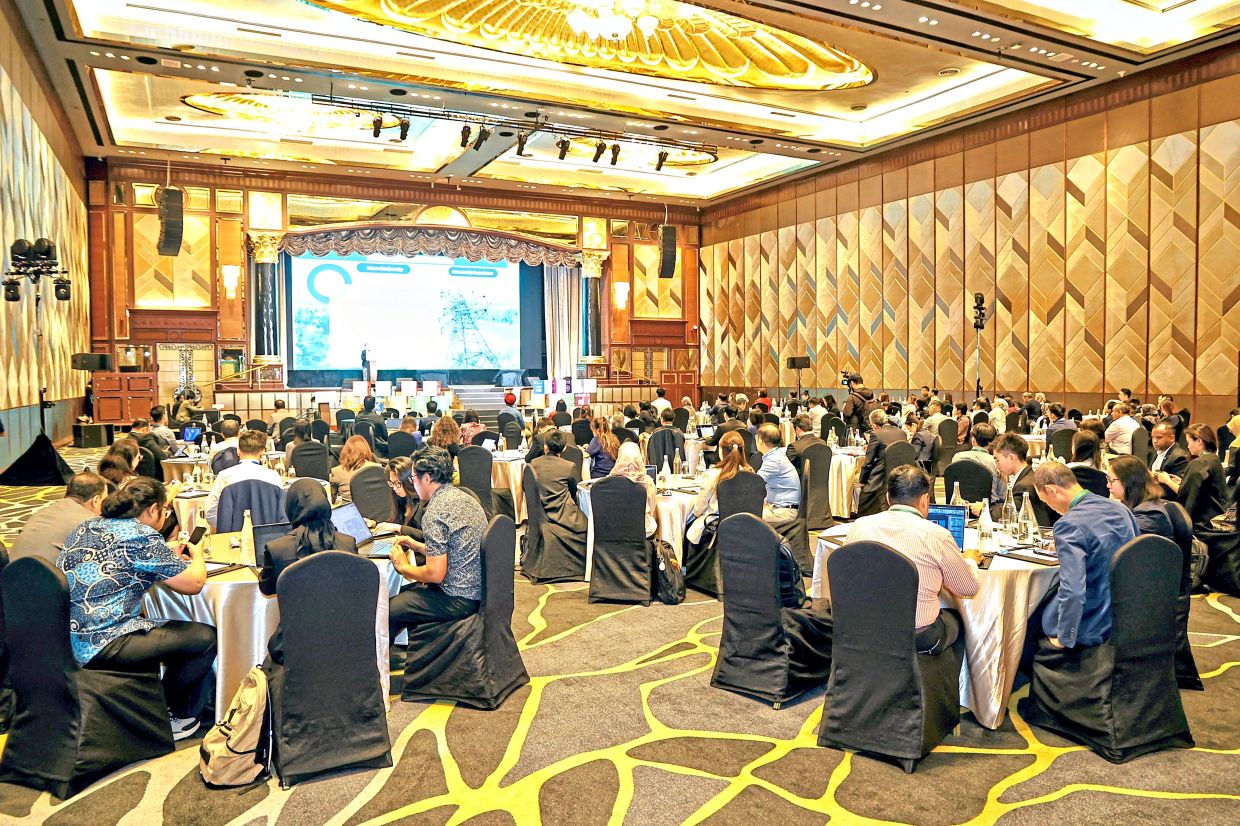
Under the theme “Driving Action to Measurable Impact”, the Asia ESG Summit 2026, which is taking place on July 21 and 22 at Sunway Resort Hotel in Bandar Sunway, Selangor, offers a platform for key stakeholders shaping the region’s sustainability agenda.
The event marks the second summit organised under the Asia ESG Positive Impact Consortium (A-EPIC) – an initiative led by SMG, Media Group of Kompas Gramedia (KG Media) of Indonesia and the Inquirer Group of Companies (IGC) of the Philippines – reflecting a shared media commitment to driving sustainable progress.
Sime Darby Property Bhd is the main sponsor while Permodalan Nasional Bhd is the supporting partner.
Notable attendees included SMG group chief executive officer Chan Seng Fatt, chief operating officer Lydia Wang, chief content officer Datin Paduka Esther Ng and Singapore Deputy High Commissioner Shivakumar Nair.
According to Chan, hosting the second Asia ESG Summit reflects the group’s responsibility as an A-EPIC founding member to escalate this regional initiative.
“In the first year, we initiated and focused on dialogue. This second year, we are focused on proving implementation and execution.
“Anchoring it again this year reflects the members’ mutual trust and shared responsibility in elevating this initiative to the next level alongside our Philippine and Indonesian partners,” he said.
“The power of this consortium lies in its reach across borders alongside KG Media and the IGC.
“Our ability to reach nearly 125 million people gives us the power to amplify this initiative.
“By sharing case studies and building a community along the way, we can propel this initiative beyond public relations toward execution that is transparent, measurable and done the right way,” Chan added.
In a separate statement, KG Media sustainability vice-president Wisnu Nugroho said sustainability communication must move beyond good intentions and compelling narratives.
To earn public trust, every commitment must be grounded in credible data, consistent measurement and transparent reporting.
“We cannot manage what we do not measure. And the future of corporate growth belongs to those who back up their sustainable narratives with verified data.
“For KG Media, the role of media is not only to amplify sustainability stories but to make them clearer, more accountable and easier for the public to understand.
“By combining research-based insights, credible data and KG Media’s media ecosystem, we aim to turn complex sustainability issues into meaningful stories and benchmarks the public can understand, follow and verify,” said Wisnu.
Philippine Daily Inquirer chief operating officer Rudyard Arbolado spoke about their commitment to “Balanced News, Fearless Views” by treating sustainability as a matter of public accountability.
“Through Inquirer ESG Edge and our regional partnership in the A-EPIC, we are combining media resources across borders to look past corporate public relations.
“Our goal is to use our combined reach to scrutinise ESG claims, share verified best practices and hold companies accountable to the data they report,” said Rudyard.
Tackling urban challenges
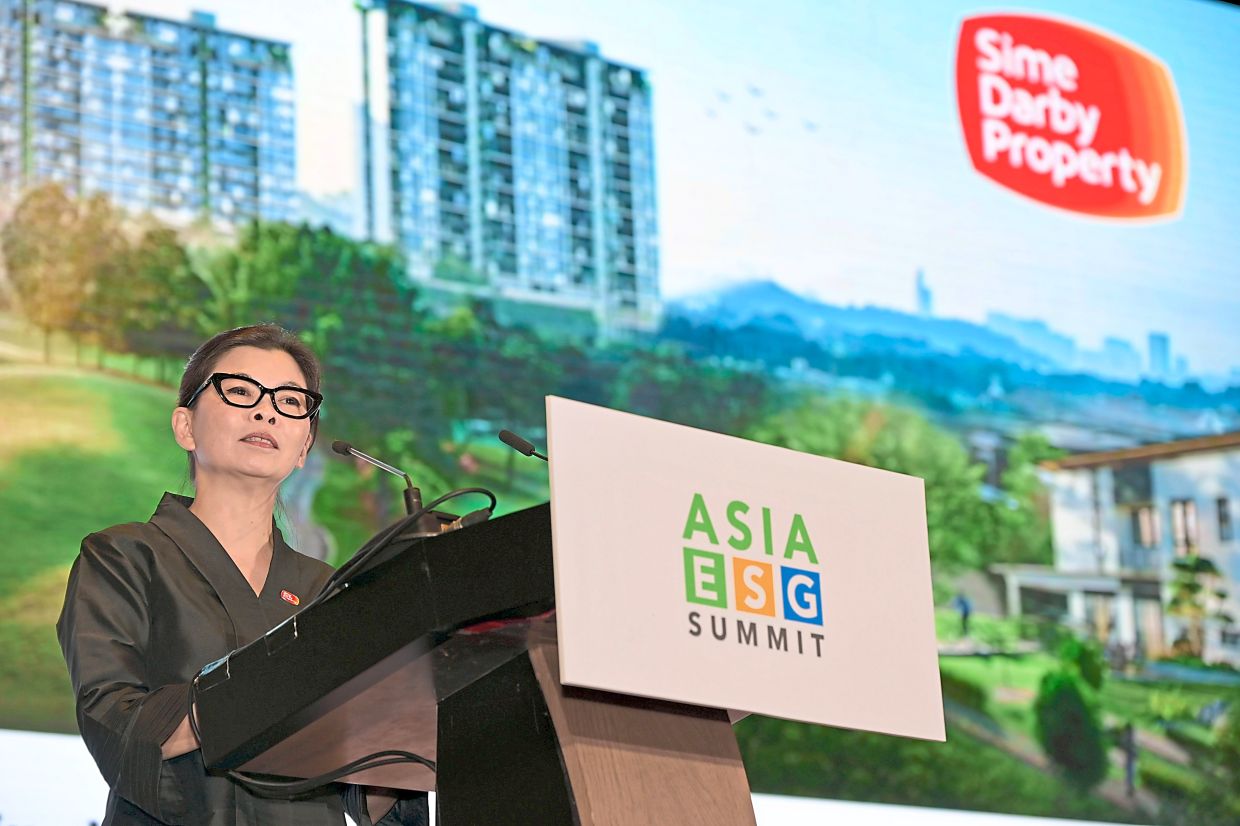
Sime Darby Property sustainability general manager Dr Yasmin Rasyid, in a statement, said embedding ESG principles across the business is essential to building long-term resilience and creating lasting value for stakeholders.
“We view sustainable development as a blueprint for shaping the future.
“As we continue to support the A-EPIC, our focus aligns with this year’s agenda of translating high-level commitments into measurable outcomes,” she said.
“This year’s theme, ‘Driving Action to Measurable Impact’, reflects our belief that meaningful progress is achieved when ambition is matched by execution.
“It also embodies our ‘Purpose of Driving Real Estate as a Value Multiplier for People, Businesses, Economies and the Planet’.
“As a force for good, we are committed to turning ideas into tangible impact through responsible development, strategic partnerships and solutions that create long-term value,” she added.
Yasmin said platforms such as the A-EPIC play an important role in accelerating collective action by enabling industries to move beyond commitments and demonstrate measurable progress.
“Sustainability is not only integral to future resilience but also a catalyst for long-term growth and shared value creation,” she said.
Meanwhile, Yasmin’s presentation titled “Beyond ESG Reporting: Turning Sustainability Ambitions into Real-World Impact” was among the highlights yesterday.
She shared about Malaysia’s looming urban crisis, noting that 90% of the population will live in cities by 2050 with 60% of those future homes yet to be built.
To tackle this, Yasmin outlined their four-pillar strategy focusing on energy and carbon, biodiversity, climate resilience and community experience to reduce construction and operational emissions.
Assoc Prof Dr Chen Jit Ern’s session on “Climate Resilience and Adaptation: Hardening Assets Against Extreme Weather Risk” piqued the interest of many participants.
Prof Chen, who heads the Jeffrey Sachs Centre on Sustainable Development at Sunway University, shared valuable insights and answered questions on how companies can assess and manage physical climate risks, strengthen infrastructure and build resilience against extreme weather events.