
THE acronym ESG emerged in 2004. Paul Clements-Hunt, who was the head of the United Nations Environment Programme Financial Initiative (UNEP FI), is widely credited as one of the figures behind the creation of the acronym.
In a guest post published on Artificial Heart on Medium in 2020, he recalled how he and his UNEP FI team decided on the order of the three letters.
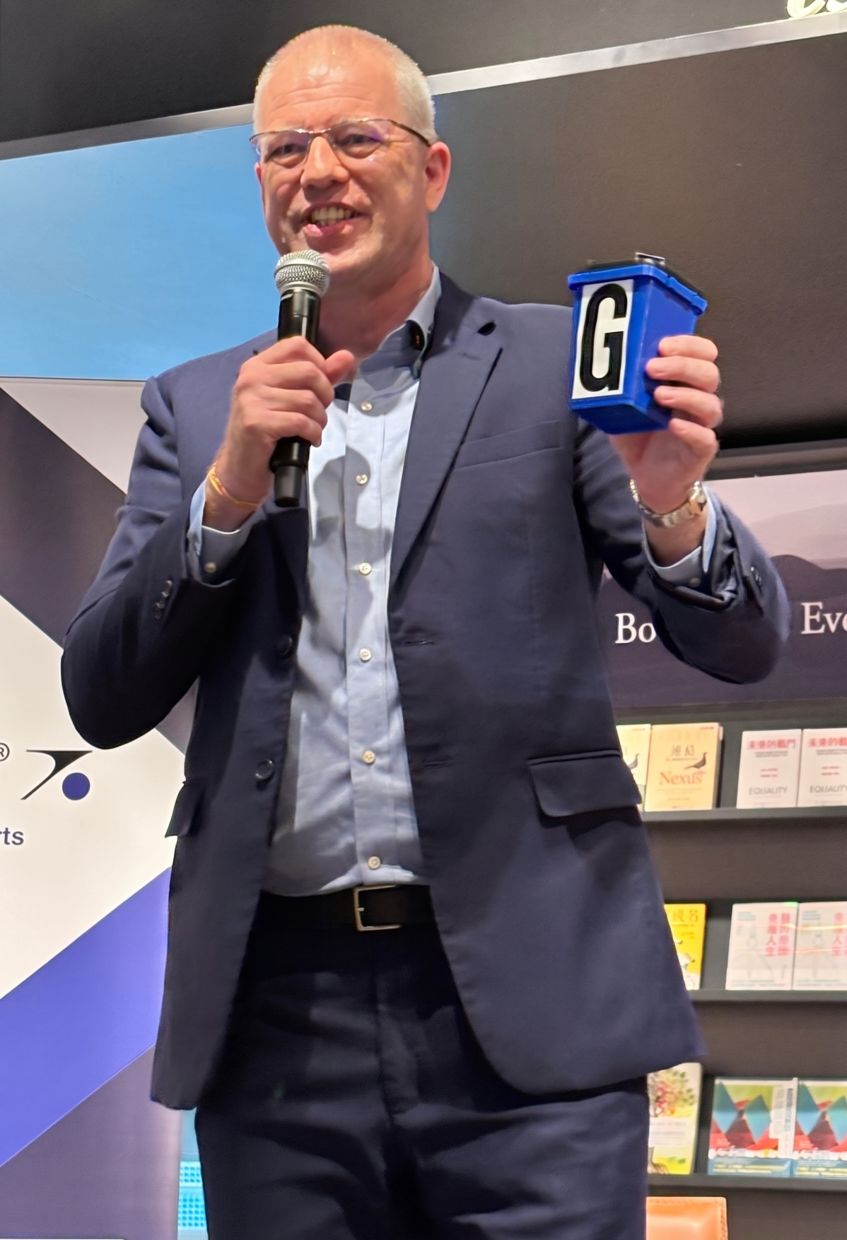
He wrote that, intuitively, the phrase should begin with G, governance, as that seemed to dominate the business world, but GES “did not feel right” and was “a touch awkward, a touch too technical”.
By contrast, ESG had “a better ring”, was “sexier” and might gain traction. Clements-Hunt wrote that eventually, his team collectively agreed, and ESG was born.
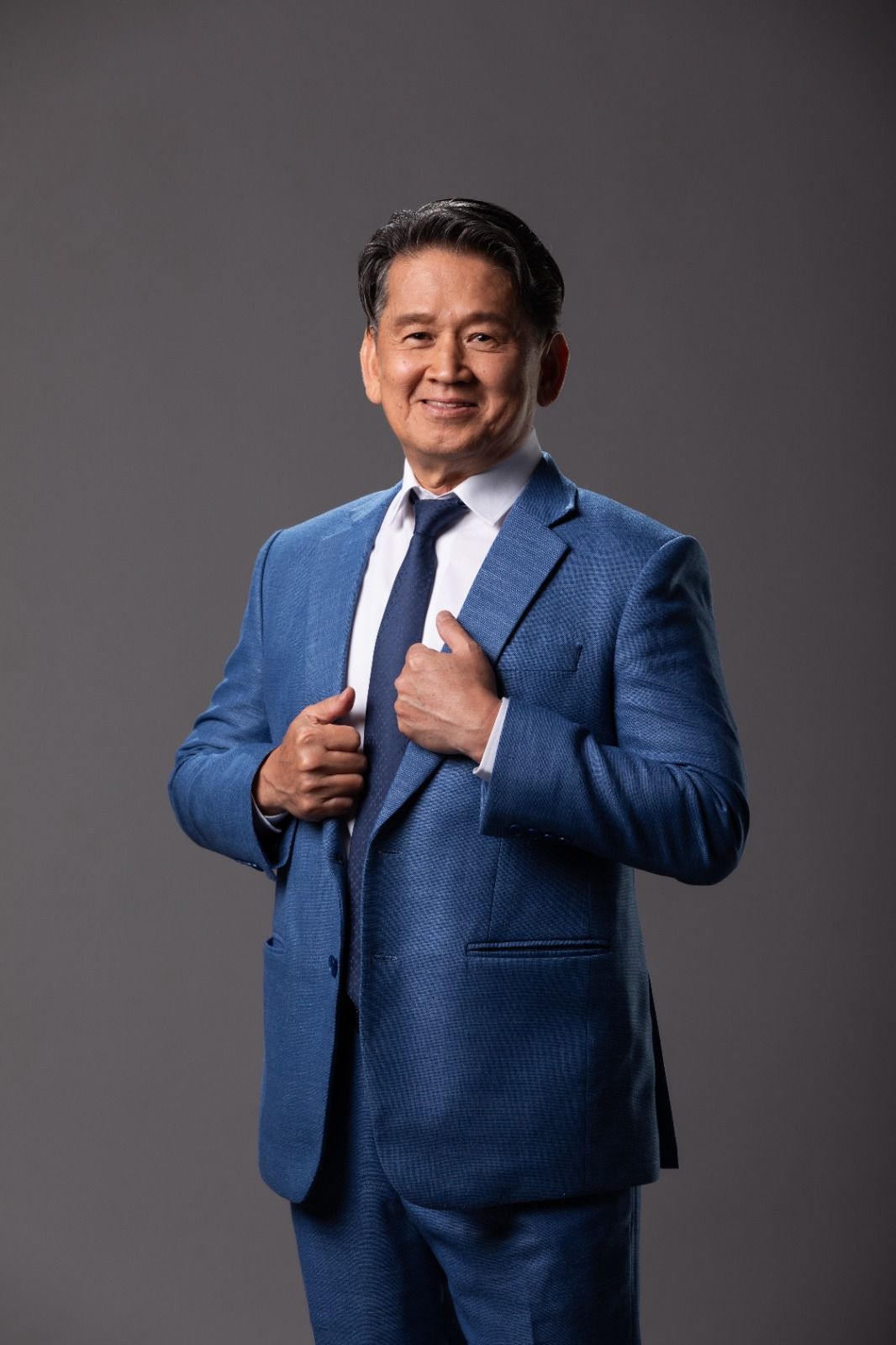
Orbis Business School managing director Dennis Akkerman, a Malaysian-based author and coach on business transformation, said he personally thinks the acronym should have begun with G.
“I believe that ESG should actually be GSE, because governance is the foundation on which the social and environmental pillars are built,” he said. “Governance comes first because it is non-negotiable, and that is as much about policies as it is about core values.”
His reasoning is that governance sets the conditions for everything else to happen. Social brings people, culture and behaviour together – and behaviour is what governance is governing – while environmental responsibility becomes embedded when an organisation has strong governance and the right culture to support it.
“Environmental and social outcomes are things an organisation ultimately does, or does not do. Governance determines whether those things get measured, rewarded and sustained,” he said.
Describing governance as the operating system of an organisation, Akkerman said if the operating system is unstable, it does not matter how impressive things look on paper.

In sustainability, governance can refer to both a subject matter as well as an oversight mechanism. From a topical perspective, Polar Advisory Group founder Pam Lee Wen Ai explained, governance topics include anti-corruption, data privacy and security, compliance, risk management, etc.
The term sustainability governance, meanwhile, tends to refer to the structure on how sustainability agenda is being governed in an organisation, she added.
Either way, the disconnect between a company’s commitments and how they are translated into practice remains an important area of discussion.
Having policies is easy
Governance is often less visible than environmental performance, partly because environmental issues are easy to measure, Akkerman said.
“Carbon has a unit. Energy consumption has a number. You can set targets, build dashboards and show progress.”
Governance, by contrast, is about human behaviour, power and decision-making. It is the “soul of the organisation” and much harder to measure, he added.
It makes things more transparent, which in itself can become uncomfortable for some leaders.
“Asking to stop an unethical decision or say no to a major customer is a very different, and more difficult, conversation. Governance cannot really be delegated or outsourced because leadership itself is part of what is being governed,” he said.
Lee pointed out that governance topics such as anti-corruption, data privacy and security, compliance and risk management are not new. Most companies, particularly listed companies, already have mechanisms in place to deal with governance issues due to regulatory compliance.
For higher risk areas, the company would invest in internal controls, including policies, standard operating procedures and training, and multiple lines of defence such as internal auditor review and external assurance.
But putting these controls in place is actually the easier part, Lee said. “The harder part is actually changing the culture and behaviour of the people. For example, is there a real tone from the top? Is the whistleblowing channel actually being used, or is it just on paper only?”
Beyond compliance
Citing a real-life example, Akkerman said he knew of a person whose manager repeatedly introduced a vendor during tender processes, and this particular vendor kept getting the deal despite not being the cheapest nor the best.

She confronted the manager and raised the issue with senior leadership, who backed the manager. She eventually resigned and was out of job for more than six months, he said.
“In my latest book Not My Problem? Why sustainability is too expensive to ignore, I put it quite simply: Real governance is not what the policy says. It is what happens to the person who raises non-compliance.”
For Akkerman, integrity is one of the non-negotiables of governance, alongside psychological safety and effective whistleblower protection as well as accountability.
There must be clear red lines around bribery, corruption, fraud and conflicts of interest, he said, regardless of how senior an employee is or how commercially attractive an opportunity is, he said.
But integrity cannot stop at legal compliance.
“The question is not only, ‘Is this legal?’ but ‘Is this the right thing to do, and does it reflect who we say we are?’ That is the real test for integrity.”
He shared the story of a chief executive officer of a mid-sized Malaysian company who refused to pay a bribe for a fire certification. When overseas clients questioned why the certification remained outstanding, he consistently defended his decision.
“He would rather explain it in their audits than pay a bribe to obtain the certificate.”
Where the challenges lie
Akkerman noticed a wide range of governance maturity in Malaysia.
Listed companies and multinationals have governance structures consisting of sustainability committees, policies, materiality assessments and extensive reporting.
“The challenge is often integration and ownership,” he noted.
He has observed a recurring problem: sustainability functions carry a great deal of responsibility, but do not necessarily control the decisions that matter most, as procurement, finance, operations, human resources and business leaders continue to make the day-to-day choices.
“Sustainability then risks becoming something the sustainability department ‘does’, instead of part of how the business is run.”
Mid-sized organisations, meanwhile, face an ownership issue, with sustainability sitting somewhere at the intersection of departments and nobody is quite sure who really owns it. “Once responsibility becomes too diffuse, it is very easy to fall back on: ‘That’s someone else’s problem.’”
And the challenge can be more personal in small and medium enterprises and founder-led companies. Governance depends directly on the values and behaviour of the owner or senior leadership team, which can have an advantage because decisions can be made quickly.
But it can also raise a fundamental question, he said.
“Who can challenge the person at the top when they are wrong? Hierarchy in organisations can often make challenging someone more senior uncomfortable.
“Having the right governance structure on paper therefore does not automatically mean people feel comfortable using it.”
To Akkerman, this is where governance, organisational culture and leadership behaviour come together.
The solution is not to simply add more policies and frameworks, but increasingly about making the existing structures work in practice, he stressed.
Board’s role
For governance to move beyond policies, sustainability needs to become a boardroom issue.
In Malaysia, this is one area where the National Sustainability Reporting Framework, which incorporates the IFRS S1 and S2 sustainability disclosure standards issued by the International Sustainability Standards Board (ISSB), can have an effect.
Across Asia, Japan, Singapore and Hong Kong have also moved towards ISSB-aligned sustainability reporting. South Korea has in July published a roadmap for sustainability reporting applying its sustainability disclosure standards based on the ISSB framework.
According to Lee, reporting aligned with the ISSB pushes accountability upwards because the standards require the company to disclose how its board and management oversee sustainability-related risks and opportunities.
“The board must now pay attention,” she said.
The standards can also influence how companies improve their decision-making and risk management by requiring them to identify sustainability-related risks and opportunities, assessing their financial impact and testing the companies’ resilience under different climate scenarios, Lee added.
Common and industry-based metrics also make it easier to compare sustainability performance across industry peers and track their own progress over time.
But reporting should not be a box ticking exercise, in which companies try to report on every item that the standards or framework require. Companies should focus on issues that are material to them, Lee shared.
“Real impact is about knowing which sustainability issues actually matter for your company in terms of strategy and risk management.”
Sustainability risks have to be assessed by business units and integrated into the enterprise risk management framework, Lee said.
For her, a good sustainability governance means there is board oversight, a key management person in charge of sustainability and a sustainability working group across different functions.
There should be a key performance index or targets, regular reporting to the board (she recommends bi-annual at least), and linkage between sustainability performance and senior management’s remuneration.
Lee added that she wished more companies had board and senior management oversight over the accuracy of the sustainability-related risks and opportunities as well as the sustainability data they are reporting.
There should also be some form of assurance over the data, be it internal auditor review or external assurance, she said.
Mid-tier reality
Mid-tier companies are facing rising stakeholder demand for transparency, while operating with smaller dedicated teams and tighter budgets than larger and listed companies.
Malaysian Consortium of Mid-Tier Companies (MCMTC), in a joint response to StarESG by president Martin Ang Mui Chin as well as council member and sustainability and ESG compliance team lead Lim Chee Yoong, said other challenges in establishing formal sustainability governance include navigating a fragmented ecosystem of multiple standards and requirements, while ensuring ESG initiatives remain transparent, authentic and measurable, rather than superficial marketing.
For mid-tier companies, the approach to sustainability governance is incremental.
“First, pragmatic frameworks. Taking ‘baby steps’ with simple internal standards when full alignment with global frameworks like Global Reporting Initiative or ISSB is not yet feasible. Train the relevant personnel and they in turn train the rest,” it said.
Policies are written in plain language so that employees understand what is expected of them. To foster a culture of openness, internal ESG progress statements are communicated to employees annually.
MCMTC shared that the companies’ core governance priorities are preventing corruption, upholding ethical business practices and safeguarding stakeholder trust.
“Governance has shifted from a reactive compliance exercise into a proactive defence mechanism and strategic differentiator,” it said.
The G in ESG represents how the companies are run with integrity, MCMTC emphasised.
Sustainability governance is about doing business ethically and responsibly, establishing adequate procedures and policies as a robust defence system against compliance and regulatory risks, it added.
“Rather than viewing governance as a burden, we recognise sustainability governance as a strategic advantage and competitive edge that builds resilience and long-term value for sustainable growth.”
Governance takes root
Sustainability governance structures at many mid-tier companies are beginning to take shape.
Assigning explicit ESG oversight to the board of directors is becoming the standard anchor for mid-tier firms, MCMTC said.
This is complemented by internal governance frameworks, which establish clear anti-corruption policies, grievance reporting mechanisms and whistleblowing policies to uphold organisational integrity. These policies are also communicated across all levels of the organisation.
“We embed policy frameworks to act as an operational defence system against emerging regulatory and compliance risks.”
For mid-tier companies, investments in governance investments are treated as a path to becoming preferred suppliers for larger domestic and international clients, MCMTC said.
This responsibility extends across the supply chain. Mid-tier companies have to ensure that third-party vendors and lower-tier suppliers strictly adhere to compliance, human rights and environmental standards, as well as ethical practices.
“Many of the suppliers to the mid-tier companies are still small and medium enterprises (SMEs), and some could also be micro-SMEs. We need to train our supply chain to comply as well.”
MCMTC views sustainability governance not as an added administrative burden, but a critical driver of resilience and competitive edge.
“By embedding ethics, accountability and responsibility into our operational DNA, mid-tier companies can transition from vulnerable market players into sustainable, future-ready leaders.”
AI drives governance goals
As more companies harness artificial intelligence (AI) as a tool for ESG, Bain & Company’s Visionary CEO’s Guide to Sustainability 2026 offered an interesting insight into how companies perceive AI’s role in achieving sustainability goals.
About 90% of “shapers” – identified based on their AI maturity, breadth of adoption, reported value and overall sustainability maturity – see AI as a major opportunity to advance their sustainability goals, in particular the environmental and governance targets.
While confidence in AI among “laggards” (companies at the opposite end of the spectrum) was far lower, they see AI as playing a more prominent role in advancing their governance goals as more prominent than their environmental and social goals.
In response to StarESG, Bain & Company explained that it tested a few AI use cases to drive sustainability governance goals, including using AI to improve sustainability measurement and data quality, as well as to streamline reporting and governance based on the Corporate Sustainability Reporting Directive.
“We found in our research last year that these were the most highly adopted use cases across both ‘shapers’ and ‘laggards’, and in fact it’s where everyone seems to start.
“And this year’s research shows that continues to be true.”
However, it added, many of the highest value use cases go beyond governance to make better, sell better and protect better, as described in its report.