KUALA LUMPUR: The Smart Lane initiative implemented on several stretches of the North-South Expressway (PLUS) since 2023 has helped reduce traffic congestion by between 30 and 50 per cent, says Datuk Seri Alexander Nanta Linggi.
The Works Minister said the implementation of the initiative has helped ease congestion during peak hours and festive seasons, with strict technical assessments constantly carried out to ensure the safety of all road users, including motorcyclists.
"Based on monitoring by the Malaysian Highway Authority (LLM) from 2023 to date, the Smart Lane initiative has been effective in reducing traffic congestion by between 30 and 50 per cent.
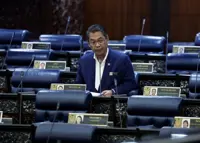
"From a safety perspective, the accident rate in Smart Lane zones was found to be very low compared with the total traffic volume along the route,” he said during a question-and-answer session in the Dewan Rakyat Thursday (July 2).
He said this in response to a question from Zakri Hassan (PN-Kangar), who sought justification for the implementation of the Smart Lane initiative on several stretches of PLUS highways, with regard to the safety and comfort of motorcyclists.
Nanta said only 36 accident cases were recorded at 12 Smart Lane locations on weekdays from January to May this year, with fewer incidents involving motorcyclists than on regular routes, as riders are more cautious when sharing the lane.
According to him, analysis findings showed that the main cause of accidents in the zone was user behaviour, including failure to comply with safety instructions such as using the emergency lane before or after designated stretches, making dangerous lane changes, and stopping vehicles without valid reason.
For additional monitoring measures, Nanta said the LLM has stipulated that concessionaires must appoint independent road safety auditors to conduct a stage 5 road safety audit every five years.
"The scope of the audit also takes into account safety aspects in the implementation of Smart Lane and is not limited to motorcyclists only. Improvement actions will be taken in line with the audit findings to reduce the risk of accidents,” he said.
Apart from that, Nanta said his ministry and LLM were currently expanding the use of closed-circuit television (CCTV) cameras equipped with artificial intelligence (AI) functions to detect traffic density in real time, to ensure more efficient traffic flow coordination.- Bernama