




EVERY parent is familiar with the routine of managing a childhood fever. In most instances, a temporary rise in body temperature simply indicates that a child’s immune system is actively fighting off a common, self-limiting viral infection.
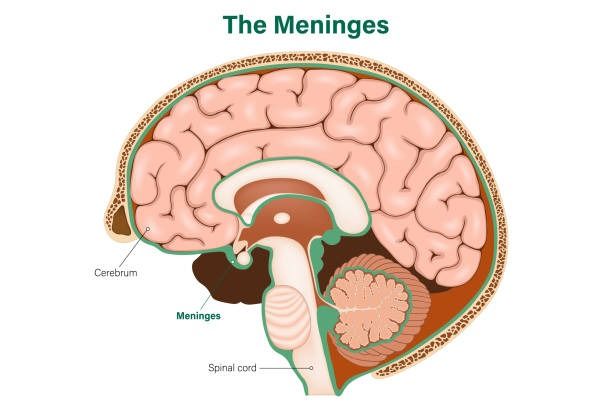
However, a persistent or unusual fever can occasionally serve as an early warning sign of a far more critical medical condition – such as meningitis, an infection involving the protective membranes around the brain and spinal cord that can progress rapidly if left unaddressed.
Sunway Medical Centre, Sunway City (SMC) consultant paediatrician and paediatric intensivist Dr Olive Lee Pei Ee explains that meningitis is an infection of the protective layers around the brain.
Because the initial symptoms of meningitis often mirror everyday illnesses like a common cold or flu, early recognition poses a significant challenge for families.
Educating parents on how to identify subtle behavioural changes, encouraging them to trust their parental instincts and emphasising the necessity of seeking timely medical evaluation are essential steps in protecting young children from severe, life-altering health complications.

Condition overview
Dr Lee says that the infectious process can affect the protective membranes, known as the meninges, or involve the brain tissue itself.
She points out that while an infection isolated to the outer lining is called meningitis, an infection directly affecting the brain tissue is termed encephalitis.
She highlights that both conditions frequently occur simultaneously in paediatric patients, a combined state that medical professionals refer to as meningoencephalitis.
Dr Lee explains that the specific type of meningitis depends on the underlying organism that causes the infection.
She says that it can be caused by viruses, bacteria, tuberculosis, fungi, or parasites.
She points out that parasitic and fungal types are rare and typically occur in children with severely low immune systems rather than healthy children.
She highlights that non-infectious types also exist, which are triggered by autoimmune diseases or post-infection responses in children.
Symptoms and red flags
Dr Lee explains that the initial symptoms of meningitis can be very non-specific, often resembling a common cold with fever, lethargy, vomiting, running nose, or cough.
She says that while some children may experience sensitivity to light – known as photophobia – not every child will show this symptom.
She points out that specific signs like neck pain and headache should not be dismissed as they are highly suspicious of brain infection.
She highlights that older children are able to express that they have a headache, neck pain, or weakness.
Dr Lee explains that in non-verbal children who cannot express themselves, the signs remain very non-specific, making it difficult for parents and even general practitioners to differentiate meningitis from ordinary illnesses.
“It mimics other common illnesses, which makes it difficult to differentiate meningitis from ordinary illnesses,” she says.
She says that red flag symptoms include children refusing to play, constantly sleeping, looking weak, or refusing feeding altogether.
She points out that with a common illness, a child may look very sick during a fever but will bounce back and play once the fever subsides.
She highlights that children with meningitis, however, will constantly look unwell even when their body temperature returns to normal.
She advises parents to trust their parental instincts and seek medical evaluation if they feel something is wrong, as catching the disease early is crucial.
“They have to trust their own parental instincts because they know their children best, not the doctor, so they can pick up subtle changes.
“In meningitis, we try to detect as early as possible because the consequences are dire. We want to detect early so that we can treat early,” she emphasises.
Treatment approaches
She says that viral meningitis is usually self-limiting, meaning children can recover without specific medication while receiving supportive care.
Dr Lee explains that bacterial meningitis is the form doctors are most concerned about because it requires immediate antibiotic treatment to prevent long-term complications.
She points out that whenever a child presents with possible meningitis, doctors will always treat them with antibiotics and assume it is bacterial until proven otherwise.
She says that treatment begins immediately because time is critical in preventing neurological complications.
She points out that if tests later confirm a non-bacterial cause, the antibiotics can be safely discontinued.
Targeted care
Dr Lee explains that Tuberculous Meningitis (TBM) is a specific, severe form caused by the same bacteria responsible for pulmonary tuberculosis.
She says that while other bacteria or viruses directly cause brain injury, TBM initiates a disease process where ongoing inflammation continues to drive the neurological damage.
She points out that TBM is a slow, chronic process that evolves over weeks, which causes many people to miss it in its early stages.
She highlights that medical professionals consider TBM when symptoms persist for weeks without recovery following standard meningitis treatment.
Dr Lee explains that tuberculosis is endemic in Malaysia, meaning there is a high prevalence of the disease in the population.
She says that TBM is treated with a combination of anti-TB medications and steroids to control the inflammation that drives the injury.
She points out that while standard bacterial meningitis treatment lasts one to three weeks, anti-TB treatment must be administered for nine to 12 months.
She highlights that early diagnosis is critical to prevent severe neurological deficits, such as a child becoming bedbound, losing the ability to talk, walk, hear, or see.
“They are not functioning anymore. We do not want them to survive like that and have no quality of life. We want them to be back to their previous developmental milestones and improve from there,” she emphasises.
Prevention guidance
Dr Lee explains that the Bacillus Calmette-Guérin (BCG) vaccine administered at birth as part of Malaysia's National Immunisation Programme (NIP) serves as an essential protective shield.
She says that while the vaccine does not offer 100 per cent immunity against all forms of TB, it drastically reduces the risk of severe, life-threatening complications like TBM and miliary (disseminated) TB.
She points out that if a child lacks a visible BCG scar, parents should consult a paediatrician for assessment.
Dr Lee advises parents never to hesitate when seeking medical clarification for a sick child.
She highlights that prompt medical attention protects vulnerable brain tissue, which cannot regenerate once destroyed.
“If they delay the diagnosis, it delays the treatment. It can damage more brain tissue, because brain tissue cannot regenerate again.
“So, it is important for parents to trust their instincts. If the child is not their usual self, they should see a doctor because early diagnosis is not just saving a life, but it ensures that the child can return to their normal life,” she says.


