
HOW long can a person afford to live? It is an uncomfortable question in a world where longer life expectancy is considered one of humanity’s greatest achievements.
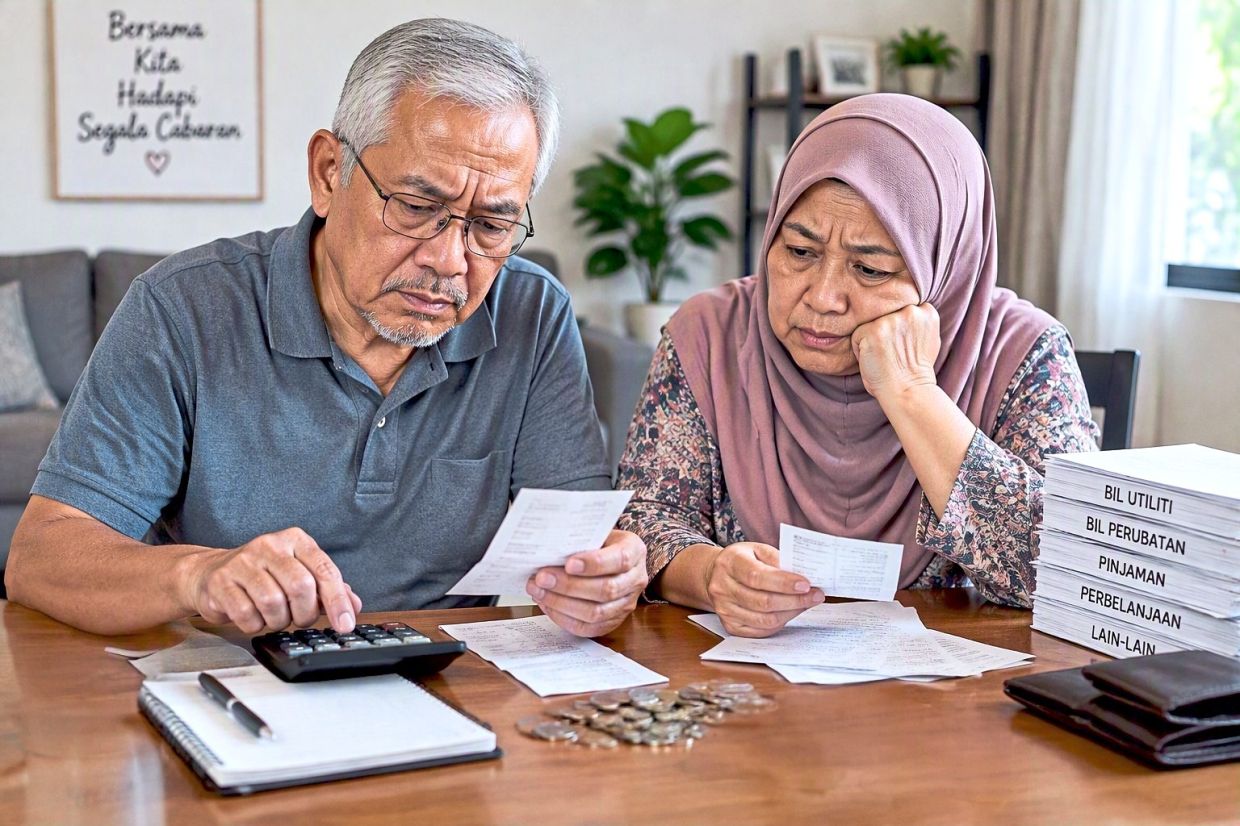
Yet, for those approaching retirement, the prospect of reaching 85, 90 or even 100 carries a financial uncertainty that few can fully prepare for.
Consider someone retiring at 60 with what appears to be a respectable amount of savings. Will it last 20 years? Perhaps.
But what if that person lives another 30 or 35 years?
The irony is difficult to ignore. Advances in healthcare are allowing us to live longer, but our retirement arrangements may leave us financially vulnerable precisely because we have lived too long.
In Malaysia, the debate over retirement adequacy has increasingly revolved around two familiar propositions: raising the retirement age and increasing contribution rates.
Neither is without merit. Working longer provides additional years to accumulate savings, while higher contributions can improve retirement balances. Both deserve consideration.
But are we asking the right question?
The fundamental challenge is not simply how much Malaysians save or how many years they remain in employment.
It is whether the system itself is designed to provide financial security throughout old age.
A model from another era
According to PERKESO’s Social Protection Exchange (SPEX) Data integrated with the International Social Security Association’s (ISSA) social security information, Malaysia is one of just 20 countries in the world that still retain a provident-fund model for retirement savings together with countries like Solomon Islands, Kiribati, Kenya, Uganda and Fiji. This is a distinction that deserves closer examination.
For decades, Malaysia has relied predominantly on a system under which workers and employers contribute towards individual savings accumulated over a person’s working life.
It has undoubtedly served the nation well. The model has cultivated a savings culture and built substantial retirement capital. These achievements should not be underestimated.
But recognising the strengths of a system should not prevent us from questioning whether it remains sufficient for the challenges ahead. A provident fund and an old-age pension serve fundamentally different purposes.
One accumulates wealth for retirement. The other is designed to provide income throughout retirement, potentially for as long as a person lives.
In a system centred on individual savings, the responsibility for managing longevity risk rests primarily with the retiree.
Even where withdrawals are structured into monthly payments, the underlying question remains: What happens when the savings are exhausted?
There is also the question of how retirement wealth is distributed.
Published Malaysian data for 2023 showed that the top 20% of members, ranked by savings balances, held approximately 82% of total retirement savings.
Such concentration reflects inequalities accumulated throughout working life. Those with lower wages, interrupted employment histories or fall out of the formal system inevitably approach retirement with smaller financial reserves.
A system based predominantly on individual accumulation carries these inequalities into old age.
For some, retirement means financial independence. For others, it may mean increasing dependence on family members or public assistance.
Surely, the measure of a country’s retirement security cannot rest solely on the wealth accumulated within its savings institutions. It must also consider how effectively that wealth translates into adequate and dependable income for ordinary people.
Lessons from beyond our borders
Malaysia is not alone in confronting this challenge. But we would be mistaken to assume that the provident-fund model must remain unchanged simply because it has served us well in the past.
Several countries have already demonstrated that individual savings and collective pension protection need not be mutually exclusive.
Singapore, for example, retained its provident-fund framework while introducing CPF LIFE, which pools longevity risk to provide eligible retirees with monthly income for life.
India, formerly a provident fund, offers another instructive precedent.
Its Employees’ Pension Scheme, introduced in 1995, established a pension component alongside provident savings, financed in part through a reallocation of existing employer contributions.
The evolution is not confined to Asia. If I can recall my engagement in the sidelines of World Social Security Forum (WSSF) last year, Eswatini has moved to reform its retirement system, introducing legislation in 2025 to transform its national provident fund into a pension scheme.
These transitions took different forms, reflecting each country’s economic circumstances, institutional capacity and historical legacies.
Their experiences are not without challenges, nor should their models be replicated without careful consideration.
Nevertheless, they illustrate an important shift in thinking: Retirement security should not depend exclusively on the savings an individual has managed to accumulate.
In my engagements with social security leaders through ISSA’s regional forums, the sustainability of retirement income has become an increasingly important concern.
Countries are grappling with ageing populations, changing employment patterns and the need to provide adequate benefits without imposing unsustainable burdens on existing systems.
One principle remains particularly relevant. Risks that individuals cannot reasonably manage alone can often be addressed more effectively through collective arrangements.
Even the most prudent Malaysian will not be able to save enough for something that he cannot predict. This is the underlying strength of social insurance.
By pooling resources and sharing risks across a wider population, social insurance can provide protection against uncertainties that individual savings accounts are not designed to absorb independently.
The question for Malaysia, therefore, is not whether to abandon its existing retirement system, but how to build upon it.
Rethinking the contributions we already make
This brings us back to the ongoing debate over retirement age and contribution rates. For many employees below 60, combined mandatory retirement savings contributions from workers and employers already amount to approximately 23% or 24% of wages.
This represents a significant financial commitment by both parties. Before concluding that Malaysians must contribute more, perhaps we should first examine whether the contributions already being made could be structured more effectively.
What if a portion of the existing 23% or 24% contribution could be allocated towards a pooled old-age pension or social insurance component, while the remaining contributions continue to accumulate as individual retirement savings?
Such an approach would retain the existing overall contribution rate while introducing a collective mechanism to provide lifelong income protection.
The principle is straightforward. Rather than leaving every retiree to manage the financial uncertainty of an unknown lifespan independently, part of that risk would be shared across a wider population.
It would represent a shift from a retirement system primarily concerned with accumulating wealth to one equally concerned with providing lifelong income security. However, this would not be a cost-free transition.
Redirecting a portion of future contributions into a pension pool would mean that less accumulates within individual accounts.
The resulting pension benefits must therefore justify that trade-off. Existing savings and accrued rights must be protected.
Any proposed arrangement would require rigorous actuarial assessment, transparent financing, prudent governance and a clear determination of how risks and obligations would be shared.
A pension promise is only meaningful if it can be honoured decades into the future. Equally, pooling longevity risk does not automatically resolve retirement poverty.
Those who have contributed too little throughout their working lives may still be unable to finance an adequate pension. A comprehensive system must therefore consider appropriate minimum-income protection for older persons, supported through sustainable financing.
The International Labour Organization’s Convention No. 102 provides a useful international reference, establishing minimum standards across nine branches of social security, including old age, employment injury, unemployment, sickness, invalidity and survivors’ benefits.
For Malaysia, the longer term ambition is to develop a more coherent social protection architecture in which retirement income, social insurance and minimum protection work together.
This requires more than reallocating percentages. It demands an examination of how contributions are collected, how resources are pooled, how benefits are distributed and how financial obligations can be sustained across generations.
The window for reform is narrowing
Malaysia’s demographic transition makes this discussion increasingly urgent. According to the Department of Statistics Malaysia, those aged 65 and above already account for 8.4% of the country’s population in 2026, and our live births are down by 4.5% with fertility rate at 1.5 children per woman in 2025.
As this proportion distorts, so too will the need for dependable retirement income. The consequences of inadequate savings will extend beyond individual retirees, affecting families, public finances and the wider economy.
We may have roughly the next decade to establish the foundations of a more resilient retirement system before demographic pressures become considerably harder to manage.
The opportunity to plan a measured transition should not be wasted.
I believe Malaysia should establish an independent, multidisciplinary retirement security think tank, bringing together policymakers, social security institutions, employers, workers, economists and actuarial experts.
Its mandate should extend beyond studying retirement ages or contribution rates in isolation.
It should examine how Malaysia can progressively develop a hybrid retirement system combining individual savings with pooled lifelong income protection, supported by credible financing and appropriate minimum safeguards.
Different approaches must be tested against retirement adequacy, fairness, fiscal implications and long term sustainability.
The transition must be transparent, evidence-based and sensitive to the expectations of existing contributors and retirees.
As ISSA president, I strongly believe Malaysia has much to gain from the experiences of countries that have already embarked on similar reforms.
ISSA’s international network and technical expertise can provide valuable opportunities to examine different models, understand their strengths and limitations, and identify approaches suited to Malaysia’s circumstances.
Ultimately, however, the decision must reflect our own demographic realities, economic capacity and aspirations for social justice.
This is not about saying that the existing system has failed. Nor is it a rejection of proposals to strengthen retirement savings through longer working lives or higher contributions.
It is about recognising that these measures, however useful, cannot by themselves eliminate the financial uncertainty of an unknown lifespan.
A country that has succeeded in building substantial retirement wealth must now ask how that wealth can be translated into income security that lasts throughout old age.
We should be looking beyond how much Malaysians have saved when they reach retirement, towards whether they can continue to live with dignity long after their working years have ended.
After all, the true measure of retirement security is not how much money a person has at 60, but whether that person still has an income at 85, 90 or beyond.
Living longer should be a reward for progress, not a financial penalty.
Datuk Seri Dr Mohammed Azman Aziz Mohammed is the president of the International Social Security Association (ISSA).