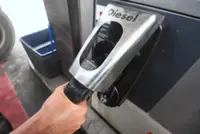
KOTA KINABALU: Calls are growing for the Federal Government to fine-tune the implementation of the Budi Diesel mechanism in Sabah, with motorists, industry players and politicians saying the nationwide approach may not adequately reflect the state's geography and transport realities.
While welcoming the subsidised diesel price of RM2.10 per litre from July 1, many said the monthly quota and ownership requirements could pose challenges for Sabahans who regularly travel between districts or depend on diesel-powered vehicles to earn a living.
Fuel consumption estimates show that a pickup truck travelling from Sandakan to Kota Kinabalu consumes about 50 litres of diesel one way, while the journey between Kota Kinabalu and Tawau requires around 65 litres, depending on the vehicle and driving conditions.
Many also pointed out that independent oil palm smallholders, farmers and fishermen frequently travel between villages, towns, collection centres and palm oil mills, making diesel an essential operating cost rather than simply a transport expense.
Another concern is the requirement that subsidised diesel be tied to a vehicle registered under the applicant's name.
On social media, Sabahans questioned how the mechanism would apply to company-owned vehicles, rental vehicles and vehicles purchased through "sambung loan" arrangements where ownership has yet to be formally transferred.
Others asked how the subsidy would apply if a husband working in Peninsular Malaysia leaves the family's four-wheel drive in Sabah for his wife to use while the vehicle remains registered under his name.
The Sandakan Tourism Association also called on Putrajaya to delay the removal of diesel subsidies for tour buses and vans in Sabah, saying operators needed time to adjust.
Its president, Teo Chee Kim, said tour operators typically accepted bookings three to six months in advance, with many already taking reservations for 2027 based on current operating costs.
"We are not against the implementation of the SKDS scheme. However, we appeal to the government to provide the tourism sector with a grace period of three to six months before full implementation so operators can revise their rates accordingly," he said.
Teo warned that the industry was already facing weaker overseas arrivals following the conflict in the Middle East and that the sudden implementation would further strain tourism operators.
Sabah Agriculture, Fisheries and Food Industry Minister Datuk Jamawi Jaafar said he had received numerous suggestions and feedback ahead of the July 1 implementation, particularly regarding vehicle ownership requirements and the monthly diesel quota.
"I also acknowledge that many farmers, livestock breeders, fishermen and food industry operators purchased vehicles through 'sambung loan' arrangements because they were not eligible for bank financing," he said.
Jamawi said the proposals would be studied before being brought to the Sabah Cabinet and subsequently submitted to the Federal Finance Ministry.
Sabah DAP chairman and Senator Datuk Phoong Jin Zhe said Putrajaya should avoid adopting a one-size-fits-all approach.
"A monthly quota of 200 litres may be sufficient for households in Kuala Lumpur, Selangor or Penang, but in Sabah, especially in the interior and rural areas, many families consume far more than that," he said.
He said the Government should review the monthly quota and eligibility criteria to better reflect Sabah's travel patterns and transport needs.
However, Sabah Finance Minister and Deputy Chief Minister Datuk Seri Masidi Manjun said the Federal Government had already taken Sabah's unique circumstances into account before introducing the mechanism.
"The implementation of the targeted diesel subsidy takes into consideration Sabah's uniqueness, including its geography, socio-economic conditions and vehicle usage patterns," he said in a press conference on Tuesday (June 23).
Masidi said a comprehensive study had also examined the widespread use of four-wheel drives in rural and interior areas to ensure the mechanism suited Sabah's needs.
Under the Budi Diesel mechanism, eligible private diesel vehicle owners will receive a combined monthly allocation of 200 litres of subsidised RON95 and diesel, while eligible pickup truck and jeep owners may apply for an additional 100 litres of subsidised diesel.