‘Food remains an effective way to bridge cultural divides’
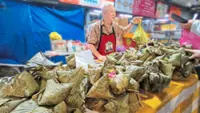
JOHOR BARU: For decades, the pyramid-shaped pouches hanging from roadside motorcycle vendors’ bikes remained a mystery to Hasimah Nordin.
The 56-year-old from Taman Plentong Baru would often spot the neatly wrapped bamboo leaf dumplings being sold in her neighbourhood and wonder what they tasted like.
“I used to ask my Chinese neighbour about them and he told me they were called zong zi. He also told me Muslims could not eat them because they were not halal,” she recalled.
Years later, Hasimah finally got her answer – not only tasting the traditional Chinese delicacy for the first time, but learning to make it herself.
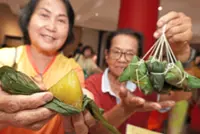
She was among participants at a community zong zi-making workshop aimed at promoting cultural understanding among Malaysians from different backgrounds.
“I convinced six of my neighbours to join because we wanted to learn more about Chinese culture. We learned to make zong zi with marinated chicken, salted egg yolk and mushroom.
“The taste exceeded my expectations,” Hasimah said, adding that she plans to make them for her children at home.
Hasimah also discovered nyonya chang, a colourful variation of the dumpling known for its distinctive blue hue derived from butterfly pea flowers.
While zong zi is sometimes described as a “Chinese ketupat”, she said the similarities end there.
“Ketupat is made by weaving coconut leaves into a pouch, while zong zi uses bamboo leaves and strings to hold everything together.
“The most difficult part was tying the dumpling. If it’s not secured properly, the rice and fillings will spill out when cooking,” she said.
Hasimah, who is also a member of the Pasir Gudang Senior Citizens Activity Centre, hopes to introduce zong zi-making as one of the centre’s future activities.
For sales promoter Samling Madang, 46, the workshop brought back childhood memories.
Growing up in Belaga, Sarawak, she watched her mother make Chinese and Malay kuih, as well as zong zi, to sell in their village.
“This class served as a refresher and inspired me to create my own Muslim-friendly version of the dumpling,” said Samling, who is from the Kenyah community.
Malaysian Chinese Muslim Association Johor committee member Azura Tan, who conducted the workshop, said food remains one of the most effective ways to bridge cultural divides.
“Many Muslim friends are interested in trying different types of Chinese food, so there is a growing demand for halal Chinese cuisine.
“Once participants learn the basic techniques, they can customise the fillings according to their own preferences. Using halal ingredients allows more people to enjoy this traditional delicacy,” said Azura, who previously operated a bakery selling Chinese festive treats.
The Duan Wu Festival, also known as the Dragon Boat Festival, is traditionally celebrated by Chinese communities with zong zi, made by wrapping glutinous rice and various fillings in bamboo leaves.
The festival is celebrated today.