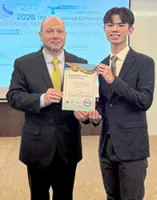
FOR most students, learning takes place in lecture halls. But for Universiti Tunku Abdul Rahman (UTAR) student Syabil Aufa bin Shahir, one of the most meaningful lessons came before sunrise on the slopes of Mount Bromo in East Java.
The Bachelor of Corporate Communication (Honours) student from UTAR’s Creative Industries faculty, was part of a Malaysian delegation to the International Student Excursion (ISE) 2026.
The regional programme, hosted by Universitas Muhammadiyah Sidoarjo (UMSIDA), Indonesia, extended learning beyond textbooks into lived cultural exposures and cross-border exchange.
The experience reflects the Bachelor of Corporate Communication (Honours) programme’s emphasis on experiential learning, intercultural communication, regional engagement, and industry-relevant exposure beyond the classroom.
“Interacting with people from different countries helped me understand how culture shapes communication and connection,” said Syabil. “It’s something you can’t fully grasp from textbooks alone.”
UMSIDA Business, Law, and Social Sciences faculty dean Dr Poppy Febriana said programmes like ISE are designed to bring students closer to the realities of South-East Asia, including its diverse cultures and contexts.
“When they engage across cultures and institutions, they develop not only knowledge, but also the ability to navigate differences and build meaningful connections.”
Over several days, students engaged with peers from Indonesia, Thailand, and the Philippines, exchanging perspectives through discussions and shared activities as they immersed themselves in local communities.
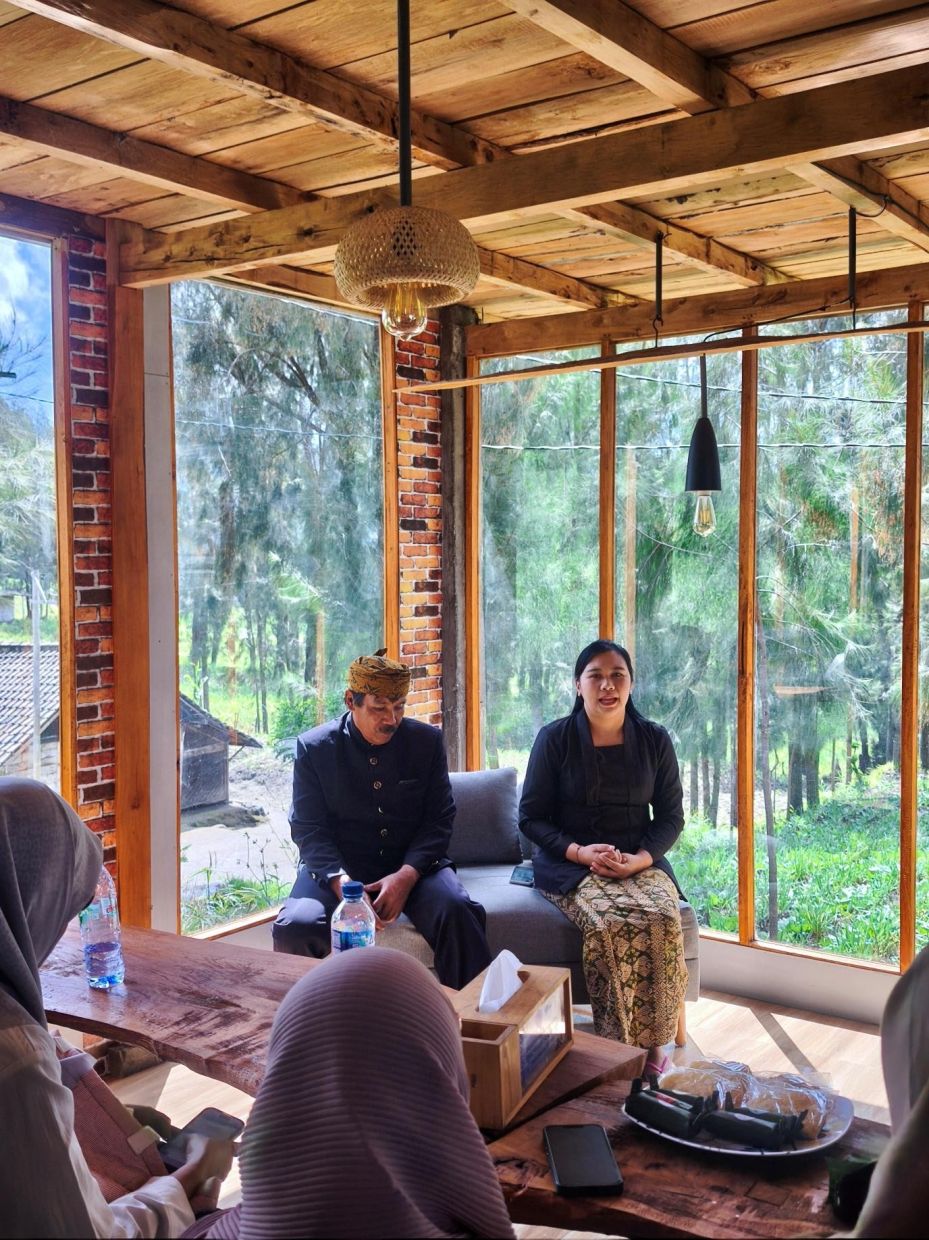
At the Tengger highlands near Mount Bromo, they observed how traditions, spirituality, and environmental stewardship are closely intertwined with daily life.
The learning journey also extended into the academic sphere. Alongside the excursion, the delegation participated in the International Conference on Public Administration and Policy (ICOPAPER) 2026, held at the Rembang Regency Regional Secretariat, where students engaged with local government leaders at the regency level on issues of governance, communication, and digital trust.
Beyond participation, students translated their experiences into tangible outputs, including short-form video content and academic papers, bridging field exposure with professional communication practice.
Through such initiatives, students strengthen skills in public relations, content creation, media production, cross-cultural communication, digital storytelling, and strategic communication – competencies increasingly valued in today’s communication industry.
For UTAR Mass Communication department head Kenneth Lee Tze Wui, who has been advancing experiential and regional learning initiatives, such integration reflects a broader teaching philosophy centred on learning beyond the classroom.
“Students need to move between contexts, understanding people on the ground while also being able to analyse and articulate what they observe,” he said. “When exposure and reflection come together, learning becomes far more meaningful.”
Lee added that lecturers in his department are encouraged to design meaningful learning opportunities beyond the classroom, enabling students to engage directly with communities, industries, and regional partners.
The initiative reflects a sustained effort to integrate regional exposure into student development, supported by collaborations with partner universities across South-East Asia.
A similar impact is seen among past participants. Sau Zhi Xin, who joined an earlier exchange programme in Bali, said the field-based learning prompted her to apply her communication skills more actively in cross-cultural settings.
This reflects a broader shift in higher education, as universities rethink how to prepare graduates for an increasingly interconnected and complex region, where cultural awareness, adaptability, and communication skills are as critical as academic knowledge.
For Syabil, the experience brought his studies into sharper focus.
“It’s one thing to study communication,” he said. “It’s another to experience it across cultures and contexts. That’s when it starts to make sense.”
UTAR’s Bachelor of Corporate Communication (Honours) programme prepares graduates for careers in corporate communication, public relations, media and broadcasting, advertising, branding, digital content creation, journalism, event management, and strategic communication across diverse industries.
Offered by UTAR’s Faculty of Creative Industries, the Bachelor of Corporate Communication (Honours) programme combines academic learning with practical industry exposure, equipping students with communication, media, and creative skills for a rapidly evolving global landscape.
For more information, go to www.utar.edu.my or call 05-468 8888 (Kampar Campus), 03- 9086 0288 (Sungai Long Campus).