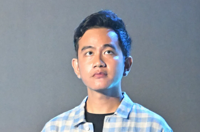
A NOTABLE development in inclusive artificial intelligence (AI) research has placed Universiti Tunku Abdul Rahman (UTAR) among recognised contributors in the field.
Representing the varsity, PhD candidate Tan Jing Jie earned the Best Presenter Award at the 5th International Conference on Computer Technologies (ICCTech) 2026.
Co-organised by several academic institutions, the conference was held in Langkawi from Feb 3 to 5.
The Best Presenter Award, announced during the conference, recognises clarity, innovation and impact in research presentation.
Tan, a third-year Doctor of Philosophy (Engineering) candidate from UTAR’s Lee Kong Chian Faculty of Engineering and Science, received the award for his presentation of the project titled “SEAVIP: Social Enhancement Application for Visually Impaired People with User-Centered UI/UX and Mobile-Optimised Face Recognition”.
The SEAVIP system addresses a critical gap in assistive technology for visually impaired individuals by enabling real-time face recognition and providing contextual social cues, such as emotion, age and gender, through a mobile-based platform.
Unlike conventional solutions, which are often cost-prohibitive or computationally intensive, SEAVIP introduces a novel boosted face recognition framework that significantly enhances accuracy while reducing processing requirements. This allows the application to function efficiently on standard smartphones, expanding accessibility for users from diverse socio-economic backgrounds.
Tan said the research was motivated by a desire to bridge the gap between advanced AI capabilities and real-world usability.
“The goal was to create a solution that not only demonstrates strong algorithmic performance but also delivers meaningful improvements to daily social interactions for visually impaired users,” he said in an April 3 press release.
He described the recognition as a significant milestone in his research journey.
“Receiving the Best Presenter Award is both an honour and an encouragement to continue combining deep technical research with human-centred design.
“It reinforces the importance of developing innovations that are not only scientifically sound but also capable of creating real impact,” he said, adding that the achievement provides momentum for future advancements, including the integration of large language models to enhance conversational capabilities and scene understanding.