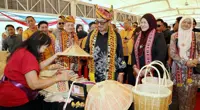
RANAU: The Domestic Trade and Cost of Living Ministry is implementing the Festive Season Maximum Price Scheme (SHMMP) for the Kaamatan and Gawai Day celebrations from May 27 to June 4.
Domestic Trade and Cost of Living Minister Datuk Armizan Mohd Ali said the nine-day scheme covers 17 types of controlled items.
This includes 12 items in Sabah and Sarawak, and 11 in the Federal Territory of Labuan.
Armizan said the scheme balances the interests of consumers and traders by ensuring affordable prices without burdening businesses with an overly long enforcement period.
For the Kaamatan festival in Sabah, the ministry has identified 12 items compared to 10 last year.
"Two new items added are imported old ginger and potatoes from China," he said at a press conference in Kundasang.
For the Gawai festival in Sarawak, 12 items are listed compared to 11 last year, with the addition of imported buffalo meat from India.
Armizan said the maximum prices were determined through discussions with the Agriculture and Food Security Ministry, relevant agencies and industry players.
In Sabah, controlled items include live pigs, pork, imported buffalo meat, chicken wings, curly dried chillies, onions, imported old ginger and potatoes.
In Labuan, the 11 listed items include pork, chicken wings, curly dried chillies, onions, imported old ginger and potatoes.
Armizan noted that this year’s scheme shows more stable price trends in Sabah and Labuan.
In Sabah, six items recorded price decreases while three remained the same.
A similar trend was recorded in Labuan, with six items showing price decreases and two remaining unchanged.
For Gawai in Sarawak, the items involved include live spent hens, imported round cabbage, coconuts, grated coconut and coconut milk.
Comparative price analysis for Gawai showed five items with price decreases and three remaining unchanged.
The scheme is enforced under the Price Control and Anti-Profiteering Act 2011.
Armizan said enforcement officers will be stationed at strategic locations including public markets, farmers’ markets and shopping centres to monitor compliance.
"We also enforce prudently through education, advice and warnings to ensure traders comply with the law and practise ethical business," he said.
Traders are required to use pink labels for all controlled items throughout the scheme period.
Individuals selling items above the maximum price face fines of up to RM100,000 or three years' jail, while companies can be fined up to RM500,000.
For failing to display pink price labels, individuals can be fined up to RM10,000 and companies up to RM20,000.