PETALING JAYA: Any intervention to address issues affecting flower growers in Cameron Highlands will be coordinated through the relevant agencies, says Datuk Seri Mohamad Sabu (pic).
The Agriculture and Food Security Minister said this includes agencies such as the Federal Agricultural Marketing Authority (Fama) and Agriculture Department.
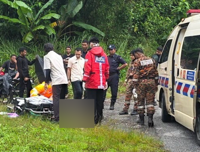
Mohamad said the ministry would first assess reports that cultivation activities in the highlands had been disrupted by heavy rainfall before determining the appropriate measures to take.
“Yes, (flower) planting activities have indeed been affected. The ministry will immediately go and check and see what solutions can be taken, especially by Fama and the Agriculture Department,” he said at a press conference held in conjunction with the upcoming Malaysia Agriculture, Horticulture and Agro-Tourism Exhibition (Maha) 2026.
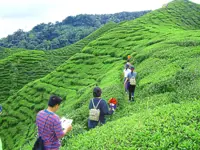
The floriculture industry, valued at roughly RM500mil annually and heavily concentrated in Cameron Highlands, remains a significant agricultural sector, with the highlands producing more than 80% of Malaysia’s cut flower exports.
Based on trade data, Malaysia reportedly recorded US$77.98mil (RM309.67mil) in cut flower exports in 2024, ranking eighth globally in cut flower sales.
Meanwhile, the Agriculture Department previously reported that the floriculture industry generated RM417.3mil in export revenue in 2021, up from RM403mil in 2020.
On another development, Mohamad said more than 50% of padi fields in Kedah, including areas under the Muda Agricultural Development Authority (Mada), have entered the ploughing stage despite reports that nearly 90% of farmers had yet to begin planting for the first season.
He said water was already available in the padi fields, although dam levels had yet to reach a satisfactory level.
“Planting activities are expected to begin soon, as more than 50% of the fields have already been ploughed.
“The process is already underway,” he said.
According to the Mada schedule, planting for Phase One was scheduled to begin on April 15, followed by Phase Two on April 29 and Phase Three on May 13.
Asked whether delays in planting could affect Malaysia’s rice self-sufficiency rate (SSR), Mohamad acknowledged that delays could lead to lower production.
“If delays occur, there will indeed be a reduction.
“We also know that weather conditions can sometimes affect planting schedules and cause changes in planting dates.
“However, if there is a shortfall in the SSR, we have measures in place to make up for it,” he added.
Ahead of Maha 2026, Mohamad said the programme, themed “Value Creation for Food Security”, would focus on efforts to increase value across the country’s entire agri-food chain.
Scheduled to take place from Aug 28 to Sept 6, he said the programme is targeting four million visitors, with participation from 2,000 exhibitors from within and outside the country.
“It is also expected to generate at least RM55mil in direct sales and attract potential investments worth RM8bil through the signing of memorandums of understanding and memorandums of agreement,” he said.