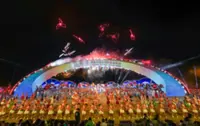
WHEN athletes arrived at the Sanya Phoenix International Airport, in Hainan, China, they stepped into a city that had spent six years preparing for this very moment, and even longer building toward something far greater.The 6th Asian Beach Games kicked-off in Sanya on April 22, and will run through April 30.
It features 14 sports, 15 disciplines and 62 gold medals, marking the first time Hainan has hosted a multi-sport event.
Originally scheduled for 2020, the Games were delayed by the COVID-19 pandemic, turning this edition into a culmination of a long wait.
That wait coincided alongside sweeping changes in the city. Its biggest and most significant was the launch of island-wide customs operations for the Hainan Free Trade Port (FTP) on Dec 18, 2025 which fundamentally reshaped the island’s economic framework.
Days later, Sanya inaugurated China’s first international route operating under seventh-freedom traffic rights, linking the city with Prague in the Czech Republic.
The policy allows foreign airlines to operate routes between Hainan and third countries without returning to their home base, enhancing global connectivity.
The most recent milestone was the opening of Terminal 3 at Sanya Phoenix International Airport on Feb 6.
As the Games approach, flights to cities including Moscow, Minsk and Astana have increased, reinforcing Sanya’s role as an emerging aviation hub.
Access has also improved for international visitors, with citizens from 86 countries now able to enter Hainan visa-free for up to 30 days.
Regional connections have strengthened as well, including increased flight frequency between Haikou and Kuala Lumpur.
For Malaysian visitors, the convenience extends beyond visa-free entry and direct flights. The FTP’s framework offers added appeal, including access to international brands and specialty goods at zero-tariff prices.
This blend of tropical allure with unprecedented economic incentives sets Sanya – often dubbed as the “Hawaii from China” – apart from traditional resort islands.
The Games offer Malaysians a front-row seat to witness Hainan’s remarkable transformation, showcasing its ambition to become a leading regional hub for both leisure and commerce.
The economic impact of the FTP has been swift. In the first 100 days of customs operations, Hainan’s foreign trade exceeded 80bil yuan, up 32.9% year-on-year.
More than 7,500 new foreign trade enterprises were registered, while over 11,700 entities gained zero-tariff status. Imports benefiting from zero tariffs reached 750mil yuan in the first month alone.
The policy shift is already visible in consumer markets. Imported goods from South-East Asian agricultural products to international consumer brands are entering Hainan at lower prices, while duty-free sales continue to expand.
At the same time, outbound trade is growing, supported by new financial and logistics mechanisms under the FTP framework.
Passenger flows reflect this connectivity. In the same 100-day period, inbound and outbound travel reached 861,000 trips, with more than 217,000 visa-free entries.
The Asian Beach Games will serve as the first large-scale test of these systems. Thousands of athletes, officials and media will arrive within a short window, placing pressure on border processing, transport and event operations.
What distinguishes it now is the infrastructure beyond tourism: an integrated system of trade, aviation and policy incentives designed to position Hainan as a regional hub.
The Games are, at the core, a sporting event. But the timing places it in a broader context.
After a six-year delay, the Games are unfolding on an island that has been fundamentally reshaped.
How that transformation is experienced by participants and visitors alike, will define part of Sanya 2026’s legacy.