
PETALING JAYA: Six years after the pandemic’s onset, the World Health Organization (WHO) is now urging nations to prioritise routine Covid-19 vaccinations as a critical necessity for those at high risk.
This suggestion follows a high-level meeting of the Strategic Advisory Group of Experts (SAGE) on Immunisation in Geneva last week.
While widespread immunity has lowered the global burden, the WHO warns that the virus continues to claim lives and cause severe illness among the most susceptible.
National health authorities are being told to move quickly.
“SAGE recommended that countries consider Covid-19 vaccination based on local epidemiology, population characteristics, access to Covid-19 vaccines, cost-effectiveness, acceptability, and programmatic feasibility,” the organisation said in a statement.
This advice prioritises groups at the highest risk, including the elderly with significant comorbidities, residents in long-term care facilities, and any individual over six months old who is moderately or severely immunocompromised.
For these priority groups, the schedule has been accelerated to two doses per year. SAGE recommends these be administered six months apart.
This applies to both the unvaccinated and those whose last dose was more than six months ago.
The recommendation stems from data showing that protection against severe disease drops significantly after the six-month mark.
However, the WHO noted that the final frequency of doses should also be weighed against cost and local feasibility.
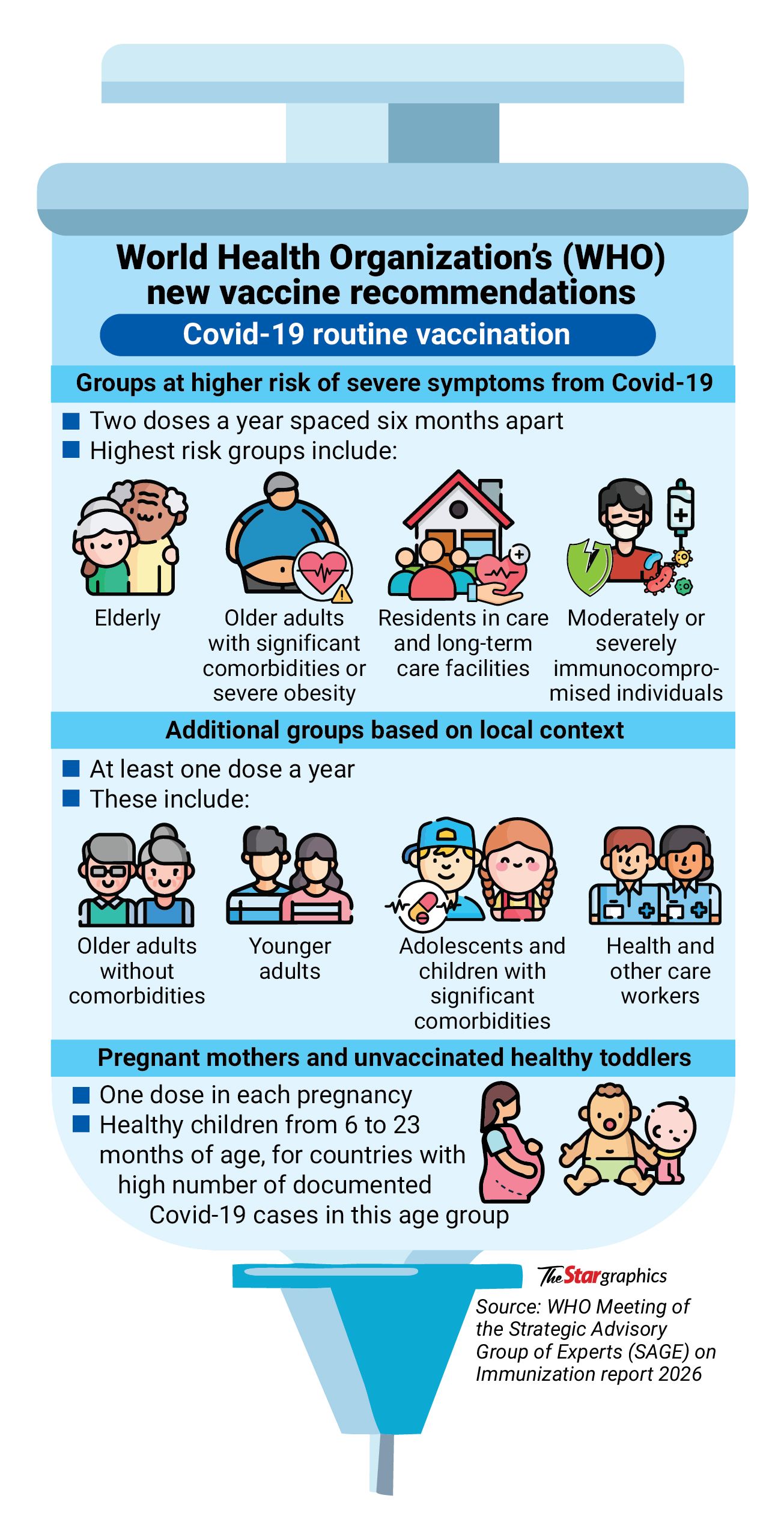
Annual boosters are also recommended for a wider circle of at-risk individuals.
This includes older adults without underlying health issues, healthcare workers, and adults and children with severe obesity.
Maternal health is a particular focus of the updated strategy.
“For pregnant persons, whether unvaccinated or previously vaccinated, one Covid-19 vaccine dose during each pregnancy, at any stage, though ideally during the second trimester,” the WHO advised.
The goal is to provide immediate protection for the mother and essential early-life immunity for the infant.
The new framework also reverses previous stances on the youngest age groups.
While routine revaccination was once not recommended for healthy children aged six to 23 months, these new guidelines will now form the basis of a formal WHO Position Paper due later this year.
These developments arrive as Malaysia marks six years since the 2020 movement control order was implemented to contain the virus, which claimed over 30,000 lives nationwide.