
PETALING JAYA: Covid-19 vaccinations should not be made mandatory for all, say local public health experts. They argue that these jabs should remain a voluntary option reserved specifically for high-risk groups, such as the elderly and the immunocompromised.
Public healthcare specialist Prof Dr Sharifa Ezat Wan Puteh of Universiti Kebangsaan Malaysia said that while Covid-19 is still endemic, the fatality and hospitalisation rates are now low.
“Unlike when the pandemic first started in 2019-2020, most of the population have been immunised,” she said.
“Vaccinations should be made optional mostly only for those at highest risk of getting severe Covid-19 symptoms like the partially immunised or unvaccinated; it should not become mandatory for all.”
Prof Sharifa Ezat stressed that a blanket approach is no longer necessary, stating: “The vaccine should only be given in a case-by-case situational condition that warrants it.”
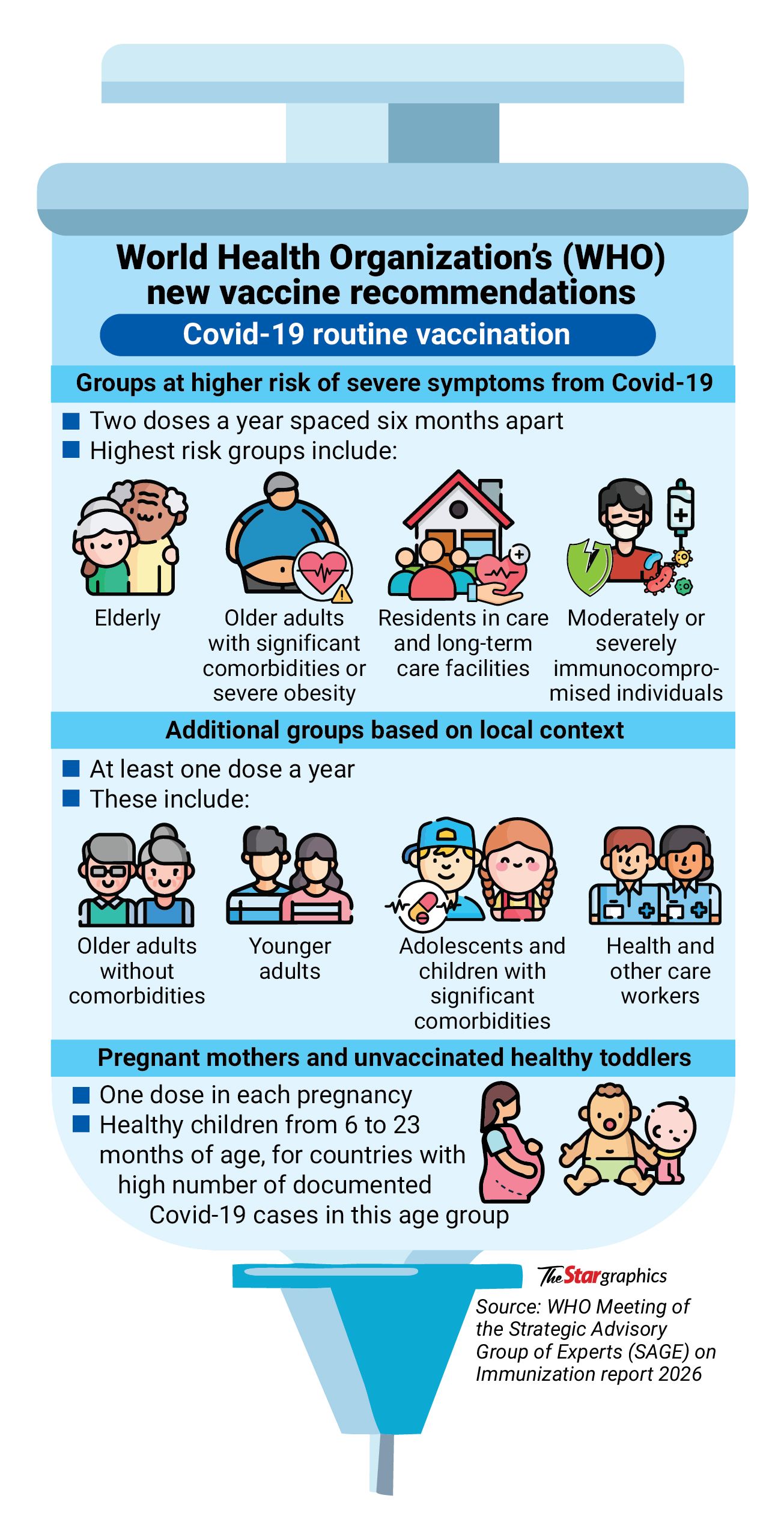
Her comments come in response to the World Health Organization’s (WHO) latest advice, which suggests biannual boosters for high-risk groups, including care home residents and those with severe comorbidities.
Addressing concerns regarding vaccine hesitancy, Prof Sharifa Ezat advised the public to discuss risks with certified providers.
“Despite the possible side effects, the general benefits of the vaccine far outweigh the risk as it is meant to reduce morbidity and complications of a disease by preventing severe symptoms.”
Public Health Medicine specialist Datuk Dr Zainal Ariffin Omar said making the vaccine optional for these groups is a sustainable, long-term solution for Malaysia.
“By focusing on high-risk groups, WHO acknowledges that the virus is here to stay and we must protect the most vulnerable.”
He noted that the strategy for fighting Covid-19 has fundamentally changed.
“The primary goal of Covid-19 vaccination is no longer to prevent all infections, but mainly to prevent severe disease symptoms, hospitalisations, and death.”
However, Dr Zainal still recommended that high-risk individuals maintain routine boosters to keep population immunity high.
“This would reduce the burden on the healthcare system as fewer high-risk individuals will have to go to the hospital. It will also provide a crucial layer of protection if the virus ever begins to circulate rapidly again,” he said.
The former Health Ministry director-general added that high-risk individuals should not worry excessively about side effects, provided they consult with their doctors beforehand.
Universiti Putra Malaysia senior consultant clinical microbiologist Prof Dr Zamberi Sekawi agreed that Malaysia should consider the WHO’s risk-based approach, but warned against a “one-size-fits-all” adoption.
“The key is not simply to adopt recommendations wholesale, but to apply them intelligently based on our own disease burden, health system capacity, and priority populations.”
Prof Zamberi highlighted that despite the overall decline in severe cases, the virus remains dangerous for the susceptible.
“As such we should work on highlighting the benefit and importance of vaccines to reduce severe illness and death to these groups so they can adopt vaccines themselves willingly.”