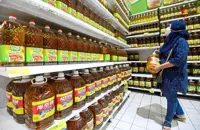
JOHOR BARU: Targeted subsidies for the 1kg cooking oil packets are showing positive results in Johor, with fewer complaints of shortages reported since the rollout of the Electronic Cooking Oil Subsidy System (eCOSS) app.
State Domestic Trade and Cost of Living Ministry director Lilis Saslinda Pornomo said consumers are now more confident about supply availability as the system allows authorities to track distribution in real time.
“Leakages have dropped and users know where to get subsidised cooking oil if an outlet runs out. If a location has no supply, they can go to other listed outlets.
“And if all else fails, they can come to the ministry and we will act immediately,” she said during a briefing on eCOSS at a hypermarket in Taman Mutiara Rini here yesterday.
Lilis added that the targeted subsidy mechanism, introduced by the Federal Government, ensures subsidised cooking oil reaches Malaysian households instead of foreigners or commercial users.
She said the ministry has expanded its distribution network in Johor from 15 locations in Phase 1 to 55 across the state, including major supermarkets and selected sundry shops.
Lilis added that current monthly allocations for the subsidised 1kg packet of cooking oil are around 1,000 tonnes at these selected locations.
“Every purchase is monitored through eCOSS where users register on the app and scan a QR code at participating outlets.
“This helps us prevent leakages and ensures the right groups, especially B40 and M40 households, benefit from the subsidy,” she said.
Lilis added that the ministry would continue to assist elderly users and others who may face difficulties registering or using the digital system.
“Even those who cannot use the app can have their purchases recorded manually, so no household is left out.”
Lilis also said that allocations at each distribution point are determined based on local population needs.
She explained that the ministry would analyse consumption trends every three months to adjust supply accordingly.
Lilis added that through the app, each transaction is recorded to monitor consumption and detect irregularities.
“Our enforcement teams will conduct daily inspections at all distribution points to ensure compliance.
“Members of the public are encouraged to report any shortages or suspected leakages to the ministry for immediate action. If any issue arises, we will investigate and resolve it promptly.”
Lilis said that since eCOSS was implemented in August this year, complaints about missing or insufficient stock have significantly reduced.
“Through eCOSS, the public now knows where to obtain subsidised cooking oil, even if one outlet runs out,” she said.
Lilis noted that Johor currently has more than 100,000 registered eCOSS users, making it one of the top-performing states in digital uptake.
She noted that the high consumer registration helps the authorities better track distribution and target supplies where they are needed most.
She said the system also helps prevent misuse of the subsidy by commercial buyers or bulk purchasers.
“Our goal is to ensure the supply is primarily for households.”
Lilis said that the programme is part of the government’s wider effort to assist households while reducing waste and leakage.