
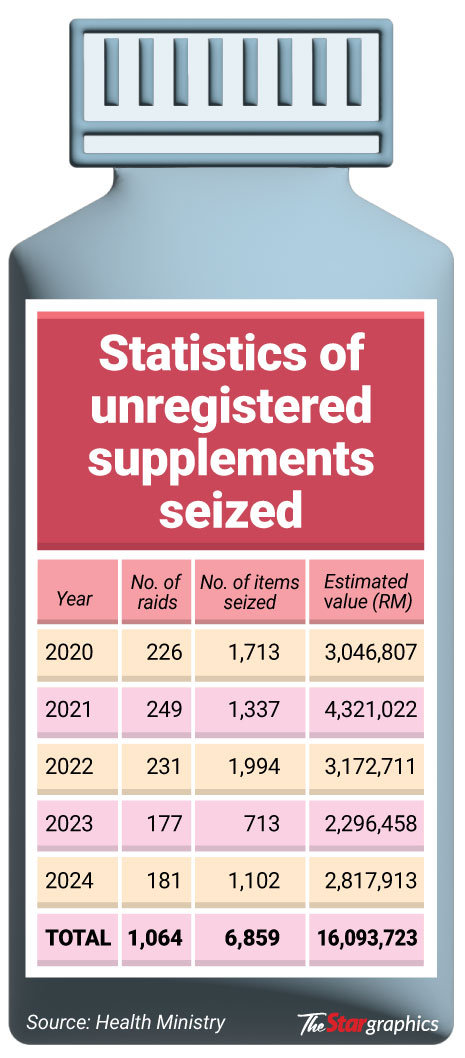
PETALING JAYA: Over 6,000 units of unregistered supplements worth RM16mil have been confiscated in the past five years, but fake medicines are still freely available in the market.
The Health Ministry is now intensifying efforts to crack down on such counterfeit medicines, telling consumers to exercise caution when purchasing medicines or supplements online.
“These fake health products are often sold by irresponsible individuals who are more interested in profit than public safety,” its Pharmacy Enforcement Division told The Star.
The Star had reported on Saturday that supplements were being sold online with fake holograms and questionable content.
Counterfeit supplements often do not contain the correct active ingredients while some may contain too much, too little or none at all – and could be ineffective in treating a condition or make it worse.
“Many also contain dangerous or toxic substances. Additionally, these products are often manufactured in unsanitary environments, raising the risk of contamination,” it said.
To safeguard public health, the division is intensifying efforts to monitor websites, social media platforms and online marketplaces to detect and investigate the sale of counterfeit products.
“Any identified links or listings will be subject to legal action,” it said.
The division is also working closely with major e-commerce and social media platforms to ensure fake listings are swiftly removed and repeat offenders are dealt with accordingly so items are taken off the market quickly.
In Malaysia, all pharmaceutical products and health supplements must be registered with the ministry’s Drug Control Authority and need a valid registration number, which begins with MAL followed by a number. These packages will also have a security hologram on the packaging.
“Since 2005, the use of security holograms has played an important role in safeguarding consumers from counterfeit products.
“In 2019, the ministry introduced the FarmaTag hologram to enhance and modernise the existing system. FarmaTag allows consumers and enforcement authorities to verify the authenticity of registered products,” it said.
Although counterfeiters have attempted to imitate the hologram, genuine products can still be identified by examining the unique security elements embedded in the FarmaTag label.
The ministry also encouraged consumers to scan the hologram using the FarmaChecker mobile application upon receiving the product, and is also organising public education initiatives to raise awareness.
“One key initiative is the Tolak Ubat Tidak Sah (TOBaTS) campaign, a nationwide effort to educate the public about the dangers of using unregistered and counterfeit medicines,” the division said.
It also advised consumers to buy their medicines and supplements from reputable sources such as licensed pharmacies or verified platforms, and to be wary of heavily discounted products online as these are often counterfeits.
“Fake supplements can cause serious health complications, especially when consumed without proper medical supervision,” it said.
Genuine products should always come in sealed original manufacturer packaging, it said.
“If possible, compare the product with previous purchases. Any noticeable changes in pill size, shape, colour, taste or markings should raise suspicion,” it noted.
“Be cautious of tablets or capsules that appear cracked, powdery or unusually coated with excess powder or crystals.”
Buyers can report sellers of counterfeits, especially those operating through online channels, to the division.
“Consumers should also be on guard against unsolicited offers, particularly through spam emails or flashy advertisements on social media platforms. These are common tactics used by counterfeit product sellers to lure unsuspecting buyers with ‘too-good-to-be true’ deals,” the division said.
Consumers can also visit the National Pharmaceutical Regulatory Agency’s website at http://npra.moh.gov.my to verify the registration status of any health products. Counterfeit products can also be reported through the Public Agency Complaints Management System (SisPAA).