SU Wenpeng once drove a small lorry ferrying durians from Vietnam to China, but that hustle no longer works, he says.
Chinese people are consuming so much of the fruit that each shipment now needs a freight truck many times the size.
These days, “everything is shipped by the container”, says Su, who has since sold his lorry and drives trucks for a logistics company instead. The old way of “using small vehicles like ants moving houses – that doesn’t exist any more”.
China relies heavily on South-East Asia to feed its durian habit, producing less than 1% of the fruit it imported in 2025. It imported a million tonnes of durian in the first half of 2026, up 51.6% year on year, mostly from Thailand and Vietnam.
A third of that was driven into China through the small town of Pingxiang, located on the border with Vietnam. It is a transit point that offers a window into how some in China are making a living from their compatriots’ taste for the “king of fruit”.
On a recent weekday afternoon, trucks carrying tonnes of the spiky fruit trundled in through the checkpoint and stopped at transfer stations nearby. Dozens of workers lifted boxes out of the Vietnamese vehicles and into Chinese ones to be sent to stores and markets across the country.
Traders bent over samples of the fruit, inspecting them with flashlights and knocking on their shells with a hammer-like contraption. Based on the thudding sounds, they can judge if the durians are ripe.
Among them was a long-time trader surnamed Deng, who was checking on a shipment of Thai Monthongs bound for central Changsha. Monthong durians, also known as “golden pillows”, are a widely exported variety.
The businessman is a frequent visitor to Pingxiang during both the Thai and Vietnamese durian seasons. The trade was fairly lucrative when he started over a decade ago, but profits have thinned as more sellers got in the game.
“There are too many people,” he says, and “the [South-East Asian] output is getting higher and higher”. This means each fruit will likely sell for less, a boon for consumers, but less so for middlemen like him.
Dealing durians is “quite a gamble”, says Deng, who declines to give his full name for privacy reasons. If they do not sell well, his 16-tonne shipment may not fetch more than the 400,000 yuan (RM244,249) it cost, he tells.
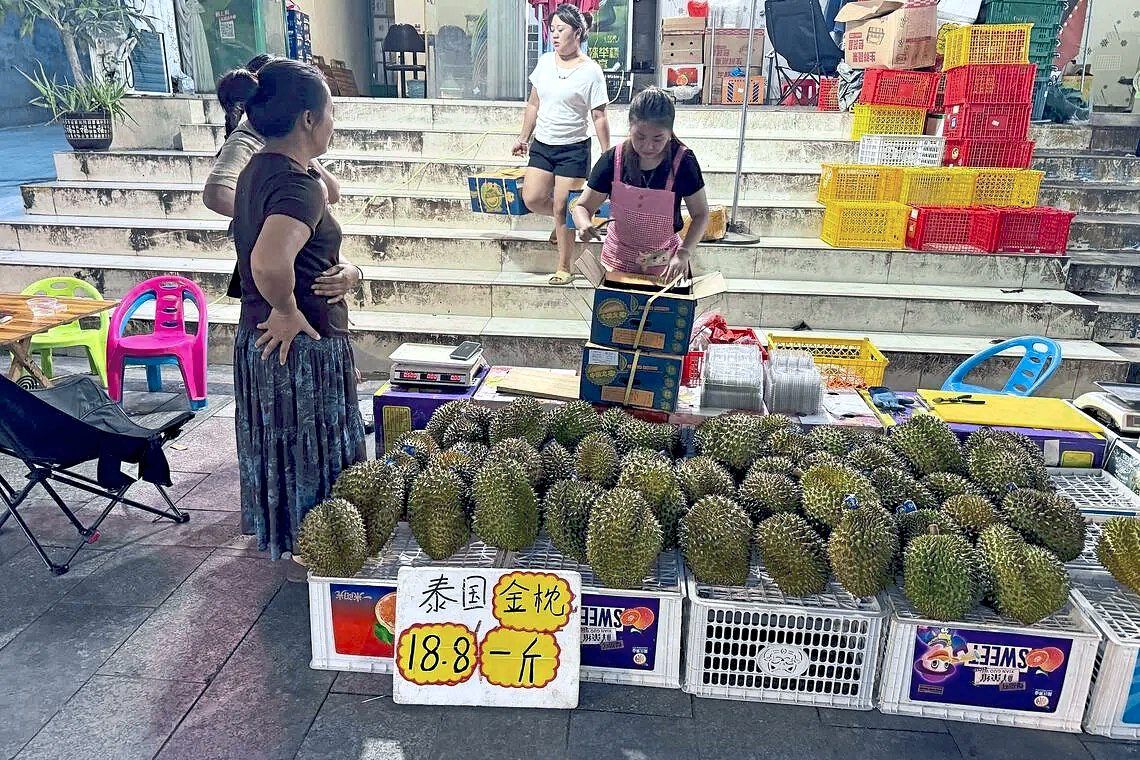
Durians in China are sold on the street, in supermarkets and on the Internet. They are also used in foods ranging from cake and ice cream to hotpot and pizza.
The fruit can be divisive in terms of its smell and taste, but “when you love it, you can’t quit”, says Deng Fuxiang, who heads research and development at Guan Liu Xiang, a Guangzhou-based manufacturer of durian products.
It opened a processing plant in Pingxiang in 2025, where 20 to 30 workers extract durian flesh, turn it into paste, and make it into popular desserts like mooncakes, mochi, and crepe cakes sold around the country.
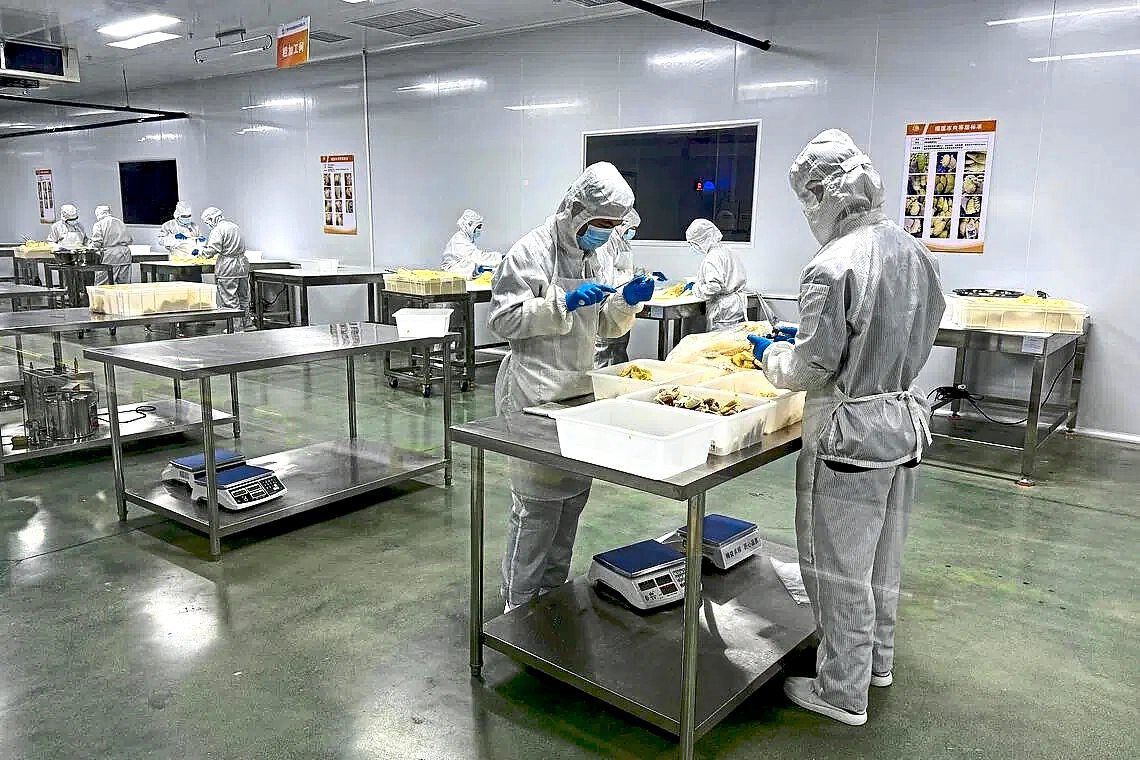
Its border outpost allows it to receive fruit deliveries “at least three days faster” and offers savings on import duties, Deng Fuxiang says.
The company is a short distance from China’s border crossing with Vietnam and the historic border gate known as Friendship Pass, the biggest tourist attraction in the otherwise sleepy town.
There, visitors stop to take pictures with the centuries-old gateway and climb hills to view old cannons that only Chinese citizens are allowed to access.
The Friendship Pass gateway was named “South Suppressing Pass” in the Ming Dynasty.
For entrepreneur Lee Ni, the attraction is a prime venue at which to set up his latest venture: a durian ice cream cafe. With this, he hopes to tap tourist footfall and “enhance the cultural appeal of the scenic area”, he says.
The cafe – which he is in the final stages of renovating – is painted bright yellow and offers a cute backdrop which people can take pictures with. It will be his fourth outlet in Guangxi, riding on people’s appetite for durians.
One of its signature offerings is a tea float: a cup of tea with a scoop of durian ice cream on top. Still, he is aware that durians are not for everyone.
“For those that don’t love it, we also have avocado, passion fruit and mango desserts,” says Lee. — The Straits Times/Asia News Network