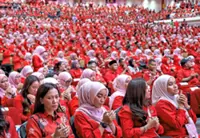
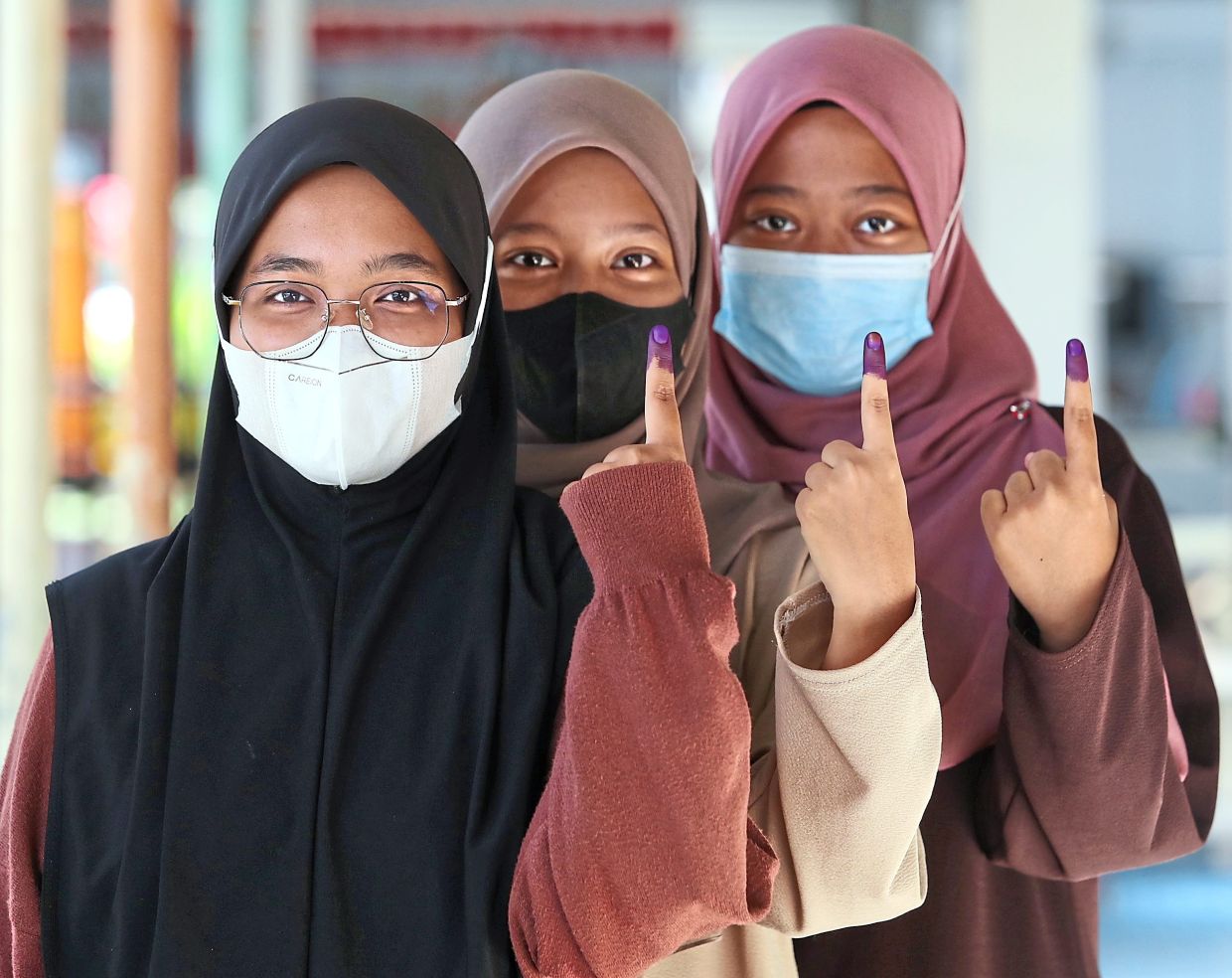
THE queue into the voting hall in Bukit Jelutong was long, at times splitting into two or three lines, recalls Hasbullah Nawawi of his experience during the 14th General Election (GE14).
"I did not have to wait long. I still remember who I voted for and why. I wanted change to take place. I want equal opportunities for all, regardless of race or background.
"I was and am tired of racial politics or partisanship. That is why I braved the crowd to do my part," says the 29-year-old, who now runs a trading business.
Hasbullah may not have been a voter for long, but he represents a growing number of Malay youths weary of the political divisions that had long defined the nation. For years, decisions at the ballot box were shaped by loyalty and leanings, rather than the merit of policies on offer.
His outlook aligns with a study by Iman Research last year, which strongly suggests that Malay youth aged between 18 and 35 are now making political choices based on performance and the common good, inclusive of other races – not blind partisan loyalty.
"The Malay youths today prefer to make their votes based on policies, especially ones that are fair to all. They also want to be more involved in decision-making.
"And yes, they are the ones who will influence the voting patterns of the future generation," says Iman Research's data analyst and researcher Aziff Azuddin.
According to the Malaysian Statistics Department, 12.2 million people aged 18 to 40 were eligible to vote in 2022, with 5.8 million new voters automatically registered following the implementation of the minimum voting age of 18 – known as "Undi18" – in 2019.
Then and now
Back in 2017, before GE14, a Merdeka Centre study found that while infrastructure approval was high (75%), 71% of youths surveyed felt they had no influence over government decisions, and only 30% cared about politics – a trend most common among rural youth.
Today, Malay youths voice concerns over an uncertain economic future, political polarisation, distrust in governance, the role of Islam and Malay identity, ethnic relations and the education system, according to Iman Research's study, Orang Kita: Malay Youth Democratic Renewal Post-GE15 – The Politics of Acknowledgement and Resentment.
The qualitative study engaged Malay youths across Peninsular Malaysia, especially in the "Malay Heartlands", through in-depth interviews with 105 participants from diverse backgrounds.
"Our respondents came from various walks of life – skinheads, young graduates, Islamists, professionals, the unemployed, and small business owners. All saw themselves as rightful stakeholders in the country’s well-being, with many feeling that politics marginalised them.
"We asked the young Malays we met about their ideas of democracy, multiculturalism and the country’s future. The study aimed to empower them as future stakeholders and leaders, encouraging them to understand democracy, the region’s growing populism, and potential solutions," it says.
The study also notes that Malay youths today are far more informed and opinionated than their predecessors, thanks to exposure through social media and current affairs.
"Yes, there is brewing anger towards leadership that has failed them and their parents for generations, as well as political instability and the rising cost of living," it says.
Aziff agrees that this shift in mindset is tied to the introduction of Undi18.
"When the government implemented Undi18, it tells the youth – or how the latter sees it – to be part of the democratic decision-making process.
"That was the signal received by the youths. They have better political literacy. Back then, you could only vote at 21, and even in universities, many students were not allowed to discuss politics, despite its relevance to their studies."
Economy and politics
The study says participants agreed the economy – both current and future – is a major concern, identified under three broad themes; rising cost of living, stagnant wages, and a challenging job market.
"Participants reported experiencing increased costs of goods and services, as well as higher property rental rates. The discussion on the increased cost of living primarily focused on consumer spending on food and beverages, as well as the prices of everyday essentials."
On wages, participants noted that salaries, particularly for fresh graduates, are low and have remained stagnant for years.
"Despite the government implementing a progressive wage policy to increase the minimum wage to RM1,700, many youths expressed that current salaries were not keeping pace with the increasing cost of living.
"This has led them to feel that they lack spending power. Stagnant or low wages also become an additional stressor for those who graduated with student debt, the second most common debt among youths aged 20 to 29."
Some participants linked this uncertainty to political instability.
"There is a belief that if the government is too focused on dealing with issues of politics rather than policy and governance, this affects how investors consider investing in the Malaysian economy.
"This political instability extends to polarisation not just among the political class but also among the Malaysian public," says the report.
The study notes that public issues on ethnicity, religion, politics, or the economy are often presented in a "polarising" manner through media and political actors.
Consequently, this affects the broader Malay youth population, particularly those less exposed to current affairs or reliant on selective news sources.
"This prompted some participants to believe that, by and large, Malaysian youths were ill-prepared to vote in the GE15 due to their lack of political education literacy.
"This has caused political discussions among youths to centre on political parties or figures instead of policy."
Religion and relations
On ethno-religious identities, some youths expressed concern that Malay youths, in general, were not serious about Islam or Malay unity, says the study.
It found a belief that Islamic foundations – whether cultural identity or morality – were weakening among Malay youths.
When it came to inter-ethnic relationships, however, most participants were concerned with growing tensions between Malays and non-Malays.
"Some participants also believe that there is a lack of engagement or socialisation among the different ethnic groups, resulting in ongoing tension and frequent misunderstandings.
"In some discussions, participants attributed this to the existing education system that separated young Malaysians and resulted in ethnic polarisation."
One participant noted that voting results reflected this divide.
"If we look at the GE voting patterns, this situation is worrying because it can be seen that the Malays are heading towards extremism, says the participant.
Hopes and recommendations
What do Malay youths want? Among other things, they hope to see maturity from the political class.
"Specifically, participants expected the opposition to take its role seriously and adopt the role of checks-and-balances, debating policy instead of drawing on race and religious issues to remain politically relevant.
"All participants agreed that the government and the opposition must set aside their differences and focus on nation-building," says the study.
On Islam, many, if not all, participants expected it to remain part of public life.
"However, there was a broad spectrum regarding how deeply or integrated Islam would be in legal and policy frameworks. Some participants believed that political Islam should be adopted as a governance structure.
"The study says this section of participants also believed that the Shariah legal system must be strengthened and given broader powers, given the current polemics surrounding the perceived limited reach of Shariah legal institutions."
But some participants desired less obvious integrations but still driven primarily by Islamic principles.
"Some participants diagnosed that the current disappointing state of leadership is due to political leadership not following the 'true' teachings of Islam.
"There is an unwavering belief that if Islamic principles or Shariah legal and political structures were adequately implemented in the Malaysian fabric, it would significantly improve society en masse."
At the same time, the study recommends strengthening meaningful youth engagement through inclusive communication strategies, targeted outreach, and direct involvement in policymaking – especially outside the urbanised West Coast regions.
It also calls for aligning the education system with economic demands, improving political literacy, and fostering inter-ethnic understanding from an early age.
Subsequently, it suggests de-escalating identity-based polarisation by promoting narratives and policies emphasising shared national belonging while respecting religious and cultural diversity.
"(There is also a need to) support youth political participation by creating structured pathways for leadership, mentorship opportunities, and institutional support within political parties and civil society platforms.
"(It is also crucial to) promote an inclusive economic policy that bridges the gap between national development narratives and the youth’s lived realities, especially regarding job creation, wage growth, and social mobility."