PLAINCLOTHES counter-intelligence agents from Cuba’s Interior Ministry knocked on the doors of community leaders living near a military outpost in Havana last month, asking for the names of everyone in nearby homes.
The US government had attacked the capital of Venezuela, capturing President Nicolas Maduro and killing more than 100 people, including 32 Cubans who were guarding Maduro, so the Cuban agents were clearly making contingency plans for a similar strike on potential targets in Cuba, community leaders said. One was told evacuation plans were being drawn up.
The idea seemed reasonable enough: even as normal life continues, anxiety is palpable on the island.
The United States attacked Venezuela, a key Cuban ally, in January. President Donald Trump recently proposed a “friendly takeover”.
Now, the United States has launched a major assault on Iran, and its supreme leader is dead. Many Cubans are wondering if they are next.
“I am afraid of a military invasion,” one of the community leaders said, speaking on the condition that her name not be published because she was not authorised to discuss her interactions with the counter-intelligence services. “The entire country is afraid.”
Cuba, a country suffering from a severe energy shortage largely brought on by Trump’s blockade of foreign oil shipments that has set off a deepening humanitarian crisis, is caught in a Faustian bargain.
Many Cubans are enduring the worst moments of their lives and eager for an end to the 67-year-old communist government that jails opponents, suppresses free speech and controls a failed centralised economy.
But an actual military conflict, which could lead to civilian casualties, would be a high price to pay, many Cubans say, and the frightening prospect is a divisive issue in this nation of nine million people and among the millions of exiles, many of whom are eager to see the government toppled.
Since the capture of Maduro, Cuban President Miguel Diaz-Canel has ordered an increase in military exercises, though most Cuban military equipment is obsolete and hails from the Soviet era.
He called the attack on Iran a violation of the country’s sovereignty and a violation of international law.
“The international community must act immediately to stop this aggression and escalation,” he wrote.
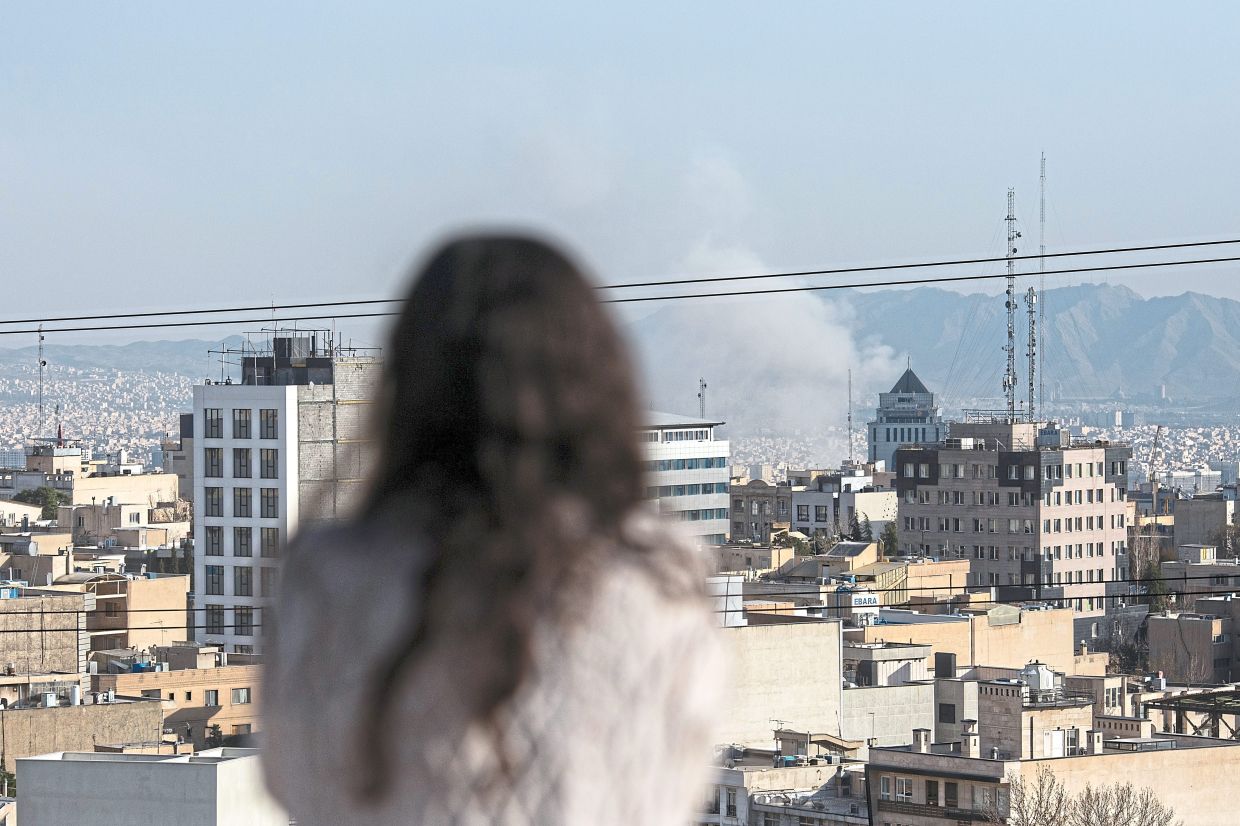
Peter Kornbluh, a co-author of Back Channel to Cuba, a chronicle of secret negotiations between Cuba and Washington, who recently returned from the island, said the killing of Iranian leaders serves as a “dagger to the throat” for the Cuban government, signalling that the Trump administration may pursue forced regime change despite continuing diplomatic negotiations.
Still, Kornbluh said that the Cuban officials he spoke to are sticking to their posture of “nationalist dignity”, saying they remain open to dialogue but refuse to negotiate under the threat of obliteration.
The Trump administration has suggested that its plan is for the Cuban government to collapse under the weight of economic sanctions, not rocket fire.
Asked the day after the Venezuela strikes whether he planned action in Cuba, Trump said: “I think it’s just going to fall. I don’t think we need any action. Looks like it’s going down. It’s going down for the count.”
Some Cubans said they haven’t had the time to think about the possibility of hostilities with a far more powerful nation whose military capability dwarfs Cuba’s.
They have been too busy dealing with a laundry list of problems, including extended power outages, a lack of gas and increasing difficulty finding food at local markets.
Others, however, are eager for Trump to do, once and for all, what 12 US presidents before him failed to accomplish: remove the communist government in Cuba.
“I think that many, many people are expecting that – that he’ll be the one to force things to change. I’m convinced,” said Rita Garcia Morris, executive director of the Christian Centre for Reflection and Dialogue, a religious non-profit group in Cuba. “What they want is for it to happen right now.”
Garcia said she hoped for a negotiated solution that keeps in mind the suffering in Cuba, where hospitals are cancelling surgeries, food is rotting in ports because there is no gas to transport it, and airlines have suspended flights because there is so little jet fuel.
Even in a country where long lines at supermarkets and crushing poverty are commonplace, the current energy crisis has caused a free fall and pushed the government into what experts say is an existential corner.
After attacking Venezuela on Jan 3 and taking over its oil industry, the Trump administration prevented Venezuela from sending oil to Cuba.
Cuba’s government had long depended on Venezuela for about one-third of the 100,000 barrels it needs each day to run factories, public transportation and keep the lights on.
A few weeks later, in a sharply worded executive order, Trump threatened tariffs on any nation that provided oil to Cuba.
Amid reports that US Secretary of State Marco Rubio has been meeting with a grandson of former President Raul Castro, who still wields significant power, Cuban government officials have said they are open to discussions – provided that Cuba’s sovereignty is respected.
Lillian Guerra, a Cuban American historian at the University of Florida, said Cuban officials are most likely nervous “and should be”.
But she said that if Trump “decapitates” the Cuban government by killing Diaz-Canel or targeting Castro, it would leave a situation similar to Iran, where the powerful Revolutionary Guard remains.
The Cuban military and the Interior Ministry are powerful entities in Cuba, and the military controls the country’s economy.
Since the killing of Iran’s supreme leader, Guerra said she has received several worried text messages from friends in Cuba wondering what would happen to their country.
“On the island, people do not want war,” Guerra said.
Years of economic strain have worn Cubans down, she said, and the internet has opened their minds to fight back against decades of indoctrination. — ©2026 The New York Times Company
This article originally appeared in The New York Times.