WHILE artificial intelligence (AI) and other digital technologies are eliminating jobs and disrupting businesses, one industry remains firmly intact and is even thriving. Pop concerts and other live performance markets are booming and are expected to grow further, as they provide audiences with real-life experiences of excitement and ecstasy through physical presence – something computer-mediated virtual realities can never fully offer. Just next week, an army of fans from around the world will descend on downtown Seoul to watch a live concert by BTS, the sensational boy band’s first reunion after a four-year military service hiatus.
In fact, live music has been K-pop’s fastest-growing cash cow since the end of the Covid-19 pandemic. According to statistics compiled by Billboard, K-pop agencies such as Hybe, SM Entertainment and JYP Entertainment earned US$228mil (RM898mil) in tour revenues during the first half of last year, selling 1.6 million tickets across 78 shows – a 79% jump from a year earlier.
But those figures cover only the concerts tracked by Billboard. If all K-pop shows are counted, the numbers grow exponentially. Hybe, the biggest of these agencies and home to BTS, alone staged 213 concerts for 3.3 million fans last year.
Revenues from those tours amounted to US$537mil (RM2.1bil), accounting for about 30% of its total revenue, up from 12% two years earlier. Hybe’s tour revenues are now similar to those from music, which include album and streaming sales, but tour revenues are likely to exceed music sales soon.
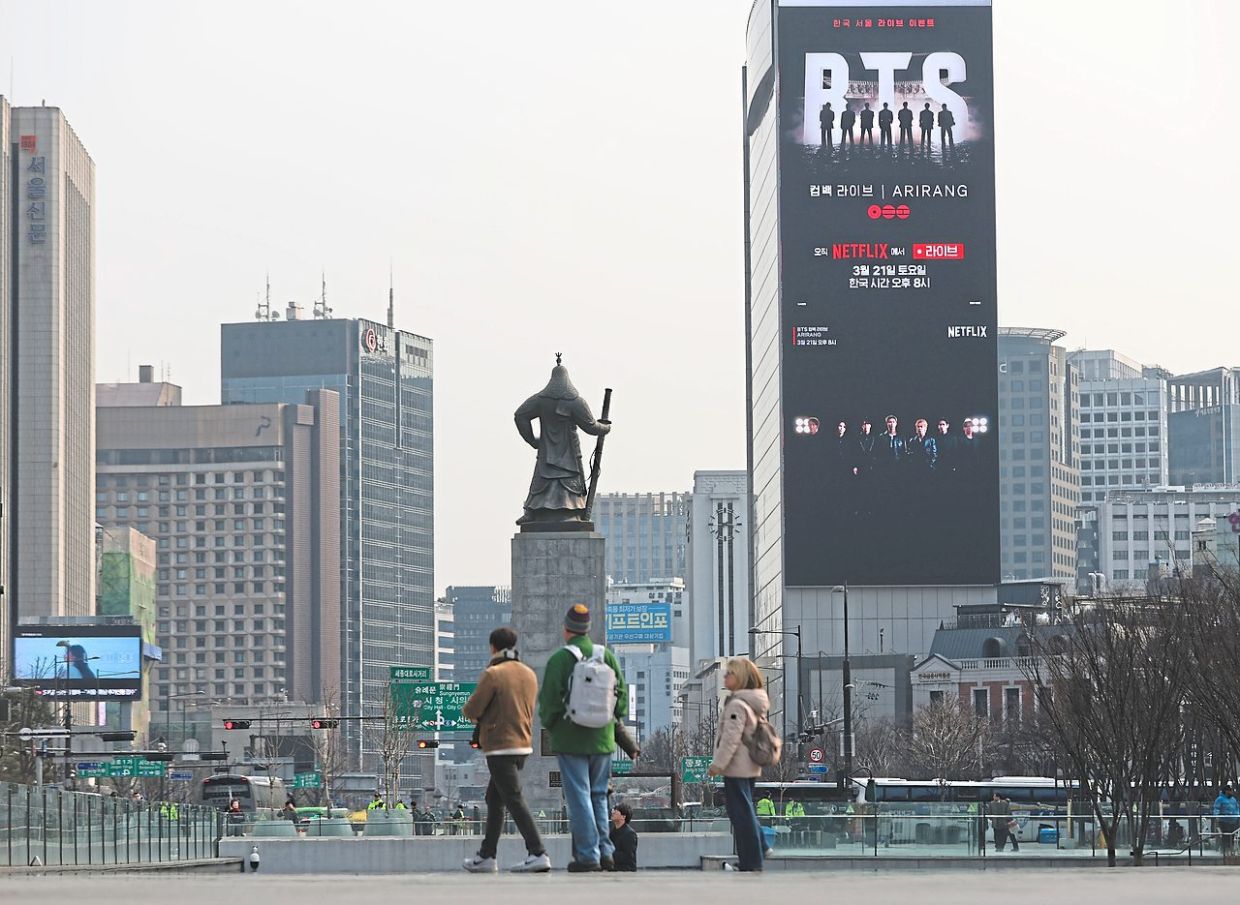
For Hybe, however, the best is yet to come. BTS will soon begin their world tour for the first time since their military service hiatus, generating as much as US$1bil (RM3.9bil) in ticket sales and other related revenues such as merchandise sales, VIP packages, livestream tickets, and fan club memberships.
After a massive outdoor performance in Gwanghwamun in downtown Seoul next week, which will be televised live by Netflix, the band will launch a global tour, staging 79 concerts in 34 cities across five continents, including Tokyo, Los Angeles, Madrid, Paris and London.
Featuring songs from their new album Arirang as well as their previous hits, the concerts will dazzle the famous Army – the group’s fans – with spectacular stage shows and choreography.
A 360-degree stage equipped with huge video screens will be surrounded by tens of thousands of fans waving synchronised light sticks. The spectacle will no doubt give fans unforgettable memories.
K-pop groups mobilise passionate fans across the world through their global tours. Blackpink, Twice, Stray Kids, Seventeen and other top groups stage world concerts year-round, bringing in huge profits for their agencies.
These concerts generate not only ticket sales but also lucrative side revenues from fan events and merchandise. For host cities, they also bring significant tourism revenue in the form of hotel stays, flights and other hospitality spending.
For next week’s BTS concert, for example, five-star hotels in downtown Seoul have already been fully booked.
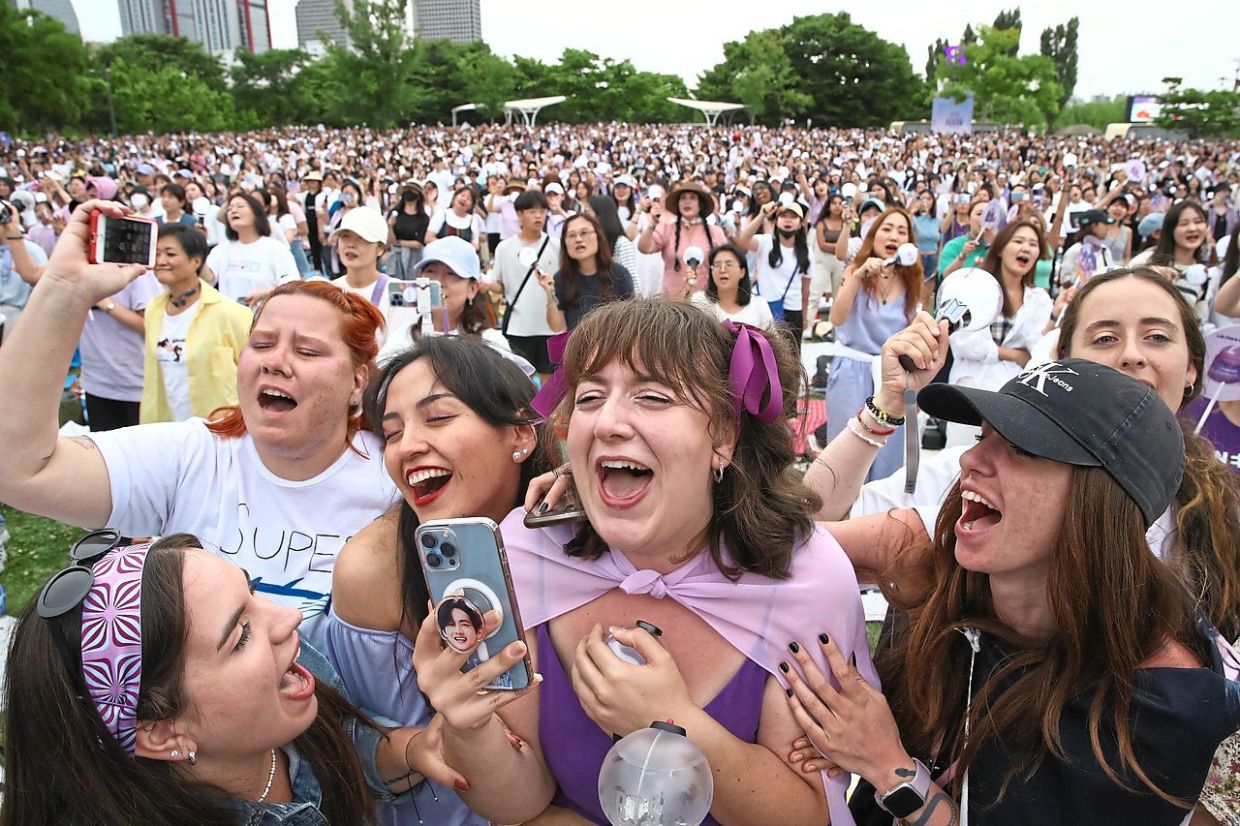
Mexican President Claudia Sheinbaum recently asked the South Korean government to increase the number of BTS concerts scheduled for May in her country. Three concerts are currently scheduled, but the 150,000 tickets for them have already sold out. As many as one million more BTS fans are reportedly waiting for tickets in Mexico.
The concert business is not without problems. Physical events are subject to their own risks, notably geopolitical tensions and environmental factors.
The Covid-19 pandemic, for example, disrupted the markets for concerts and other live events for years. The Chinese government’s ban on Korean pop culture following a diplomatic row was another example.
After South Korea deployed a US anti-missile system on its soil in the mid-2010s, Beijing imposed the ban, arguing that the system was targeting China. Not a single K-pop concert has been allowed there since then.
AI could possibly compete with the concert business in the long run. AI-generated artists performing AI-generated music are already staging concerts in the form of holograms or other video-based presences. Despite their virtual nature, some of these performers fill large venues with loyal fans. Hatsune Miku of Japan, for example, is a holographic performer with a solid and dedicated fan base.
Yet music and live performances offer a collective atmosphere and group connection that AI and other digital technologies cannot replicate.
The “experience economy”, which includes live performances, sports events and festivals, will continue to grow as societies become increasingly digitalised.
The concept of the experience economy was developed by two American business consultants, Joseph Pine and James Gilmore.
According to them, the human economy has evolved from commodities (raw materials) to products (manufactured goods) to services (activities performed for customers) and finally to experiences (memorable events).
In the music industry, the products economy is buying a CD, the services economy is streaming a song, and the experiences economy is attending a concert.
Army fans have been buying BTS CDs and streaming BTS songs; now they can finally once again experience the upcoming BTS concerts. — The Korea Herald/Asia News Network
Former journalist Lee Byung-jong is a professor at the School of Global Service at Sookmyung Women’s University in Seoul.