



WHAT weighs more than 1,815kg, lives on a remote island and can only travel by boat during India’s dry seasons? Answer: five ancient limestone sculptures that needed to somehow arrive in New York – via crate, pontoon barge, ferry over the Krishna River and truck to an airport in Hyderabad.
Now imagine the logistics involved in shipping another 120 or so rare Buddhist objects – dozens of which had never left India and many with their own sets of hurdles – to the Metropolitan Museum of Art in New York City, and you will have some sense of the challenges encountered by the curators of its new exhibition: “Tree & Serpent: Early Buddhist Art in India, 200 BCE-400 CE.”
Spoiler: The objects all made it to the Met, where the stone-carved sculptures glow like candles against the galleries’ dark charcoal walls.
Soft yellow light illuminates the contours of earth and rock revered for centuries, all part of an experience designed to inspire rumination and the Buddha’s simple message: compassion.
Securing loans from five countries for religious relics dating as far back as the 5th century BC required diplomatic finesse, prescient workarounds and lots of paperwork.
Even the most meditative art calls for feats of movement and the mundane: high-stakes dotting i’s and crossing t’s.
“This is the largest assemblage of Indian antiquities that has happened in over a generation,” said John Guy, the curator of South and Southeast Asian art at the Met, who started planning the show – underpinned by decades of research – eight years ago. “Obviously, we feel enormously privileged.”
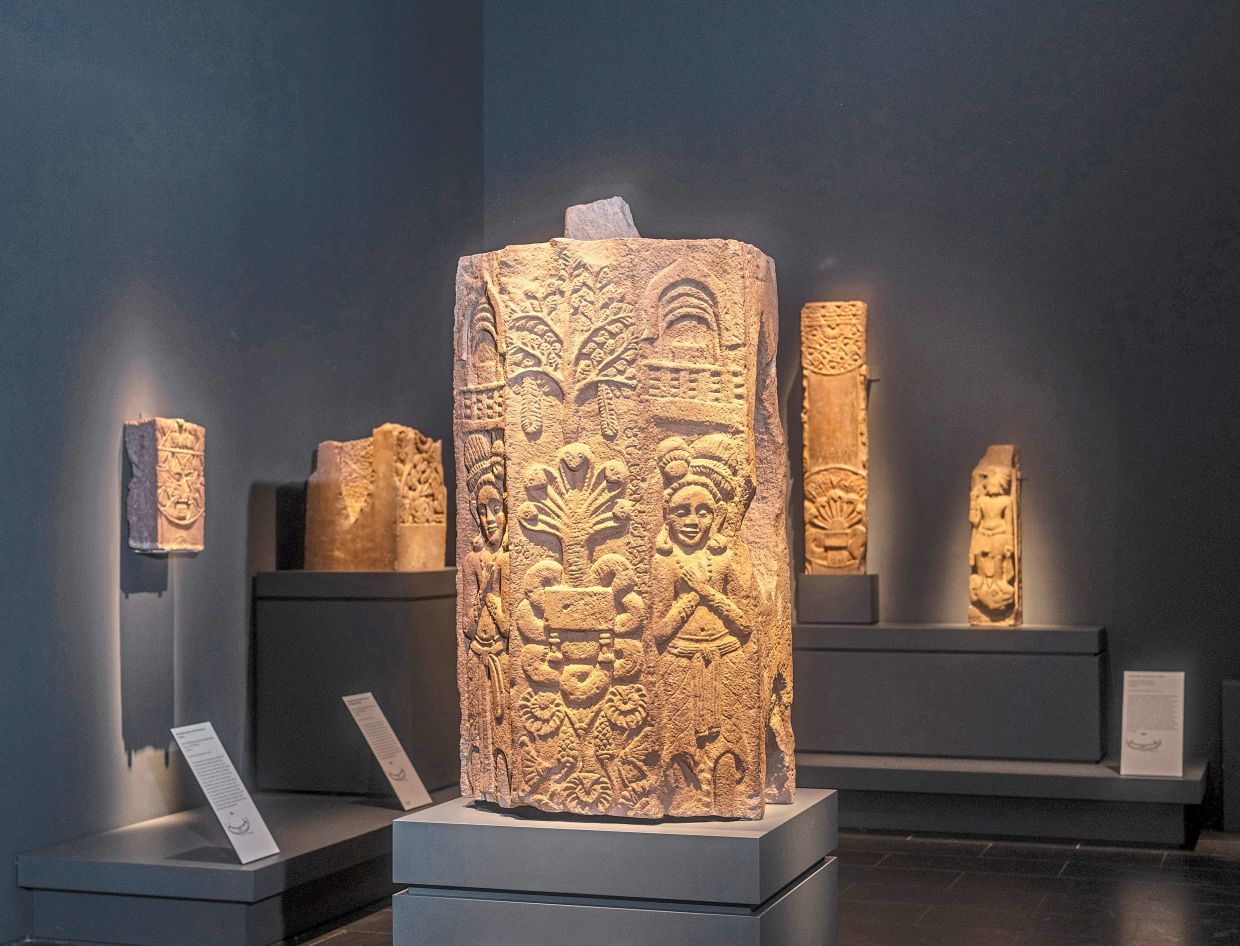
“Four flights came in to JFK with many tons of sculpture,” Guy said. That’s 18.37 tons, to be exact.
The show depended on the generosity of lenders throughout India, Italy, the United States, England and Germany, and the preparatory work included years of site visits to build trust and relationships.
Within India alone, the negotiations included the central government, the culture ministry, the Archaeological Survey of India, the National Museum and six state governments.
Over the course of the discussions, the input of three US ambassadors to India and two Indian ambassadors to the US was called upon.
The diplomacy of obtaining loans from foreign governments is a delicate process. In 1996, just weeks before the Met’s “Splendors of Imperial China” show, protesters demonstrated outside the National Palace Museum in Taipei, Taiwan, demanding the museum withhold artworks meant to go to New York. In the end, Taiwanese government officials withdrew 23 works.
Few of the loans in this Met show – which include intricate carvings of princely headdresses, flaming pillars and scenes of ecstatic devotion – have been seen outside India before, and of those that have travelled, most have not been exhibited for a generation or more.
Many of the displays feature panels from stupas, the religious monumental domes, which have housed the Buddha’s remains after cremation, along with other spiritual materials.
Negotiating antiquity loans has also become more delicate as the Met and other museums grapple with the histories of the artifacts already in their possession.
Many countries are more aggressively seeking the repatriation of items, and last year, New York investigators seized looted artifacts valued at more than US$13mil (RM59mil) from the museum.
The Met only recently announced a plan to hire a provenance research team and review its holdings.
The exhibition on Buddhism was set to open in November 2020, but the coronavirus pandemic pushed it back, and by the time the Met returned to planning in 2022, many of the people involved in earlier talks had been replaced by new gatekeepers. “So we had a lot of pedalling to catch up,” Guy said.
Although the show was slated to run three years ago, its opening is now tied to the 75th anniversary of India’s independence from the British Empire in a celebration of the country’s democracy.
The museum points to the message of meditative reflection as being at the core of the “Tree & Serpent” exhibit. At the opening in the cool, low-lit galleries, five monks from the New York Buddhist Vihara blessed the show by chanting, low and hypnotic.
“It’s an exhibition that celebrates the teachings of the Buddha and compassion for living beings, care of the environment – the sort of key tenets of Buddhism,” Guy said. “It’s a special moment to celebrate a great artistic tradition and honour a great religion.”
Perhaps the most complicated of the journeys undertaken by the rare artifacts was that of the five limestone sculptures and stupa panels that had to cross the Krishna River.
The 3rd century AD collection from the island of Nagarjunakonda, in the southern state of Andhra Pradesh, was the subject of two years of negotiations.
The individual items were large – one panel measures more than 2m in height and another more than 2.7m in length – and once they made it to the mainland, they had to be moved by truck to the Hyderabad airport for flights to New Delhi and then New York.
The other wild card? The weather. The local archaeological museum where they were held closes its doors to the public during the monsoon season, when it’s considered unsafe to cross the stormy waters and the ferry service stops running. In a fight against time, the great transit of antiquities took place in June, just before the conditions turned wet and windy in July.
Two of the artifacts – crossbars from a ceremonial gateway engraved with scenes from the Buddha’s life – have never been displayed publicly before, Guy said, even in India. They were only excavated from the hilltop Buddhist monastery site Phanigiri in 2002 and were subsequently moved to the village at the bottom of the hill and locked away in a storehouse.
There, the care of the arches fell to one person: a senior member of the village community entrusted to keep the key. For two decades, the man watched over the ancient items.
Permission to bring the crossbars to the Met took several years of conversations with the state’s culture ministry, the archaeology department, a village headman and a local member of parliament. Finally, the loan was secured.
Anytime ivory crosses borders, it is complicated. The move requires a range of licences, including an international permit issued under an agreement between more than 100 countries that enforces trade regulations to protect endangered species.
Then there are the individual import and export permits by country and the requisite letters of expertise from academic authorities.
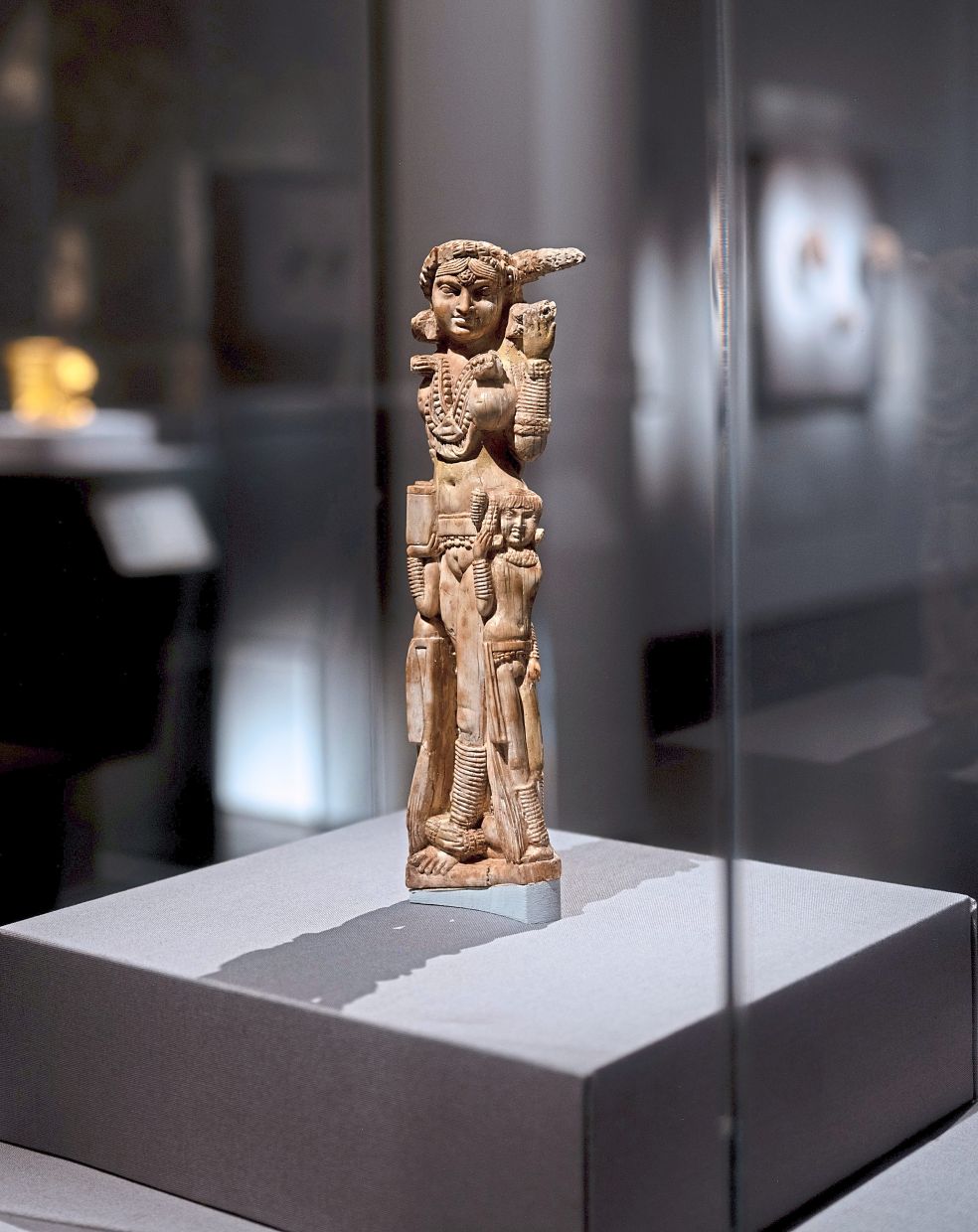
To display a 25cm-tall ivory statuette of an Indian yakshi – a female nature spirit surprisingly recovered in 1938 during an excavation at Pompeii – required 18 months of paperwork.
It was a remnant of trade by land and sea between the Indian subcontinent and the Roman Empire in the 1st century AD, in which the Indian exports included sesame oil, spices and ivory. The yakshi is the only Indian object recovered from the ancient city. In the bejeweled figurine’s first trip outside of Italy since its excavation, the sculpture – with proper permits – was air freighted from the National Archaeological Museum of Naples to the Met.
It is displayed alongside another luxury trade object, this one a bronze statuette of Poseidon whose origins were Roman but it was excavated in the Indian state of Maharashtra in 1944. “Together, these two diminutive objects embody the whole Indo-Roman trade story,” Guy said. — ©️2023 The New York Times Company
Already a subscriber? Log in
Get 20% OFF The Star Digital Access
Cancel anytime. Ad-free. Unlimited access with perks.

